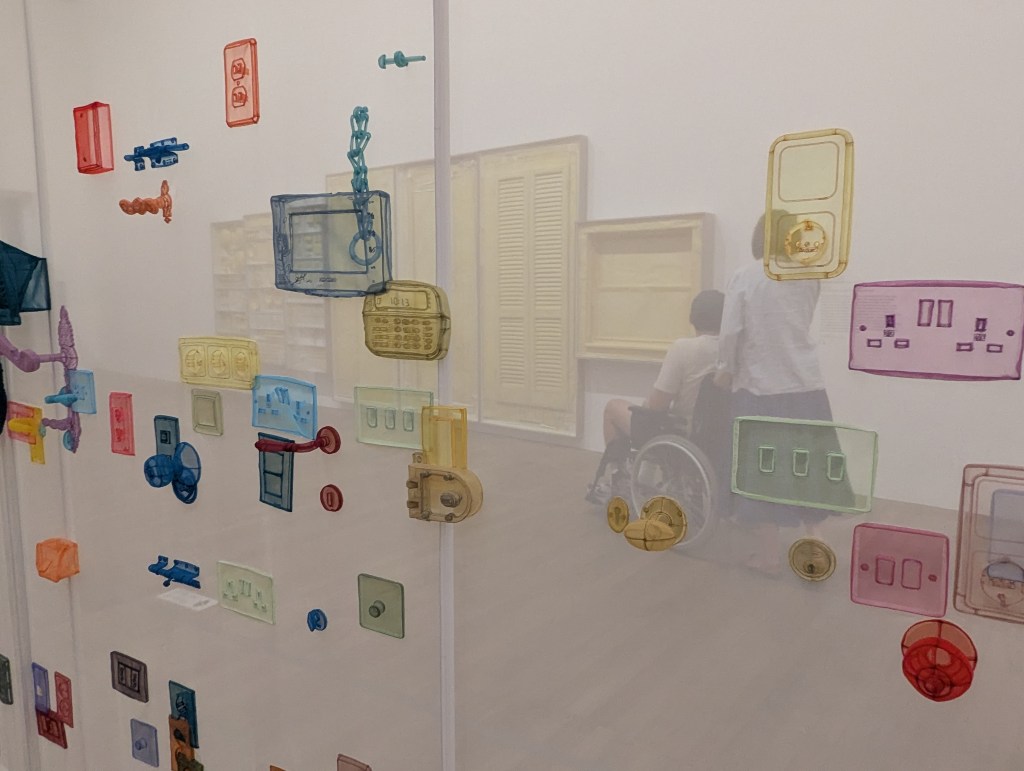
The area of research: This survey explores how people think about their homes, and what influences decisions about repairs, maintenance and improvements. It also looks at how environmental considerations may influence these decisions.
Why this research is needed: Taking action to reduce the environmental impacts of homes is crucial given the scale of their collective impact. This research is intended to help make it easier for everyone to take action – from people in their homes, whatever their tenure or type of home, to the builders doing the work and any government or industry schemes.
Participating in this research: It’s totally voluntary to participate, your answers are anonymous and you can withdraw at any stage before you submit the online survey.
Advantages and disadvantages of getting involved: Having an opportunity to explore your own views on homes will hopefully be as interesting to you as it is to me. You will also get to contribute to work which is trying to improve the environmental impact of homes and make it easier for more people to do so. However, this will involve some time from you and the subject of homes can be emotional, so this might lead to you raising areas that you find difficult to think about.
Confidentiality: The information provided will be anonymized and the data stored in line with confidentiality requirements.
Research context and approvals: The research is being undertaken as part of a PhD at London South Bank University. It has been approved by the College of Architecture and Planning Ethics and Integrity Panel, London South Bank University.
THE LINK FOR THE SURVEY IS HERE
Thank you.
Researcher: Sarah Fletcher
More detailed information on the survey and project are below:
Domestic environmental adaptation and shifting social and cultural views of home: how can we better connect what people think and feel about their homes, to action to reduce the environmental impact of homes?
You are being invited to take part in a research study. Before you decide whether or not to take part, it is important for you to understand why the research is being done and what it will involve. Please take time to read the following information carefully and ask any questions you may have using the contacts below.
Taking action to reduce the environmental impacts of homes is crucial given the scale of their collective impact. However, there is a disconnect between people’s views of home and an approach from government and industry that dominates the approach to delivery, focusing on technical and economic aspects. A failure to engage with the cultural and social relationship to housing results in poorly designed and executed programmes and offers. This leads to low take-up, underspend in government schemes and the lack of a functioning, thriving market for environmental improvements – either on their own or as part of wider home repairs and improvements that people undertake.
To increase the take-up of sustainability improvements in homes, we need to understand the social and cultural factors which shape decisions about home improvements. By addressing these factors, we can increase demand and take-up, contributing to meeting key environmental targets.
This research is intended to develop recommendations to address the environmental impacts of homes that goes with the grain of how people think and feel about their homes and how they make decisions about their homes. The data collected in this research might therefore be used in a variety of contexts to share the learning from this project.
You have been asked to participate because I am interested in getting views from people about their homes, how they feel about them and how they make decisions about any repairs or improvements they are looking to undertake. I’m also interested in getting views from people who work in this area to understand their perspective – whether it’s in government, regulators or accrediting bodies, installers, manufacturers or utilities providers, banks and insurance companies.
It is up to you to decide whether or not to take part. If you decide to take part you are free to withdraw at any stage, by leaving the online survey at any stage before you submit your responses.
After you submit your responses you will no longer be able to withdraw your data because the surveys are anonymous and it will be impossible to identify your responses from others which have been submitted.
You have been asked to participate because I am interested in getting views from people about their homes, how they feel about them and how they make decisions about any repairs or improvements they are looking to undertake. I’m also interested in getting views from people who work in this area to understand their perspective – whether it’s in government, regulators or accrediting bodies, installers, manufacturers or utilities providers, banks and insurance companies.
The online survey will invite you to provide feedback on a range of questions, some of these will offer a choice of options and invite other feedback, while other questions will be more open. This should take no more than 30 minutes to complete.
Potential disadvantages of taking part in this research include the time taken to participate and, if there are aspects of your experience of home which are difficult to talk about, this could cause some discomfort or upset.
It is up to you to decide whether or not to take part.
If you decide to take part you are free to withdraw at any stage, by leaving the online survey at any stage before you submit your responses. After you submit your responses you will no longer be able to withdraw your data because the surveys are anonymous and it will be impossible to identify your responses from the others which have been submitted.
Everyone has a relationship to home, and while it is a subject that can feel universal and well-understood, it isn’t often one we explicitly get to explore. This research will give you the opportunity to do so, and to share any insights from having thought about this before. More broadly, homes in aggregate have a significant contribution to the UK’s environmental impacts. This research wants to connect how people really think and feel about their homes, with action to reduce the environmental impact of them. The more insights the research can garner, the more robust the research will be, which increases the chances of it having an impact.
Potential disadvantages of taking part in this research include the time taken to participate and, if there are aspects of your experience of home which are difficult to talk about, this could cause some discomfort or upset.
Yes, all information collected from you will be kept strictly confidential (subject to legal limitations).
Non-anonymised data (which includes personal data) will be stored under double-lock conditions and will be made (pseudo-)anonymised as soon as practicable. The personal data will then be safely removed.
Pseudo-anonymised data (which is linked to a code sheet of personal data) will be stored under double-lock conditions and will be made anonymous as soon as practicable, and within 2 weeks of the data being collected at the latest.
Research data generated by the study will be retained for at least 10 years after the project is completed.
Confidentiality and anonymity will be ensured in publications by only using aggregated data and removing the names, job roles, organisations and any other identifying information unless you have indicated otherwise.
The researcher intends to use the anonymised results of this study in a PhD dissertation and other forms of research dissemination including academic publications and presentations or for other audiences, including potentially articles or exhibitions. You may request a copy of the published research by emailing the researcher using the contacts below.
I am conducting the research as a student at London South Bank University in the School of Architecture and Planning. The PhD is being supported through a Chancellor’s Fellowship.
The research has been approved by the College of Architecture and Planning Ethics and Integrity Panel, London South Bank University.
The researcher intends to use the anonymised results of this study in a PhD dissertation and other forms of research dissemination including academic publications and presentations or for other audiences, including potentially articles or exhibitions. You may request a copy of the published research by emailing the researcher using the contacts below.
I am conducting the research as a student at London South Bank University in the School of Architecture and Planning. The PhD is being funded through a Chancellor’s Fellowship.
Who has reviewed the study?
The research has been approved by the College of Architecture and Planning Ethics and Integrity Panel, London South Bank University.
If you would like more information about the research you can contact me by e-mail: s4428431@lsbu.ac.uk
Should you have any concerns about the way in which the study has been conducted, please contact my Director of Studies: Samuel Johnson-Schlee – johnss32@lsbu.ac.uk or the Lead of the College of Architecture and Planning Ethics and Integrity Panel: Olubisi Ige – igeo4@lsbu.ac.uk

