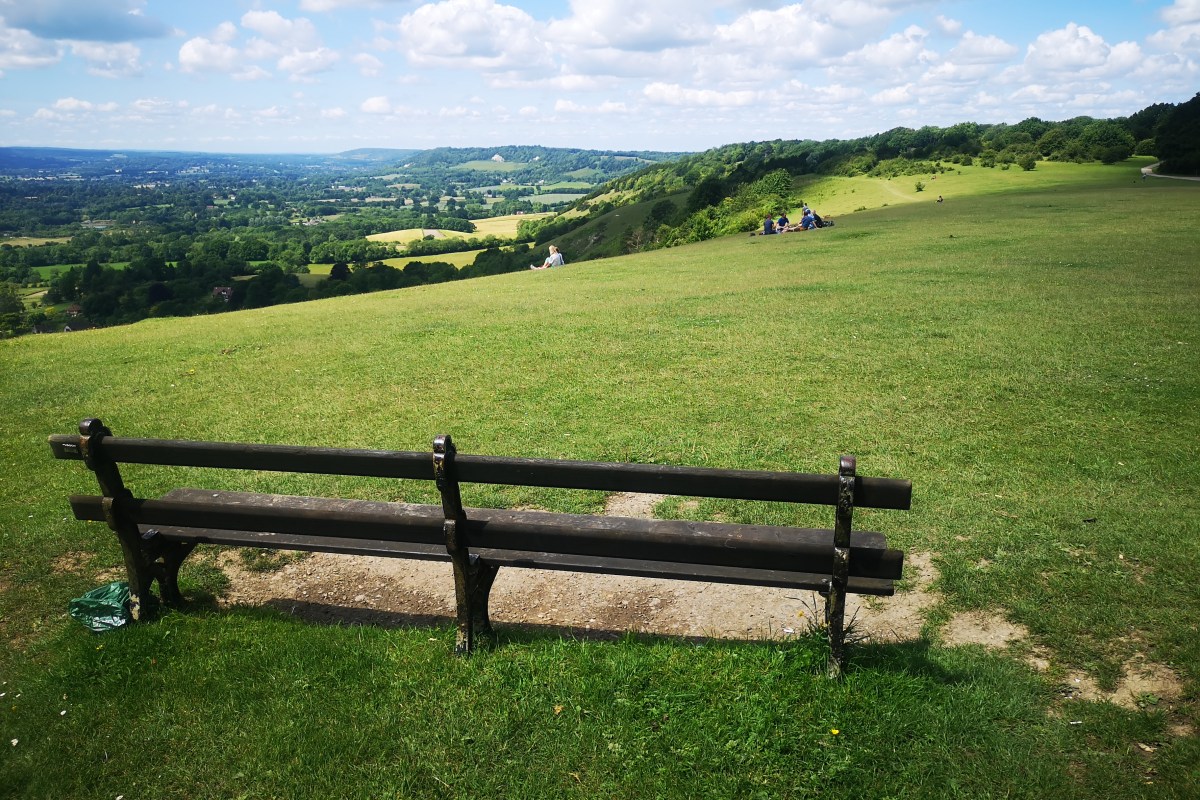
Reflecting on having got a very rough working draft of my literature review done, it’s definitely felt like a moment to pause and have a look around and back. The literature review is an act of mapping the landscape in which the work sits, so the act of putting the review together is itself one of looking around and back, as well as forward.
The literature review formed the main part of the report for my next PhD milestone review. Very exciting to be at that stage and this one has been hard going to get there because it has the longer version of my literature review in it. That had been delayed by the concussion and vitamin d deficiency that I got last year and lasted for about four and a half months. I had been really looking forward to the opportunity to do more reading in the area for my PhD and so it was doubly frustrating to not be able to read very much at all when I got the concussion. And learning to read for the PhD, or pull it together into the literature review didn’t feel like it came very easily.
Below are a few notes on what I have learned so far about the mechanics of trying to do the literature review:
- Write as you go is definitely the main thing I wish I had done more of along the way. Or otherwise finding a way to use and play with the information. Static reading without forcing myself to engage with what I was reading definitely seemed to lead to things more easily getting lost along the way, including my attention at times.
- Relatedly, making notes really helped with that but less was definitely more on the notes front. I started with a very complicated tracker which had a million different aspects in that I could potentially cover. That was helpful as a way to think through what I might be looking to understand from the literature, so I was going to the reading in an active state of trying to answer certain questions. However, that created a bit of a beast. The spreadsheet was so long and as I moved from developing the outline to trying to populate it I found that some of the divisions were a bit artificial in practice. I then spent more time trying to work out which element was a better fit than was really useful.
- Moving from that long-list to using shorter prompts that were more directly focused on what the main ideas were, how they related to other reading and to my PhD, as well as what I did and didn’t like was more of a forcing function to get me to engage with the reading. It was also more useful when it came to the write-up too, whereas for reading that I had done before the updated approach, it was much more unwieldy.
- Ironically that unwieldy came from wanting to try and make it easier for me to capture what the piece had said. In a worry that I can be a bit of an etch-a-sketch reader I had done loads of cut and paste action or more detailed notes to try and retain the info somewhere. Which was fine but then it was hard to navigate in practice and I was having to do the more analytical work twice over.
- That unwieldy also came with a cost attached to it – because it was such a heavyweight beast, even though I got a bit more familiar with it so I wasn’t constantly having to check against it, that feeling of the long list of things to cover weighed down on me and often put me off reading. Rather than feeling like I could quickly scan through things to get a sense of whether they warranted a more detailed read, I felt like I should be using the tracker consistently to record what I was reading. That then turned a small activity into a bigger one and if I wasn’t feeling in the zone for that more in-depth activity it was quite off-putting.
- Being told to read until you’ve reached saturation is advice I saw a lot of when trying to understand how I would know when I was done with a particular area. It might work for some but I found it to be terrible advice for myself. I think that was partly because I came to the PhD feeling like in work world I would often have to just skim read things because it didn’t feel like there was time to read things properly. And so I wanted to do a ‘proper’ job and feel like I really understood the area. It was also terrible advice because there’s probably absolutely loads of different articles on any one subject and so it’s not like you can easily reach saturation by just reading All Of The Things. So there were some areas where I read loads ‘just in case’ and it was a waste of time.
- Building stories from different pieces made it easier to retain what I was reading and also helped join the dots between things, or see where the dots aren’t joining up.
- Allowing myself to explore and see what might happen has been fun. I can’t remember pieces or areas that I explored and turned out not to be so useful particularly, but those that I have read and been taken by are really valued and have helped shape the work and reading further.
- Using timers for reading pieces was helpful at times, it was another way to help me focus on the questions I was trying to answer rather than drifting into reading the whole thing when it wasn’t necessary.
- Iterating the reading list at times felt like a distraction technique and I wondered if it was fake work, or being busy without purpose. There was maybe a bit of that because at times it did feel self-soothing – a way to try and turn a list that, even as someone who loves reading felt incredibly punchy to get through, into something more manageable. It was nonetheless helpful overall as a way to test my thinking around what areas felt like they needed more exploring, and what felt like they had become clearer or settled.
- Thinking about links and gaps was helpful and I definitely used some crank the handle wording to try and get that going. Very ugly but very helpful in making sure that I was explicitly articulating the gaps and opportunities or implications for the research.
- I actually colour coded the different parts of the review – into the overview, gaps and implications. It was one of those things that made me wonder if it was in the busy fake work realm again but ended up being really helpful in just drawing out the elements. The visual aspect made it really easy to see where I hadn’t followed the thread through from an element into the gaps and implications. That meant I could target areas and build them out, helping move it into a rough draft that could be worked on.
It’s good to take a look back from time to time. A reminder of how far you’ve come, to see the terrain you’ve travelled over from a different perspective. Some areas of interest that I have barely explored but am looking forward to heading towards. Lots of places that I was surprised by. Still much to explore in the landscape, but now it feels like I’ve got a bit of a map to go forwards with now…

