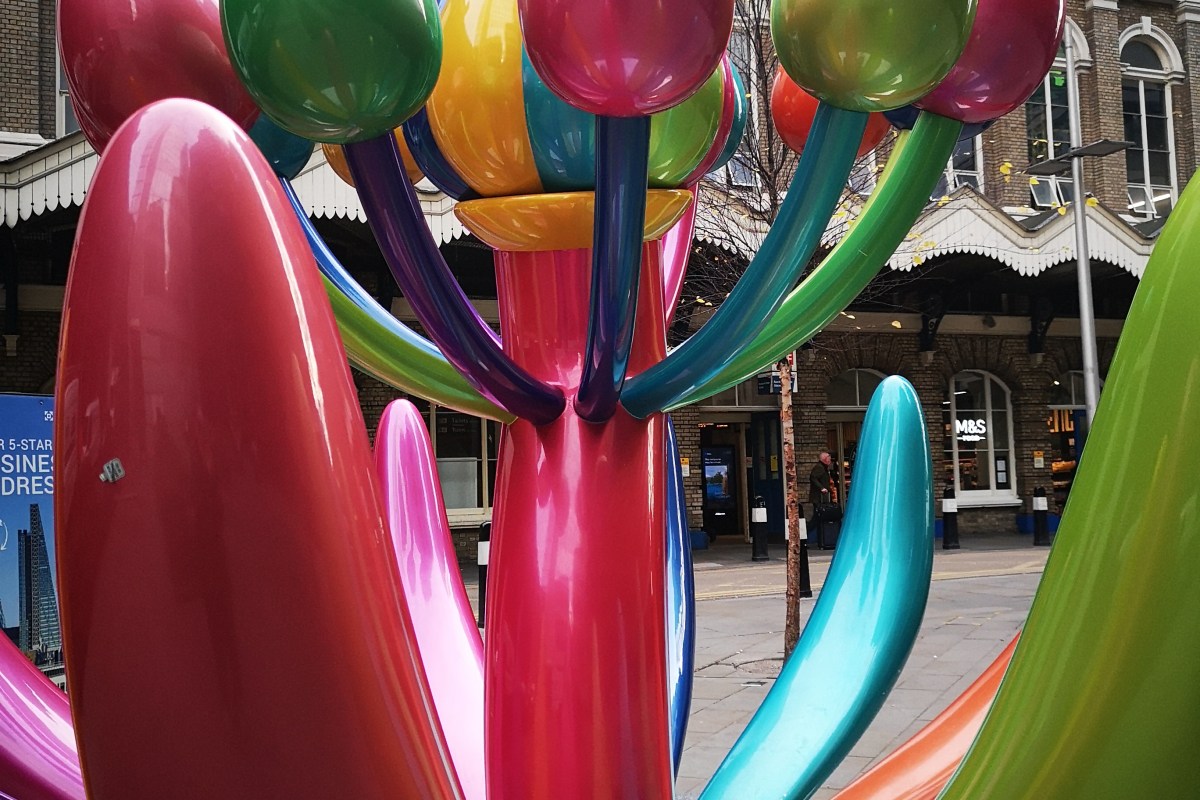
Choosing to dance

I’m at the point in the research where I’m actually drafting the questions to ask people, and it’s exciting yet it also feels a little sad. It’s a reminder that actually doing things you want to do and care about risks messing things up and dealing with messy reality but it is good to push through that for the same reasons. It has felt like a dance between ideas and reality, the literature and exploring peoples’ lived experience as well as between myself as a researcher and the people I’m asking questions of.

It feels a bit sad because to choose is to pick some things and to leave others behind. Areas that I’m really interested in, that I think would be useful, where it seems like there’s a gap – they are getting cut. Sometimes it’s because they feel too far removed from the subject, that it doesn’t feel like it would help to provide responses that add up to a cohesive set of information. This also means that if I’m asking questions I don’t think I can clearly use the answers from, I’m not being respectful of people’s time by getting them to fill in survey responses I can live without. Some questions have similarly had to be culled because I think, even though they are closely related to the area, I’ve got too many questions overall to realistically expect people to complete a survey that long. Especially because, for the kind of number of people I need to complete the surveys, I’m relying on more than just my partner and a couple of friends completing it.

In that narrowing down, from the general broad-brush ideas to the very specific questions it means a lovely idea – which can be all of the myriad of good things I can imagine – becomes a distinct thing. That narrowing down means I have to let go of all kinds of possibilities, some of which I can envisage now and some of which might only become apparent later on down the line.

One of the things I love and find very bracing about Oliver Burkeman is his repeatedly coming back to the idea of the finitude of human life and how we’re always choosing what to put our time and energy into, even if it doesn’t feel like we’re choosing. That we can’t do all of the things, even as we might want to. And that even if we think we’re getting around this by just not deciding, that’s still kind of a decision, just not a proactive one. So it’s better to try and put as much of your time as possible into things that you actively care about rather than just putting things off or getting your faff on.

So it is that, as can often be the case, aspects which makes it feel sad are also what makes it feel exciting. Doing this work gives a strong sense that the work is moving into a different phase and becoming more real. Trying to translate the general concepts I want to explore and picking the words, weighing and testing them – is this too leading? How would I use the responses to that? Trying to come up with answers for survey responses that respect the plurality of views and contexts that people can have about their experiences of home and how they make decisions about things. Imagining the discussions that I would have with people, the kinds of responses that they might give, the worlds and experiences – many of them beautiful but, given home can for too many be a space of violence and insecurity, also experiences that can be difficult and upsetting for them to reflect upon. Thinking about the kinds of follow-up questions and how to frame things to try and give people the space to talk about things without putting words in to their mouth.

In thinking of the structure of the interview, that too feels like a dance – something created between myself and the person being interviewed. Thinking through the logistics and trying to imagine how it might feel to move from one area or question to another. Are there too many questions – and the other person will feel like they are getting rushed and crushed around? That I am stepping on their toes, rushing to talk over them or hurrying them along to try and get all of the questions covered. Is that going to create a stressful situation for both of us – as though we’ve got the dancing equivalent of sweaty hands or stepping on each others toes? Watching the clock and calculating the number of questions still go to rather than being fully engaged in what the person is saying. Considering what kind of time people need to give considered responses, while still being able to get through enough questions that I get a sense of the lay of the land for them. Helping them move through the discussion and also allowing myself to be changed by what they have to say. Reflections that someone might offer up resonate differently when thinking about them in the context of what others share.

The dance still isn’t done, the questions need to be reviewed and updated. Then I want to pilot them to see how they translate in practice. It could be I put my left leg out and then have to pull it right back in again, or it turns out I’ve got two left feet or some similarly mangled metaphor. Nonetheless, that feeling of exploring and continuing to turn ideas into action is the kind of dance I want to be doing all of my days…

If only ethics approvals came as standard

I’m getting ready to start the part of the research where I can talk to and question actual people – really very exciting indeed. As part of this process I have to put together the documentation setting out my approach to identifying and managing the ethics implications of the research. Particularly given what’s happening more widely in the world, I can’t help but think this is an approach which should be much more widely adopted.

Getting ethics approval seems to be equivalent in part to a risk assessment in a programme or project management context. Looking at what are the risks I think could arise when delivering the project and setting out how I propose to mitigate, manage or remove them. Putting together the risks means that you have to think through how the activity is going to unfold in more detail. Drawing upon past experience and guidance from other experts, a first pass is developed.

More broadly though, the fact it’s called an ‘ethics approval’ rather than a risk management one feels meaningful. The word ethics carries with it a weight and dignity, a sense of morality which is beautiful indeed. I’m sure there could be contexts in which the word gets used, or abused, in a way that makes it feel hollowed out. So far it hasn’t felt like that.

The ethics process beyond the risk management then involves trying to actively think about ways in which the research might be conducted in ways that are respectful of those who are involved in it. My research around the social and cultural aspects of home unsurprisingly doesn’t require the use of physical human materials but the form I have to fill in allows for that possibility. For those who are conducting research using those materials, it is right that they have to properly account for the ethical approaches to doing so that go beyond a narrow risk management approach.

In relation to my own research, there have been discussions about how the information I give to prospective participants is presented so it can be accessible and easy to understand for different audiences. We’ve also talked about recognising and valuing the time people are giving up to support the research and how I can make sure people feel like it’s being conducted in a safe way.

The draft ethics proposal is then reviewed by my supervisors and updated following their feedback. This gives an opportunity to learn from their experiences, get more insights into practicalities and best practice. The proposal is then submitted and considered, feedback given and amendments made as needed before it’s signed off by the Ethics Committee.

That sense of care, consideration and support feels very fortunate indeed. Everyone involved is trying to make the proposal better, trying to ensure I can do a good and safe piece of work and that participants are treated respectfully. This is my first ethics approval rodeo so perhaps I might feel less enamoured of it if I go through it more times.

Nonetheless, the contrast with how so many decisions are made in work, politics and life more generally has felt noticeable. The centring of ethics shouldn’t feel rare but it does. Of course in lots of situations it is there but more implied, or wrapped up in different language. As I suggested above, there are analogies with the risk assessment process but the tenor of the discussions in relation to the ethics proposal have felt different to the risk assessment ones I’ve been party to. The explicit nature of the reference matters though, it sets a frame for the discussions and an expectation about what the process is trying to do.

The collective input on the ethics proposal looks very different to much of what’s currently unfolding in the news. The cruelty and violence being unleashed with no respect and no plan, so many lives at the whim of one unhealthy, unethical man is brutal to watch. As Ian Dunt articulated, the normalising and sane-washing isn’t being checked by other forces, instead it is serving to feed the chaos further.

Of course history, and the present, are full of examples of situations where lots of people are involved in decision making and bad things still happen, so I don’t want to pretend it’s as simple as more oversight leading to a better decision. Those issues instead provide compelling arguments to try and have better, more meaningful and ethical approaches, giving space for the better angels of our nature to prevail.

Learning to read

Reading can be, if you’re lucky, an intuitive thing to do once you know how, offering an enjoyable private pleasure that opens you up to the world. Learning how to read when you already feel like you know how to read can, by contrast, feel like quite hard work.

With the PhD I’m getting to do lots of reading but it feels like I’m having to learn, or re-learn, how to read. I’ve long been an avid reader, as a child I would devour books. I’d go to the library on a Saturday morning and take out the maximum complement of eight books. They would usually all be read by the end of the weekend, often the end of Saturday. One year in school we had to write a book report for every book we read that year – I read over 100. As an adult, reading books was still a big part of what I enjoyed doing, even as I wasn’t reading many books in a year for quite a long time. Years ago I decided to set myself a challenge to read 52 books in a year – at that stage I was reading less than 20 a year. It took a few years to reach the target but having the target did encourage me to try harder and explore different ways to make time to read. The more I read the more I found it easier to find time to read as it once again became more normal and part of day to day life.

It’s a very intimate thing to spend time with a book. For both fiction and non-fiction it’s about allowing the author and their world and characters into your head and you into theirs. A way to become more connected to the world, to understand other people and yourself, exploring connections and perspectives. ‘If on a winter’s night a traveller’ by Italo Calvino takes the idea of reading and explores how it can connect us to the world. In lots of ways reading can be a solitary experience and he explores the enjoyment to be had in the rituals and anticipation of the pleasure to be found in a book, as well as the unexpected journeys books can take us on.

In work world, I was used to reading lots, or probably more accurately, scan reading lots on speedy journeys through lots of material. My undergraduate degree was in Law, so I was accustomed to being able to scan through large amounts of often complicated content to find the salient parts. In jobs I was used to doing the same, often whilst also being in, or Chairing a meeting, so my attention was very divided. Not a leisurely journey but just trying to navigate quickly through the environment and understand where there might be opportunities or lurking tricky situations.

I’ve always felt comfortable in my ability to read things quickly and extract some key points, albeit have long been aware of, and not liked, the way in which it feels like I can be a bit of an etch-a-sketch reader. That I can read something, enjoy it or be interested, but then struggle to retain much of it after I’ve finished. Being part of book clubs has been great for that. Having an opportunity to revisit the book and explore it, get different perspectives and have to try and justify my own views and emotions about a book helps to retain a bit more of that information. Getting to return to the information and use it to explain why I do or don’t think something is well explained or written, making sense of and analysing it rather than just repeating it.

That worry that I can be an etch-a-sketch reader feels like something that doesn’t sit with doing a PhD. If the point of doing a PhD is about trying to become an expert, taking the opportunity to go deep into the literature, scan reading seems out of kilter with that. That in skim reading I am just being too superficial and lazy. Then again, in trying to closely read and make notes on each article, it can be hard to work out if I’ve read ‘enough’. When I have looked up from whatever it is I’m reading to check in on my project plan and see how actual progress looks compared to the plan, it looks like it will take me many decades to even scrape the surface of the literature. There is plenty of guidance out there which suggests a close read isn’t necessary or optimal and sometimes it can be more efficient to re-read something later because it turns out to be key, rather than assuming everything is key and reading it in detail.

At the same time as having to re-learn how to read, I’m also recovering from concussion, so my brain is having to learn and re-learn lots of things. After concussion the brain is having to rewire itself to do things, going around the parts of the brain that are a bit bruised, having to learn new ways to do things it’s been used to do more effortlessly. It’s tiring and takes a lot more energy to do something more slowly and maybe not as well, or at least feeling like it’s not as good because the discomfort levels are higher. The concussion has meant I’ve not been writing as much, or doing as much of lots of other things, as I would usually do.

It’s felt a lot like that in trying to learn to read differently too. Something that I’m used to do quickly and effortlessly, more or less, has been feeling slow. I’ve been putting off reading because of the classic worry that I won’t ‘do it right’, which then means that I’m not giving myself as many chances to practice and learn – to re-train my brain.

In a world where editing out friction is a big part of the sales-pitch of websites and apps, technology and processes, actively seeking out friction and trying to do difficult things can feel disproportionately harder than it actually is. I’m also aware of, and have found useful, lots of online resources for people studying a PhD to learn tools and tricks. So I’m constantly bashing up against the sense that I ‘could’ and ‘should’ be better at this than I am – further highlighting how slow I am.

I think what’s helped is coming to see that I’m looking to get a sense of the landscape rather than map every microbe. Trying to understand where there is fertile soil, areas that are densely populated and those which are little travelled, or perhaps approached from one direction but there might be paths to and from that part which haven’t been traversed. I’m not looking to map every blade of grass, every piece of bark on every tree. Stepping away from that level of detail to try and get more of a sense of how different things connect. Trusting that I can still make my way through the landscape, and understand myself in relation to that landscape, without having to account for each leaf on each tree.

The other aspect that has particularly shifted in the way I read, is now more actively getting a sense of myself in that landscape, rather than seeing myself as a passive viewer of it. When reading books before, whether fiction or non-fiction, it would feel like there would be some dialogue between myself and the author(s). Perhaps it might be the tone or a turn the story or a character took in fiction that I found myself reacting against. In non-fiction that sense of things being revealed, deepening my understanding, shifting my views or giving them more nuance or connections to other disciplines, ideas or events. And having the opportunity to discuss those views in book clubs or elsewhere meant I was still exploring them, just that for much of the time it felt like I was not a part of those discussions.

In trying to learn how to read for my PhD I’ve been reminded of the the first time I wore my lovely long-distance prescription sunglasses. It took over twice the time to walk home as the sights I could now see blew my mind. I loved that walk, and being shown the world anew. I was astonished that everyone else who could presumably see as well as I now could wasn’t also doing the same. In time that sense of wonder shifted, still there in that way, and available for me to dip into, but not something that I needed to do all of the time. That I could go about my business with a deeper appreciation and sense of ease when moving through the world.

Now when I’m wearing my prescription sunglasses and being able to see things that are far away, I can still enjoy it, revel in it but I can slip into and out of different modes of seeing. Sometimes that detail is front of mind and all I can focus on and that’s lovely. Other times, it’s a quiet background hum and instead I’m able to see the view, take in the overall scene. That ability to shift my focus with the reading, to sometimes place myself in the moment or go into lots of detail and at other times to step back is something that is taking a while, will likely continue to take a while, to learn. It’s likely to be slow, or slower than I think it could or should be to learn. Likely to continue feel frustrating but hopefully continues to make my world feel richer and more resplendently detailed, while helping me to get a better sense of the overall lay of the land.

Half-price posters at the Union

Every discipline or work area has it’s own activities and customs. Things which seem normal and are understood to those who are part of that world, that create a sense of belonging and give a shared vocabulary.

Moving into academia means I’m constantly discovering new ways of working or things which are part of this world that were previously unknown to me. There are plenty of situations where that sense of not knowing can feel stressful and hard, luckily so far it just feels novel and a sign of how different the world is that I’m discovering these things.

At a recent conference, during the break, one of the Professors said he was going to see the posters and invited me to go with him to have a look.

My immediate thought was that there was a half price poster sale at the Union and we were going to see. Which seemed incongruous but why not, they can be very good value.

Turns out we were going to see posters made by the people presenting at the conference, displayed as a kind of exhibition. Posters are ‘a thing’ it transpires in academia. The act and art of making a poster is a way to convey a lot of information about the project to people. It needs to be concise – both verbally and visually for people to be able to easily navigate into the project.

There can be competitions at those kind of events as to who has the best poster. So the poster itself becomes something that people try to do well, beyond and alongside the communication about the project.

I had various chats with people who are more in this world about posters, and they talked about the challenges of putting together a poster. From the difficulties of being able to find a good printer to be able to print off an A1 poster, to the need to have one on hand so that if an event appears at short notice then you’ve got a poster ready to go. I went to put need in that previous sentence into quotes, and even doing that I realised how I’m not yet in that realm – for those who are more embedded it’s as much of a need as lots of other things might seem to be for me.

Navigating through a world that feels very different to ones you’ve known before is an amazing opportunity, and I constantly feel like Alice through the looking glass. In this situation it was an easy and fun one to discover. It struck me both how improbable the transition is, with this serving as another point of difference to my previous work, whilst also reminding me how hard it can be to explore Rumsfeld’s unknown unknowns.

Separated by a common language

In making the shift from policy and delivery to academia, I definitely wanted, want, to try and share the learning as I go. Keep the connections up with those I worked with in what now feels like a whole other lifetime. Make sure the work that I’m doing is useful and can help to increase the considered and urgently needed action. Share the fascinating research that lots of colleagues in the sector would be interested in, find useful and are probably unaware of. Helping to find ways to avoid the groups from talking about the same things in different ways and often not to or with each other.

I’ve asked around around for ideas on how I can share the learning as I go – glazed expressions on all sides when I say this.

Policy and delivery people don’t seem to have any frame of reference for this concept. Which I can’t be surprised by. I’m unable to think of many examples from my own experience in policy and delivery to draw upon. A previous organisation I was at explored doing an Area of Research Interest in the subject I was working on but the decision was taken not to proceed. Given we had found it hard to identify something suitable that both needed to be done and could justify time, yet could wait at least 6 months until it was done, it was hard to argue with that. Academic work can feel too abstract, too wrapped up in complicated, impenetrable language for many people in policy or delivery roles to engage with

On the academia side of things, when I asked one of the Professor’s at my Uni about external activities, networks and dissemination he said it was the first time he had been asked that by any student. That said, there is some work going on trying to bridge the gap and I’m keen to get in amongst it where it is possible and seems to make sense to do so.

There’s still plenty of disconnects though. So much great research I’ve seen, which I’m obviously not going to name, is seemingly aimed at policy makers. Referencing policy implications either directly in the title of the piece or within the framing of the article. Yet it’s really hard to see what the recommendations are, beyond the classic more research is needed. Setting aside the fact that lots of articles include or present content in ways which don’t seem aimed at policy makers, I’m only scratching the surface of the work that’s been done and yet there are very few pieces I’ve read which make it clear what they think the policy implications are of the work. Of course there are lots of reasons why that might be the case, from a reluctance of academics to be seen to be political or proscriptive, to not feeling comfortable asserting something unless it’s clearly evidenced. Yet policy makers have to take action and make decisions, even when they are dealing with imperfect information.

I’ve not yet found a clear template for how I can share as I go, how I can help to bridge the gap. So it’s a question of exploring and seeing, trying and connecting up with others. Looking at where and how I can start to make that intention true. What existing things are a good fit and where I can helpfully add to those or where I can make my own. Let’s see…