The Anna Karenina principle?

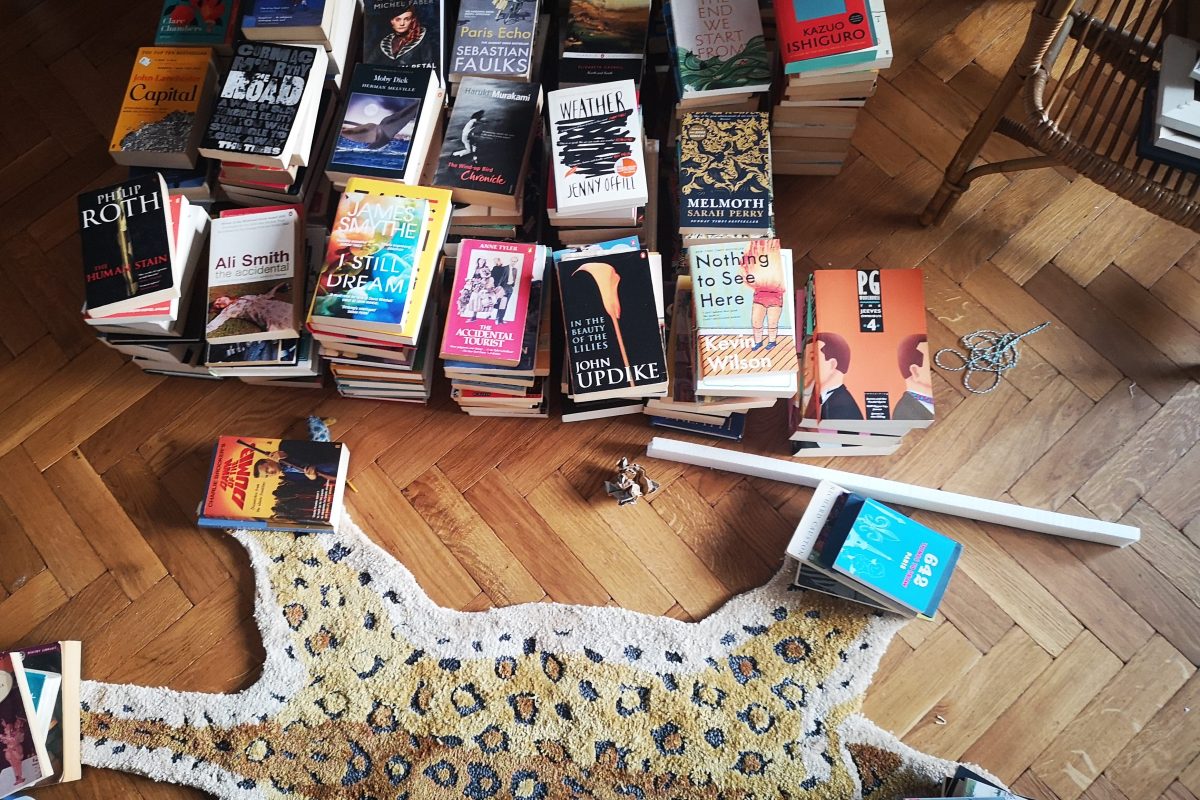
I was reminded of the Tolstoy quote from Anna Karenina that ‘All happy families are alike; every unhappy family is unhappy in its own way’ when thinking about the surprising absence so far in the novels I’m reading for my PhD. One of the strands of my research is looking at existing materials to try and get a perspective on homes and how they’ve been represented, what the view is on how to improve them or just what ‘good’ looks like. As part of this I’ve read a few novels, and have still lots more to read but I’ve been surprised not to have found many examples of ‘the ideal home’, or even ones which are very happy yet. In remembering the Tolstoy quote it made me wonder if there’s something inherent in novels that explains this lack, or whether it’s more a reflection of my limited reading so far.

The Anna Karenina principle takes the idea from Tolstoy and applies it more broadly, holding that there is only one way to achieve success in that the key factors need to be in place, but there are countless ways to fail. This principle has been applied in contexts as diverse as ecology, banking and the domestication of animals.

Turning to the novels, there are a few slightly oblique glimpses of homes that seem to be happy. The couple who have their home and themselves attacked by Alex and his droogs in Anthony Burgess’s ‘A clockwork orange’; the family home of one of the main characters in ‘Glass Houses’ by Francesca Reece – although that’s more how it is represented or seen through the eyes of a visitor than by the occupants. Maybe some traces in the Elizabeth Gaskell novel ‘Cranford’ – but even there it isn’t straightforward because of the financial concerns of many of the protagonists. Alice’s home in Sarah Moss’s ‘The Fell’ has some details in there about how she takes comfort from details around the place, yet there is also a real sense of her isolation as she is recovering from cancer alone in a time of pandemic.

Looking at the list of novels I’m still yet to explore, none of them jump out at me as being about homes that are harmonious, idyllic refuges. I might find some more representations of that in the surrounding characters but the central premise of many of the books is about the home as a site of, or representation of, things falling apart, disconnection and sadness.

Perhaps this is because fiction tends to have a narrative drive at the heart of it. A tension which needs to be resolved somehow, and so happiness can be less easy to place there because the ‘happy ever after’ is the end not the through-line. That there is something implied about unhappiness being ‘news’ or a step away from the norm of a happy home. The novel is then a way to show how the world could be, and is for many others with all of the pain and darkness that can bring. Allowing us to understand something we might not experience ourselves.

Or could it be that the home as an unhappy or unsafe place works as a plot device because it immediately enables the reader to compare the context to the idea and ideal of home. A difficult home context allows the reader to get a sense of the protagonist being in a bad place. This can make them more sympathetic to the character. It also makes it understandable the character would be seeking a way to improve their situation in a way the writer doesn’t need to explain as much as they might for some other choices or needs.

Of course it could also be because writers don’t see enough happy homes around the place to make them feel believable or true. Writing novels can be a way to draw attention to things that aren’t right. To reflect back things society needs to or isn’t engaging with. From Dickens and Hardy in Victorian times to the novels of the 2020’s, art and culture can offer insights to lives that are beyond our own, and empathy for them which makes taking action necessary. For the novels of the 2020’s on my reading list, without even having read most of them there’s a clear theme emerging around how precarious housing can be. From Ella Frears’ ‘Goodlord’ which takes the form of an extended email to an unscrupulous estate agent to Megan Nolan’s ‘Ordinary human failings’ about families in temporary accommodation, to the 2024 novels ‘I see buildings fall like lightning’ by Keiran Goddard and ‘The lodgers’ by Holly Pester, about a housing estate and the UK housing crisis respectively.

That leaves me wondering if it’s less of a surprise I’m not finding more happy homes in the novels. While the quote from Tolstoy helped shape that sense of surprise, the principle doesn’t feel quite right in terms of the view of home. It’s true that even in the 14 novels I’ve read so far I’ve loved the diversity of style, tone and characters – a huge range even as the subject itself remains fixed and the homes are largely unhappy. Yet while there are lots of commonalities in the factors constituting a happy home, the plurality of ways a good home can be made seems to undermine the principle from that direction.
Echoes across the pages

Spoiler alert: this piece is about the endings of two novels ‘Glass Houses’ by Francesca Reece and ‘Rebecca’ by Daphne du Maurier.

As part of my PhD I’m reading, watching, looking at and visiting cultural materials and buildings, museums and houses to get different perspectives on home. It isn’t surprising that I would start to see echoes between them but I was a bit surprised that burning down the house would be an early contender.

I’ve just finished reading ‘Glass Houses’ by Francesca Reece – about Geth and Olwen – a couple of people from North Wales who were connected as children and then reconnect as adults. The book is set in and around a house – Ty Gwydr, which for Geth isn’t a place he owns but feels like it is his, and that Olwen and her husband briefly own and creates a place for them to reunite. At the end of the novel it implies that Geth sets fire to the house but we never explicitly see this. Having recently read ‘Rebecca’ by Daphne du Maurier, that links back to the end of the novel where the implication is that Manderley has been set on fire. We don’t directly see the flames but the red sky and falling ash clearly suggest that is what is happened.

In both stories the home is a place of memories but also becomes, for those who decide to burn down the house – Geth and it seems Mrs Danvers in ‘Rebecca’ – a place that reminds them of a future they can no longer have. For Geth, it seems clear that Olwen chose to stay with her husband James, rather than leave him for Geth. There’s something about not being able to be with the only person he’s ever loved in that way. For Olwen, when thinking about telling James she wants to end things, she says something about it never being about not loving him, even as she clearly has very strong feelings for Geth. So there’s a difference in terms of the space that the other has in their lives and what that relationship means for each of them in terms of the possibility of love. There is also something about what the relationship would open up or close down for each of them. For Geth, there’s a suggestion of the relationship with Olwen allowing him to live in different ways – partly that he might get to live in the house he’s come to think of as his own. But also perhaps a life that goes beyond the area he grew up in. That he knows everyone and is a kind of big fish in a small pond there, and while that’s comfortable, Olwen offers him a chance to go beyond that. For Olwen it would be more of a narrowing down – financially she would be leaving someone who is very rich for someone who definitely isn’t. But more than it’s also someone who moves through the world in a quite different way – Geth is perhaps less comfortable in some situations than James is.

The ending of the stories serves to makes the home more of a character – a place that has held and facilitated ways of being in the present, as well as a holder of memories. Something that acts upon people as well as being acted upon. In Rebecca I was surprised by how the destruction of Manderley didn’t seem to have quite freed up the de Winter’s in the way the oppressive nature of Manderley, and Mrs Danvers, had seemed to suggest it might have done. For Geth though, it’s less clear what might become of him once the house is burned down and there’s presumably an investigation. Olwen and James seem to still be together and had planned to sell the house – their second home. So while they will be somewhat affected, given their wealth and decision to leave and sell, the impact for them is likely to be much more cushioned.

For both Geth and Mrs Danvers, there’s a sense they are trying to take control of a situation that is beyond their control. That the choices they wanted have become impossible for them, in Olwen staying with James and with the death of the first Mrs de Winter. It’s hard then to imagine what they can do, how they can be, and so they kick out and bring down the house which epitomises that. It’s a narrow kind of control because it can’t get them what they want but it can at least take them further away from their lost chances and so it’s understandable that might feel like the only choice they have now.

I’ve still got lots more books to read so I’m interested as to whether there will be more stories of the house burning down to end it all. As a plot device, burning down the house has a finality to it so I can see why it would be something that authors might reach for. A way to draw a line under what has happened and show that a situation, or way of being or seeing the world is now no longer possible. It serves to heighten the emotions of those who destroyed the homes physically, while showing how others might have destroyed the meaning of the home in other ways already.

Learning to read

Reading can be, if you’re lucky, an intuitive thing to do once you know how, offering an enjoyable private pleasure that opens you up to the world. Learning how to read when you already feel like you know how to read can, by contrast, feel like quite hard work.

With the PhD I’m getting to do lots of reading but it feels like I’m having to learn, or re-learn, how to read. I’ve long been an avid reader, as a child I would devour books. I’d go to the library on a Saturday morning and take out the maximum complement of eight books. They would usually all be read by the end of the weekend, often the end of Saturday. One year in school we had to write a book report for every book we read that year – I read over 100. As an adult, reading books was still a big part of what I enjoyed doing, even as I wasn’t reading many books in a year for quite a long time. Years ago I decided to set myself a challenge to read 52 books in a year – at that stage I was reading less than 20 a year. It took a few years to reach the target but having the target did encourage me to try harder and explore different ways to make time to read. The more I read the more I found it easier to find time to read as it once again became more normal and part of day to day life.

It’s a very intimate thing to spend time with a book. For both fiction and non-fiction it’s about allowing the author and their world and characters into your head and you into theirs. A way to become more connected to the world, to understand other people and yourself, exploring connections and perspectives. ‘If on a winter’s night a traveller’ by Italo Calvino takes the idea of reading and explores how it can connect us to the world. In lots of ways reading can be a solitary experience and he explores the enjoyment to be had in the rituals and anticipation of the pleasure to be found in a book, as well as the unexpected journeys books can take us on.

In work world, I was used to reading lots, or probably more accurately, scan reading lots on speedy journeys through lots of material. My undergraduate degree was in Law, so I was accustomed to being able to scan through large amounts of often complicated content to find the salient parts. In jobs I was used to doing the same, often whilst also being in, or Chairing a meeting, so my attention was very divided. Not a leisurely journey but just trying to navigate quickly through the environment and understand where there might be opportunities or lurking tricky situations.

I’ve always felt comfortable in my ability to read things quickly and extract some key points, albeit have long been aware of, and not liked, the way in which it feels like I can be a bit of an etch-a-sketch reader. That I can read something, enjoy it or be interested, but then struggle to retain much of it after I’ve finished. Being part of book clubs has been great for that. Having an opportunity to revisit the book and explore it, get different perspectives and have to try and justify my own views and emotions about a book helps to retain a bit more of that information. Getting to return to the information and use it to explain why I do or don’t think something is well explained or written, making sense of and analysing it rather than just repeating it.

That worry that I can be an etch-a-sketch reader feels like something that doesn’t sit with doing a PhD. If the point of doing a PhD is about trying to become an expert, taking the opportunity to go deep into the literature, scan reading seems out of kilter with that. That in skim reading I am just being too superficial and lazy. Then again, in trying to closely read and make notes on each article, it can be hard to work out if I’ve read ‘enough’. When I have looked up from whatever it is I’m reading to check in on my project plan and see how actual progress looks compared to the plan, it looks like it will take me many decades to even scrape the surface of the literature. There is plenty of guidance out there which suggests a close read isn’t necessary or optimal and sometimes it can be more efficient to re-read something later because it turns out to be key, rather than assuming everything is key and reading it in detail.

At the same time as having to re-learn how to read, I’m also recovering from concussion, so my brain is having to learn and re-learn lots of things. After concussion the brain is having to rewire itself to do things, going around the parts of the brain that are a bit bruised, having to learn new ways to do things it’s been used to do more effortlessly. It’s tiring and takes a lot more energy to do something more slowly and maybe not as well, or at least feeling like it’s not as good because the discomfort levels are higher. The concussion has meant I’ve not been writing as much, or doing as much of lots of other things, as I would usually do.

It’s felt a lot like that in trying to learn to read differently too. Something that I’m used to do quickly and effortlessly, more or less, has been feeling slow. I’ve been putting off reading because of the classic worry that I won’t ‘do it right’, which then means that I’m not giving myself as many chances to practice and learn – to re-train my brain.

In a world where editing out friction is a big part of the sales-pitch of websites and apps, technology and processes, actively seeking out friction and trying to do difficult things can feel disproportionately harder than it actually is. I’m also aware of, and have found useful, lots of online resources for people studying a PhD to learn tools and tricks. So I’m constantly bashing up against the sense that I ‘could’ and ‘should’ be better at this than I am – further highlighting how slow I am.

I think what’s helped is coming to see that I’m looking to get a sense of the landscape rather than map every microbe. Trying to understand where there is fertile soil, areas that are densely populated and those which are little travelled, or perhaps approached from one direction but there might be paths to and from that part which haven’t been traversed. I’m not looking to map every blade of grass, every piece of bark on every tree. Stepping away from that level of detail to try and get more of a sense of how different things connect. Trusting that I can still make my way through the landscape, and understand myself in relation to that landscape, without having to account for each leaf on each tree.

The other aspect that has particularly shifted in the way I read, is now more actively getting a sense of myself in that landscape, rather than seeing myself as a passive viewer of it. When reading books before, whether fiction or non-fiction, it would feel like there would be some dialogue between myself and the author(s). Perhaps it might be the tone or a turn the story or a character took in fiction that I found myself reacting against. In non-fiction that sense of things being revealed, deepening my understanding, shifting my views or giving them more nuance or connections to other disciplines, ideas or events. And having the opportunity to discuss those views in book clubs or elsewhere meant I was still exploring them, just that for much of the time it felt like I was not a part of those discussions.

In trying to learn how to read for my PhD I’ve been reminded of the the first time I wore my lovely long-distance prescription sunglasses. It took over twice the time to walk home as the sights I could now see blew my mind. I loved that walk, and being shown the world anew. I was astonished that everyone else who could presumably see as well as I now could wasn’t also doing the same. In time that sense of wonder shifted, still there in that way, and available for me to dip into, but not something that I needed to do all of the time. That I could go about my business with a deeper appreciation and sense of ease when moving through the world.

Now when I’m wearing my prescription sunglasses and being able to see things that are far away, I can still enjoy it, revel in it but I can slip into and out of different modes of seeing. Sometimes that detail is front of mind and all I can focus on and that’s lovely. Other times, it’s a quiet background hum and instead I’m able to see the view, take in the overall scene. That ability to shift my focus with the reading, to sometimes place myself in the moment or go into lots of detail and at other times to step back is something that is taking a while, will likely continue to take a while, to learn. It’s likely to be slow, or slower than I think it could or should be to learn. Likely to continue feel frustrating but hopefully continues to make my world feel richer and more resplendently detailed, while helping me to get a better sense of the overall lay of the land.