The power of one

For all of the talk of relational approaches to increasing the take-up of energy or environmental measures, I was struck when hearing a friend’s recent account of home renovations about the limits to that approach.

Talking about my PhD can often lead to reflections from people about their own homes and experiences. One friend talked about how their plumber had done some research and come to the conclusion that heat pumps didn’t work unless the home is really well insulated. On that basis my friends ended up going ahead and getting their ailing boiler replaced with a new one, with lots of attendant disruption to have a more efficient system put in. They also had a builder who didn’t understand building physics and hadn’t raised any concerns when my friends wanted some air bricks covered up as part of works to replaster and repaint walls.

Had my friends got a plumber who had investigated and come to a different view, which is quite possible given the increasing number of use cases that are coming online of heat pumps performing well in inefficient buildings, they might have been persuaded to have a heat pump. Similarly, had they got a builder who had a better understanding of building physics, when there was a discussion about covering over air vents the builder should have raised the ventilation point. The builder might have explained the premise of the ventilation strategy the home was built with and suggested some alternative options if they did still decide to cover them over. They could also have suggested mitigations in rooms where previous owners had already covered over or removed air vents. Instead my friends randomly found out about the ventilation approach because the algorithm served up some information.

That reliance on others who are seeming experts and placing trust in their views is very in keeping with a relational approach. This holds that we make decisions on the basis of how the home will be for those we care about but also that trades-people can have a big impact on the choices people make. However these examples from my friends also seems to suggest it really depends who you get and there’s an element of luck in that currently. In the absence of requirements or an environment where information about how homes work is a foundational part of being a trades-person, for a relational approach to energy to work for good performance outcomes a higher basic level of knowledge is needed.

It was another reminder of how far away we are from that baseline situation now and how normal it is that builders don’t consistently have, or need to have, a holistic level of knowledge. There were lots of ways in which the builder seemed to have done a good job but those were in aspects that were more visible to my friends than the potential impact of closing up the ventilation would be, at least in the short term. If it is incumbent upon non-experts to be in a position to challenge experts that seems to be a situation which is unlikely to drive good behaviours, isn’t realistic or fair on those who are getting the work done and leads to a situation that looks much like the one we have now.

This suggests the relational approach can be important in helping people make decisions and there’s something valuable in focusing on that as a route to reach people. However, without improving the underpinning levels of knowledge it feels like there’s a real risk that approach will end up perpetuating the idea the building trade can’t be trusted and does poor work – this time more explicitly in relation to energy or environmental measures. In a sector which has issues around the quality of work done through government and energy obligation funded schemes, widening the range of tenures mistakes get made in doesn’t feel ideal. Finding a way to have improvements in generating demand – for instance through the relational approach – going hand in hand with work to improve the quality of the supply chain feels like a way to try and sustainably address issues in the round.

The Anna Karenina principle?

I was reminded of the Tolstoy quote from Anna Karenina that ‘All happy families are alike; every unhappy family is unhappy in its own way’ when thinking about the surprising absence so far in the novels I’m reading for my PhD. One of the strands of my research is looking at existing materials to try and get a perspective on homes and how they’ve been represented, what the view is on how to improve them or just what ‘good’ looks like. As part of this I’ve read a few novels, and have still lots more to read but I’ve been surprised not to have found many examples of ‘the ideal home’, or even ones which are very happy yet. In remembering the Tolstoy quote it made me wonder if there’s something inherent in novels that explains this lack, or whether it’s more a reflection of my limited reading so far.

The Anna Karenina principle takes the idea from Tolstoy and applies it more broadly, holding that there is only one way to achieve success in that the key factors need to be in place, but there are countless ways to fail. This principle has been applied in contexts as diverse as ecology, banking and the domestication of animals.

Turning to the novels, there are a few slightly oblique glimpses of homes that seem to be happy. The couple who have their home and themselves attacked by Alex and his droogs in Anthony Burgess’s ‘A clockwork orange’; the family home of one of the main characters in ‘Glass Houses’ by Francesca Reece – although that’s more how it is represented or seen through the eyes of a visitor than by the occupants. Maybe some traces in the Elizabeth Gaskell novel ‘Cranford’ – but even there it isn’t straightforward because of the financial concerns of many of the protagonists. Alice’s home in Sarah Moss’s ‘The Fell’ has some details in there about how she takes comfort from details around the place, yet there is also a real sense of her isolation as she is recovering from cancer alone in a time of pandemic.

Looking at the list of novels I’m still yet to explore, none of them jump out at me as being about homes that are harmonious, idyllic refuges. I might find some more representations of that in the surrounding characters but the central premise of many of the books is about the home as a site of, or representation of, things falling apart, disconnection and sadness.

Perhaps this is because fiction tends to have a narrative drive at the heart of it. A tension which needs to be resolved somehow, and so happiness can be less easy to place there because the ‘happy ever after’ is the end not the through-line. That there is something implied about unhappiness being ‘news’ or a step away from the norm of a happy home. The novel is then a way to show how the world could be, and is for many others with all of the pain and darkness that can bring. Allowing us to understand something we might not experience ourselves.

Or could it be that the home as an unhappy or unsafe place works as a plot device because it immediately enables the reader to compare the context to the idea and ideal of home. A difficult home context allows the reader to get a sense of the protagonist being in a bad place. This can make them more sympathetic to the character. It also makes it understandable the character would be seeking a way to improve their situation in a way the writer doesn’t need to explain as much as they might for some other choices or needs.

Of course it could also be because writers don’t see enough happy homes around the place to make them feel believable or true. Writing novels can be a way to draw attention to things that aren’t right. To reflect back things society needs to or isn’t engaging with. From Dickens and Hardy in Victorian times to the novels of the 2020’s, art and culture can offer insights to lives that are beyond our own, and empathy for them which makes taking action necessary. For the novels of the 2020’s on my reading list, without even having read most of them there’s a clear theme emerging around how precarious housing can be. From Ella Frears’ ‘Goodlord’ which takes the form of an extended email to an unscrupulous estate agent to Megan Nolan’s ‘Ordinary human failings’ about families in temporary accommodation, to the 2024 novels ‘I see buildings fall like lightning’ by Keiran Goddard and ‘The lodgers’ by Holly Pester, about a housing estate and the UK housing crisis respectively.

That leaves me wondering if it’s less of a surprise I’m not finding more happy homes in the novels. While the quote from Tolstoy helped shape that sense of surprise, the principle doesn’t feel quite right in terms of the view of home. It’s true that even in the 14 novels I’ve read so far I’ve loved the diversity of style, tone and characters – a huge range even as the subject itself remains fixed and the homes are largely unhappy. Yet while there are lots of commonalities in the factors constituting a happy home, the plurality of ways a good home can be made seems to undermine the principle from that direction.

A time capsule

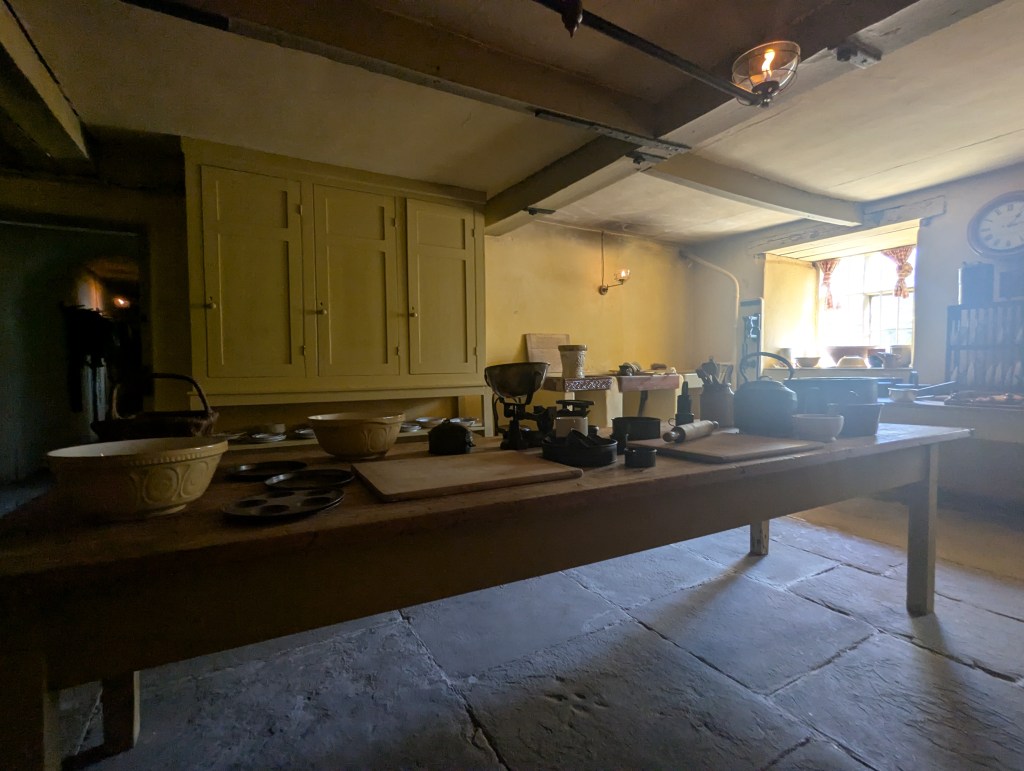
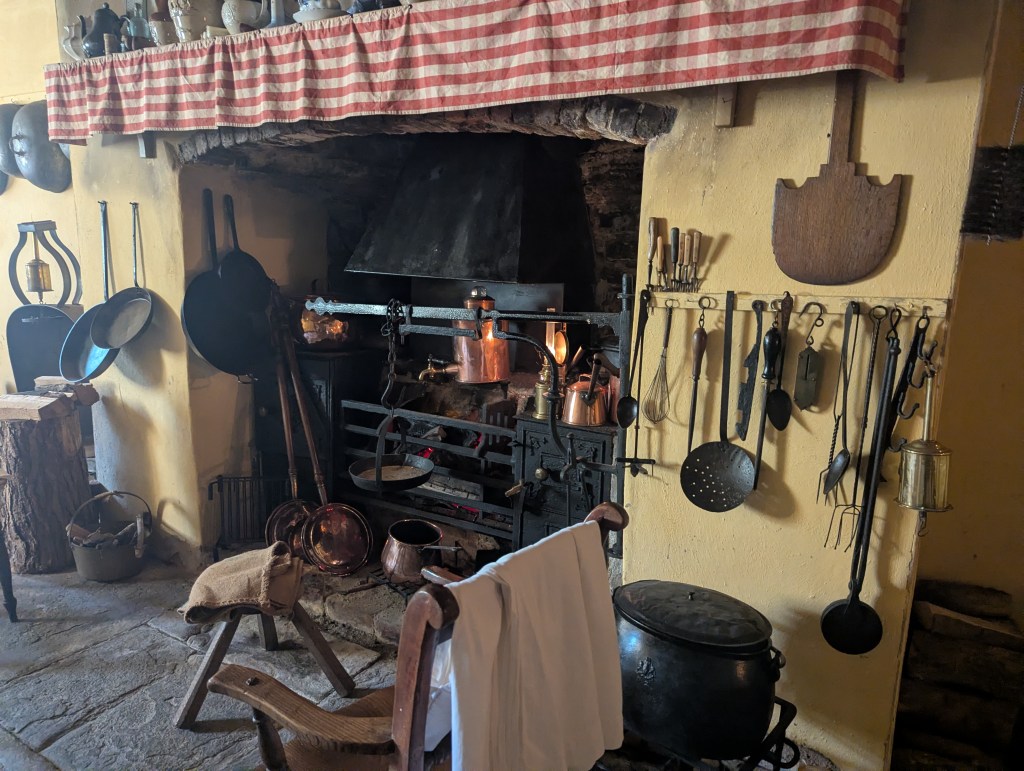
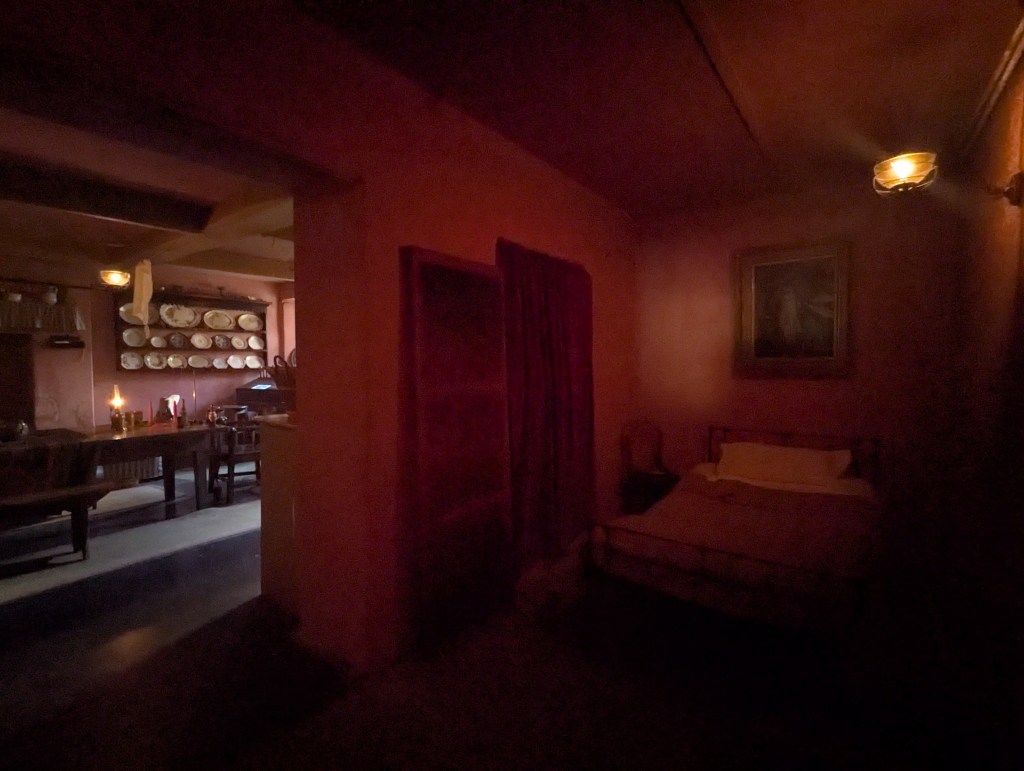
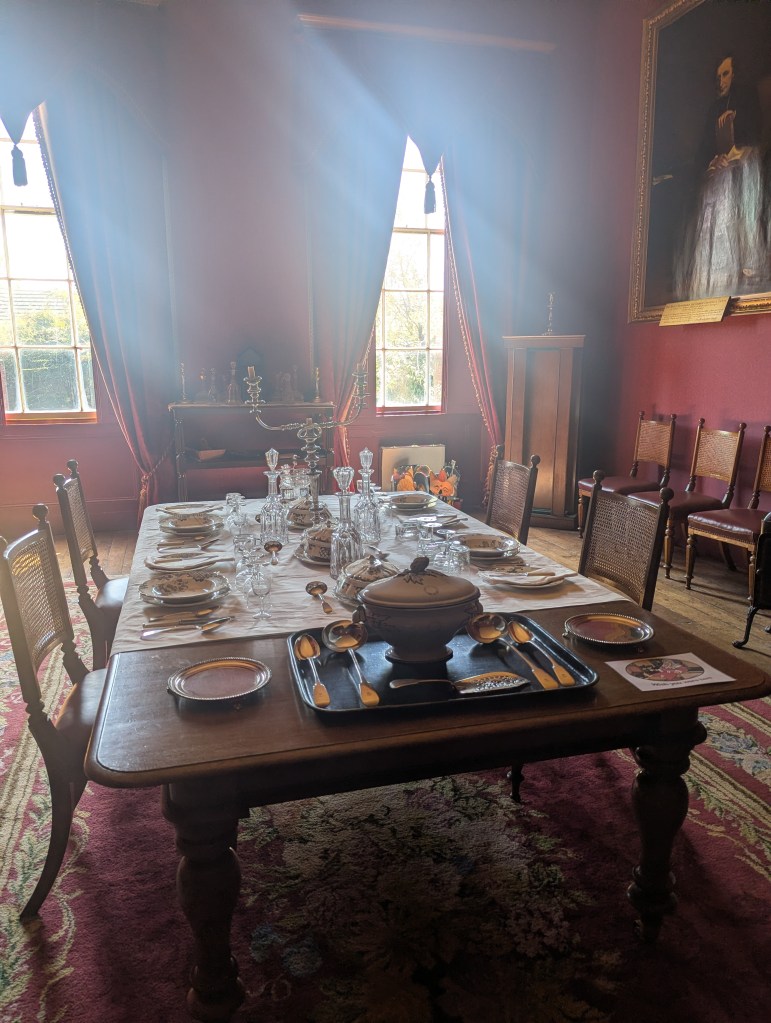
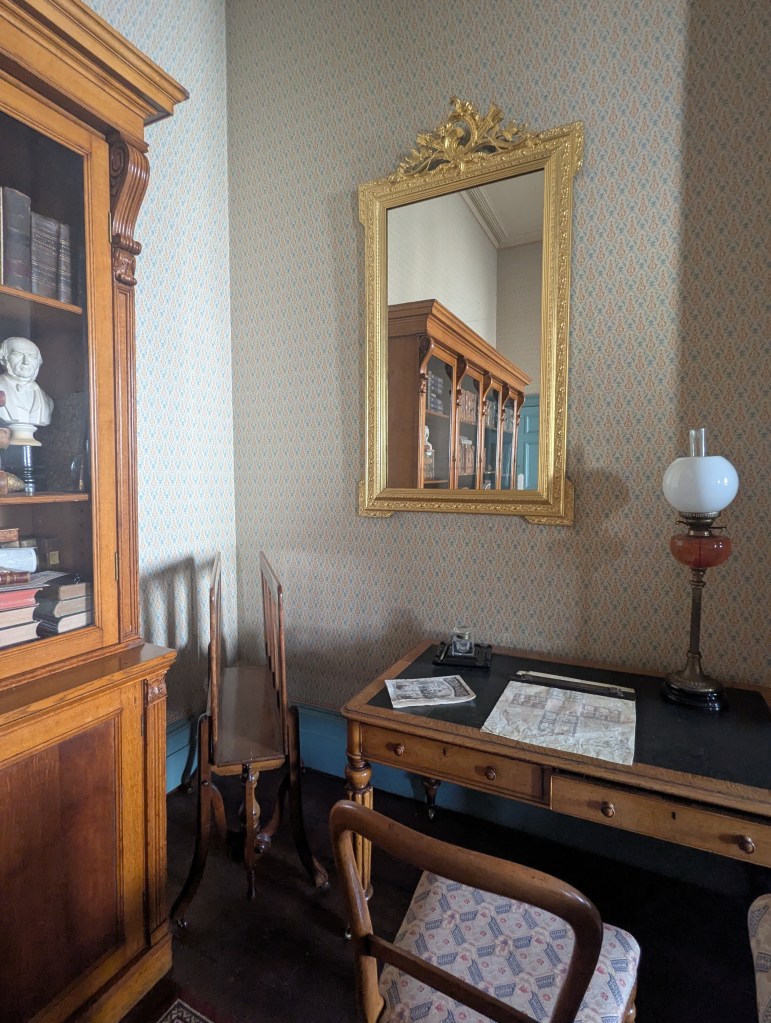
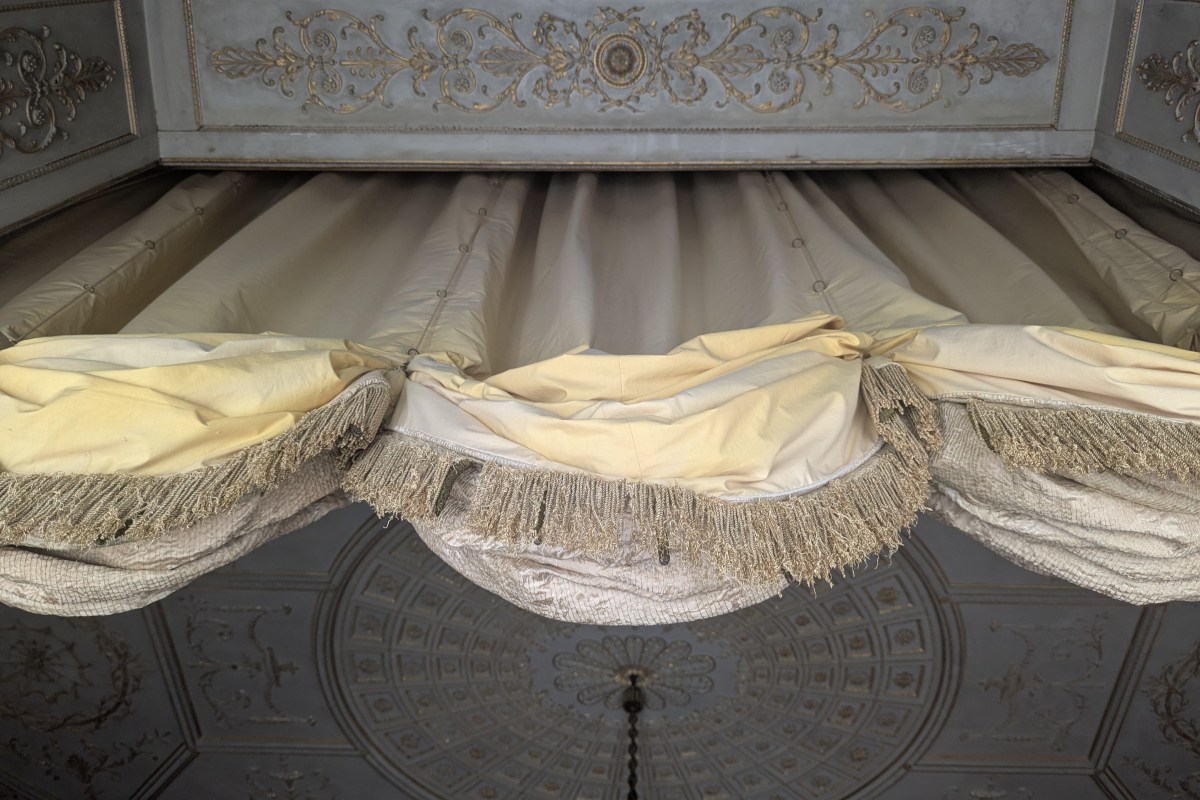
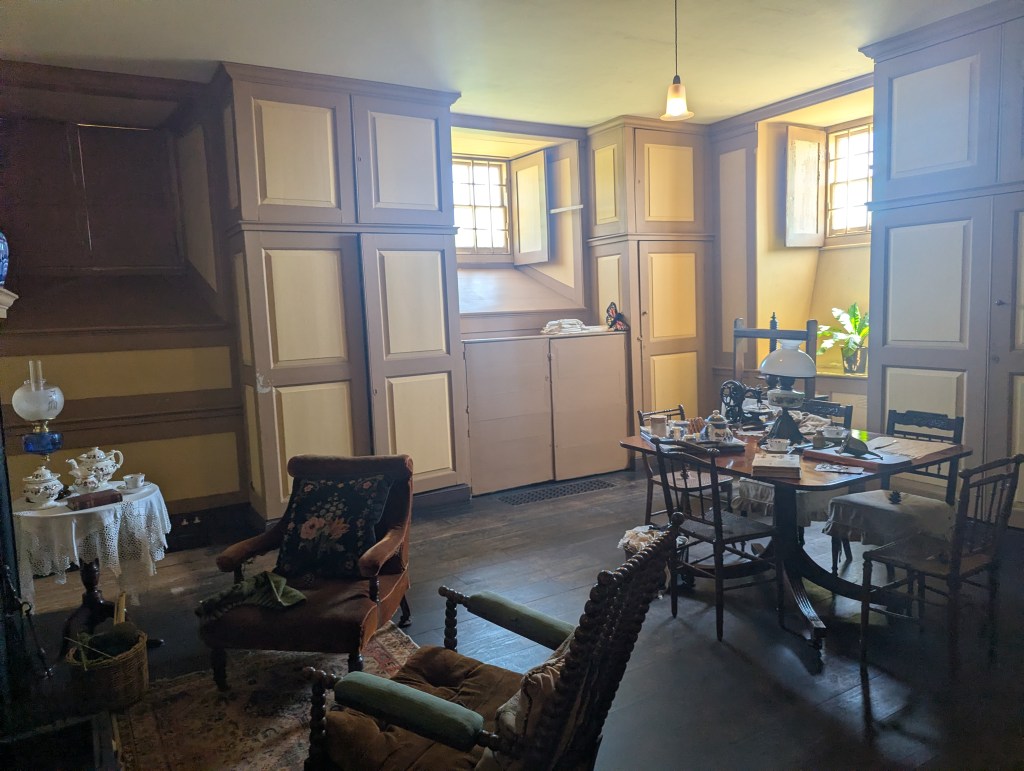
My latest study visit took me to Sambourne House, the family home of Linley Sambourne, the artist and Chief Cartoonist for Punch magazine that has been preserved almost untouched. The space has become a show home but still feels very lived in. It gives an insight into Victorian life and particularly for that of a family with an artistic disposition. The house shows how homes can absorb the influences and advances of the time, and yet still allow people to express their own tastes.

The house reflects the ‘House Beautiful’ aesthetic of the time – this saw a reaction to mass produced products, favouring the handmade and recognising the value of furniture and furnishings as artworks. The style tends to include lots of natural motifs and more muted colours – which can be seen throughout the house in the colours and designs, including William Morris wallpapers.

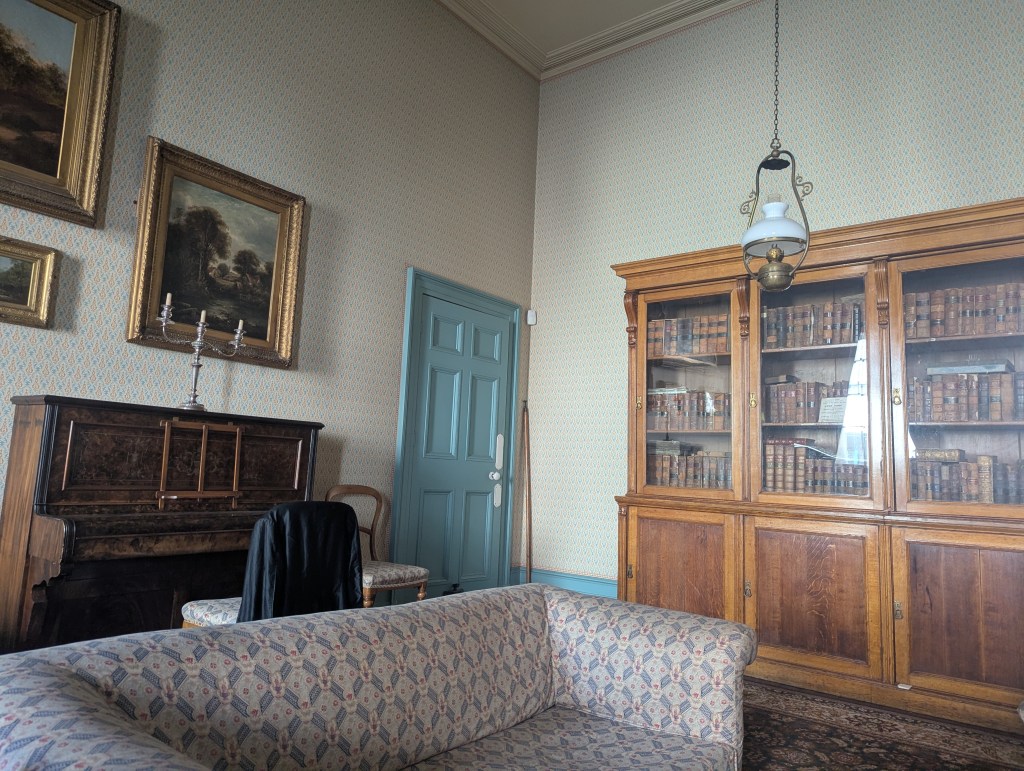
However, the house also reflects how people can take aspects of the current styles and adjust them to their own tastes. Another aspect of this style is a restrained, pared back approach and that is most definitely not the case in the Sambourne’s house. As the picture of the living room below shows, it is a space that is very full of things indeed.

As the picture above also shows, there are lots of elements of the interior which are connected to the exterior. Chinoiserie and pictures from and of the wider world – from their travels and also to reflect their connections to and placing themselves in relation to the world. Rugs and vases from around the world too – showing how homes are not just individual spaces but are connected to other places and people and that people intentionally seek out those connections. Influences and designs, a way of showing off both your taste and sense of self, allowing you to be somewhat out in the world even when at home, and signalling to others that you are cosmopolitan and connected.

There was a strong sense of comfort about the place, with lots of places for people to sit, rich and warm fabrics and materials covering all of the surfaces, and fireplaces in the rooms and even in the hall. I was very intrigued to find a curtain over the doorway in one of the rooms – part of it was on a pole that comes out so you can open the door without getting the curtain tangled up with the door. I had never seen that technology before but it makes such sense.

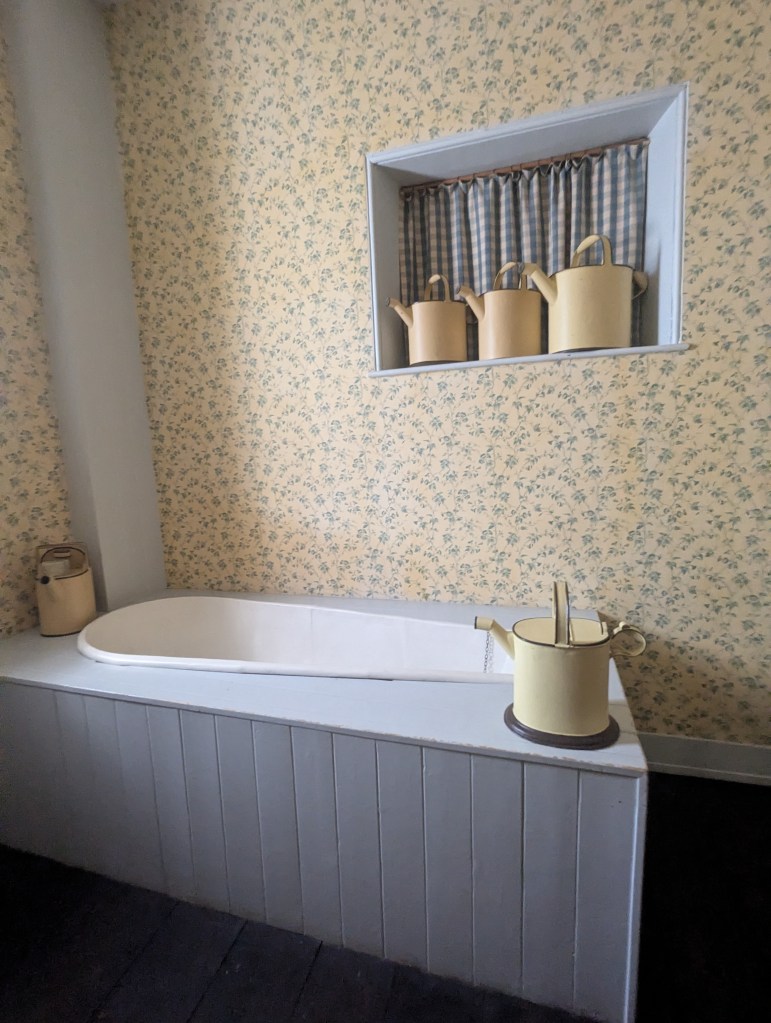
Another sign of the modernity of the house was that it has a downstairs cloakroom toilet as well as a separate bathroom with a toilet. This increased prevalence of toilets was something that was starting to come forward in Victorian times, following The Great Exhibition of 1851 at Crystal Palace. There the expression ‘to spend a penny’ came into being, as people could spend a penny to trial the first paid public toilets. This helped increased expectations about the availability of toilets, and the privacy of having a separate space for them.

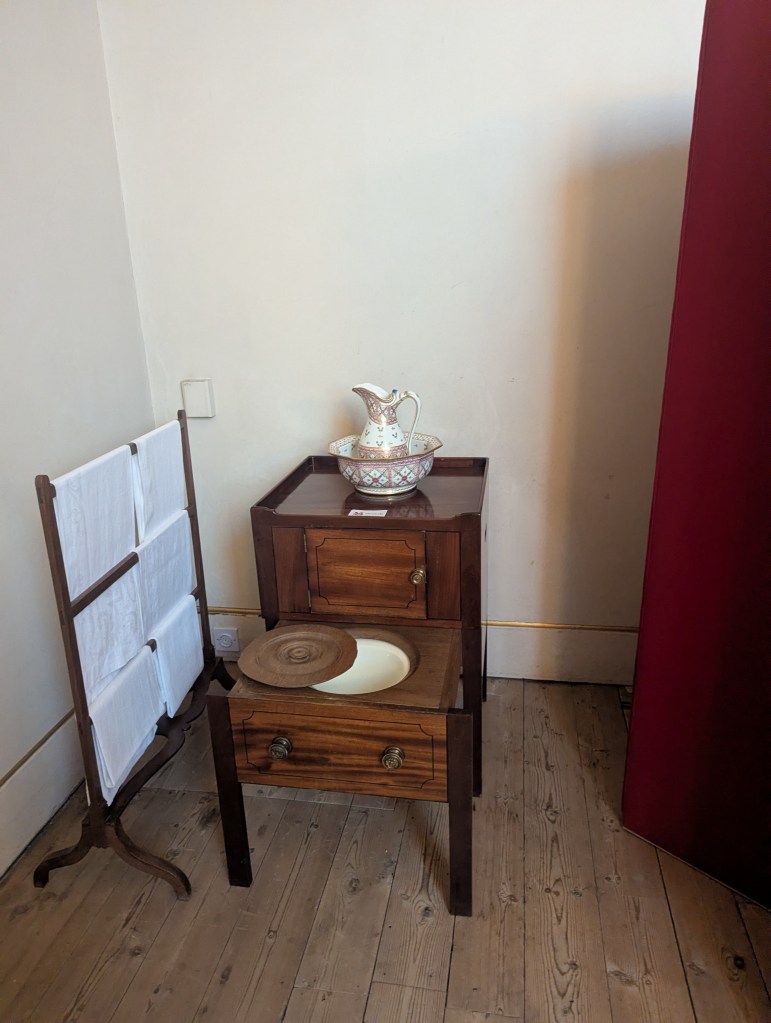
The downstairs cloakroom is so modern that the sink is a technology innovation – to empty it you would have to tilt it to let the water run out of. These sinks allowed people to have access to running water and enabled them to wash their hands without needing to have the pipework plumbed in. This made it much more accessible for people to have installed, it also got around the issue which arose where plumbing systems initially were quite smelly – rendering them less attractive for people from that perspective. I wasn’t able to get in to the room to have a look but typically these sinks would empty into a bucket which would be cleared away – by the servants.

While the rest of the house is very highly decorated, the cloakroom has the white tiling that Barbara Penner talks about in her book which have come from a medical context – where the white tiles are designed to show how clean the place is, or make it easy to tell if and where it isn’t.

After Linley and his wife Marion died the house was left to their son Roy, who kept the house largely unchanged. When he died in 1946 the house was left to his sister Maud. Maud already had a large London residence, and so the house became a time capsule, mostly unoccupied and unchanged. Maud’s daughter Anne became fascinated by the place, leading to her setting up the Victorian Society and the continued preservation of the house.

I was interested by Roy Sambourne – choosing to live in the house and preserve it largely unchanged from when his parents had lived there. It seemed like an odd choice, to consciously choose to preserve somewhere, particularly somewhere that wasn’t a ‘stately’ home or one belonging to particularly famous people. I wondered how much it was a conscious choice or if it was something that reflected more a lack of decisions and action to make changes

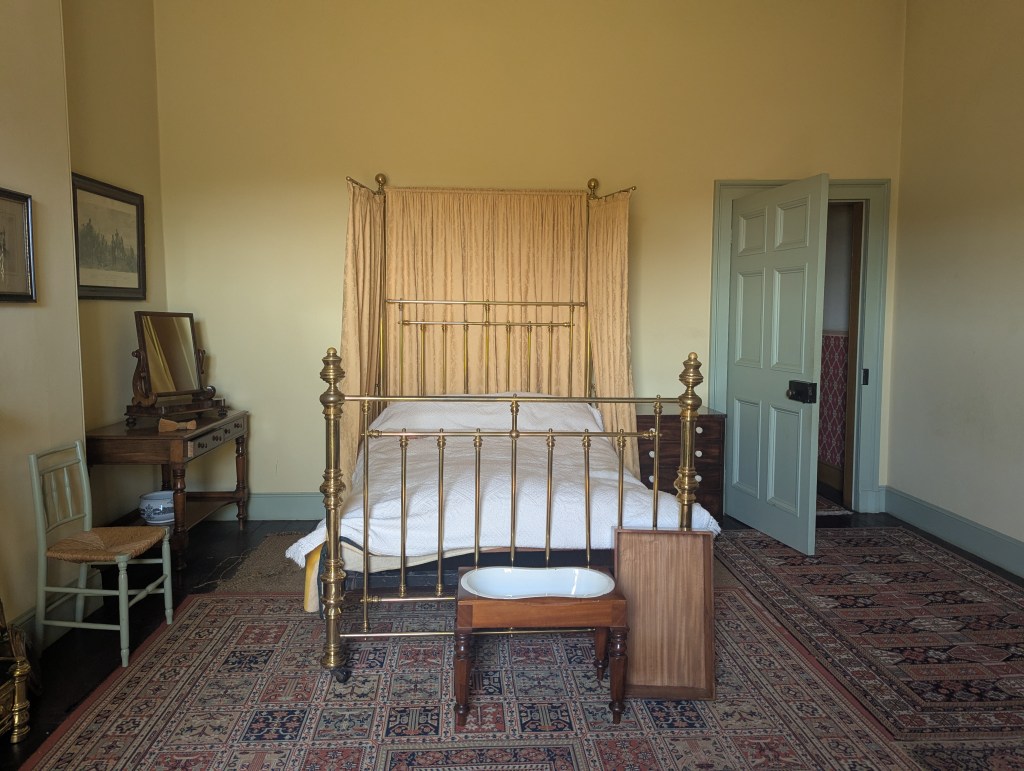
As I found out more about Roy it came to make a bit more sense. From what I’ve been able to gather, he never really found his way in life. His mother Marion Sambourne wrote that “she was worried that her son had inherited none of the ambition and capacity for sustained hard work which had made his father so successful”. Roy’s biographer Shirley Nicholson writes in her book ‘An Edwardian Bachelor’ that “All Roy ever wanted to do was have a good time with the minimum amount of effort. This may not be an unusual attitude among the young, but Roy was never to grow out of it; Life carried him along, while he made no effort to shape its course”. When I read that, it became easier to see how he might choose to live in the house and not make any particular changes to it – beyond apparently getting the woodwork in his bedroom changed from red to white – while still leaving a space that didn’t feel very minimalist, as the picture of his room below shows.

A time capsule that developed from a comfortable family home into a place that shows how people lived then. It felt quite different to the more restrained designs that can typify the modern Victorian aesthetic. For a place that hasn’t been lived in since the late 1940s it nonetheless felt like a real home, and one that people obviously tried to make comfortable and reflective of their tastes. An old fashioned feeling space now but one that was clearly quite modern in lots of ways then.

Choosing to dance

I’m at the point in the research where I’m actually drafting the questions to ask people, and it’s exciting yet it also feels a little sad. It’s a reminder that actually doing things you want to do and care about risks messing things up and dealing with messy reality but it is good to push through that for the same reasons. It has felt like a dance between ideas and reality, the literature and exploring peoples’ lived experience as well as between myself as a researcher and the people I’m asking questions of.

It feels a bit sad because to choose is to pick some things and to leave others behind. Areas that I’m really interested in, that I think would be useful, where it seems like there’s a gap – they are getting cut. Sometimes it’s because they feel too far removed from the subject, that it doesn’t feel like it would help to provide responses that add up to a cohesive set of information. This also means that if I’m asking questions I don’t think I can clearly use the answers from, I’m not being respectful of people’s time by getting them to fill in survey responses I can live without. Some questions have similarly had to be culled because I think, even though they are closely related to the area, I’ve got too many questions overall to realistically expect people to complete a survey that long. Especially because, for the kind of number of people I need to complete the surveys, I’m relying on more than just my partner and a couple of friends completing it.

In that narrowing down, from the general broad-brush ideas to the very specific questions it means a lovely idea – which can be all of the myriad of good things I can imagine – becomes a distinct thing. That narrowing down means I have to let go of all kinds of possibilities, some of which I can envisage now and some of which might only become apparent later on down the line.

One of the things I love and find very bracing about Oliver Burkeman is his repeatedly coming back to the idea of the finitude of human life and how we’re always choosing what to put our time and energy into, even if it doesn’t feel like we’re choosing. That we can’t do all of the things, even as we might want to. And that even if we think we’re getting around this by just not deciding, that’s still kind of a decision, just not a proactive one. So it’s better to try and put as much of your time as possible into things that you actively care about rather than just putting things off or getting your faff on.

So it is that, as can often be the case, aspects which makes it feel sad are also what makes it feel exciting. Doing this work gives a strong sense that the work is moving into a different phase and becoming more real. Trying to translate the general concepts I want to explore and picking the words, weighing and testing them – is this too leading? How would I use the responses to that? Trying to come up with answers for survey responses that respect the plurality of views and contexts that people can have about their experiences of home and how they make decisions about things. Imagining the discussions that I would have with people, the kinds of responses that they might give, the worlds and experiences – many of them beautiful but, given home can for too many be a space of violence and insecurity, also experiences that can be difficult and upsetting for them to reflect upon. Thinking about the kinds of follow-up questions and how to frame things to try and give people the space to talk about things without putting words in to their mouth.

In thinking of the structure of the interview, that too feels like a dance – something created between myself and the person being interviewed. Thinking through the logistics and trying to imagine how it might feel to move from one area or question to another. Are there too many questions – and the other person will feel like they are getting rushed and crushed around? That I am stepping on their toes, rushing to talk over them or hurrying them along to try and get all of the questions covered. Is that going to create a stressful situation for both of us – as though we’ve got the dancing equivalent of sweaty hands or stepping on each others toes? Watching the clock and calculating the number of questions still go to rather than being fully engaged in what the person is saying. Considering what kind of time people need to give considered responses, while still being able to get through enough questions that I get a sense of the lay of the land for them. Helping them move through the discussion and also allowing myself to be changed by what they have to say. Reflections that someone might offer up resonate differently when thinking about them in the context of what others share.

The dance still isn’t done, the questions need to be reviewed and updated. Then I want to pilot them to see how they translate in practice. It could be I put my left leg out and then have to pull it right back in again, or it turns out I’ve got two left feet or some similarly mangled metaphor. Nonetheless, that feeling of exploring and continuing to turn ideas into action is the kind of dance I want to be doing all of my days…

Lists of lists

Recently the reading I’ve been doing is about the meaning of home or, really, the meanings of home. Cumulatively it can feel a bit like the scene in ‘Being John Malkovich’ where John is in a restaurant surrounded by people who are all variations of him, all talking but the only word they say is Malkovich. The word ‘home’ starts to blur as it gets repeated over and over and over and. It feels like the words fold into each other, until the meaning starts to go or it all becomes quite Malkovich, Malkovich. That could just be because I’m marinating myself in the subject but it’s also made me reflect on what turns those lists and frameworks into things that are useful and used.

Reading Jeanne Moore’s (2000) piece ‘Placing home in context’, I think she’s great at setting out a variety of ways in which the meaning of home has shifted over time, and how it can vary across countries. How different disciplines have engaged with the idea of home and how meanings of and feelings about home have been represented. It’s a bit of a speedy romp through the subject so it’s more about breadth than depth.

She does draw together lots of lists and frameworks that have been developed to try and capture the meaning of home. Seeing so many of them together in one short article makes her reflection that lists ‘imply all meanings are equally experienced, and do not encourage a focus on the relationships between items’ more apt. A sense there are so many different ways of describing what comes through as quite a consistent set of messages. Lots of overlap and commonality between them, with Putnam & Newton (1990) finding that privacy; security; family; intimacy; comfort, and control consistently appear in research about the meaning of home. Other lists have the same words or similar meanings, which perhaps isn’t so surprising, at least for those lists and frameworks that are talking about a suggested ideal of home.

I went to the Museum of Home for their event ‘More Than a Place: Centre for Studies of Home Annual Lecture 2026’ which was a talk and Q&A with Katie McCrory exploring what she describes as the eight universal emotions that come together to create ‘a feeling of home’. This work is based upon the Life at Home report by IKEA, and in the book she identifies ‘comfort, control, security, accomplishment, belonging, nurture, enjoyment and aspiration’ as the eight emotions. Plenty of venn diagram overlap there with other lists and frameworks too.

Within an academic context I can see that lists and frameworks provide scaffolding for thought and a way to organise and reflect findings. A drawing together of what’s been learned and found, a chance to reflect on how those findings relate to the wider literature – findings suggested x which differs from the previous literature in y scenarios. Trying to represent and honour what’s been found in a way that some other literature might not quite feel it does, even that which can appear to be similar. So if people talk about security rather than privacy, it would make sense that security is the word that’s used, even though the sentiments might be analogous to another piece of research where people talked in the language of privacy. The weight of different words can vary from person to person and so when analysing the research, in the absence of anything within the wording which explicitly suggests one or other of those choices, different researchers might lean towards one rather than the other. Over time, the development of the frameworks and lists helps build up an understanding of an area and that can develop into recommendations and more directional proposals.

From a policy and practitioner perspective, I’m conscious that lots of reading I’ve done which suggests a framework has been developed, has seemed hard to translate into practice. Thinking about frameworks I’ve used in a policy or delivery context, they would be ones that have some actions or processes attached to them. There would have been underpinning research which led to the development of the list of criteria. No doubt there could be the same questions about why some options or wording were selected rather than others but when it’s accompanied by input which allows the framework to be used, rightly or wrongly, that can feel less of a pressing concern. Or at least, if the framework itself feels useful, if it seems totally bonkers then that’s obviously something else altogether.

Having a sense of who I want the work to help and what they might need, then helps shift some of that Malkovich, Malkovich energy. Given I’m intending to develop a framework as part of the outputs of my research it’s useful to have in mind more of a sense of where I want to be aiming towards. It helps explain why lots of the ones I’ve seen haven’t felt very satisfactory, that I find myself asking ‘and then what?’ about them. Being able to take a step back from the lists and lists, and indeed the lists of lists, to see the aspects that are common across those and why and where there might be gaps. Holding in mind that it is about being able to translate those lists and frameworks into action and activity that’s useful, rather than feeling like what I’m trying to do is come up with one list to rule them all. How to do that is another question, for another day, but having a sharper idea of what I’m aiming towards is very clarifying.

It’s like Piccadilly Circus in there

Policy makers can be reluctant to put in place policies that are seen to impinge upon the privacy of people in their own homes, yet commercial entities are less worried about this. From adverts in kitchens on fridges to people having massive logos on their clothing, accessories and in their homes, it’s another way of letting the outside in, making homes more public spaces.

Instinctively the idea of adverts on fridges feels quite shocking and a departure but reading Saunders & Williams 1988 piece ‘The constitution of home’ was a reminder that it’s perhaps more of a variation on a theme. They were talking then about advertising coming into the home through the TV and radio, and how this connected the home and outside world. They had slightly mixed views about the extent to which the home is or isn’t a private space but it was helpful to be able to see these adverts in a longer-term context.

TV and radio advertising has helped pave the way for the adverts on fridges, but with TV and radio, the ads are quite one-way. The people and organisations placing the ads would be able to get viewer or listener numbers and they might be able track if there was an uplift in activity as a result. They would have much less information available than is there now through tracking on phones and internet devices. This creates much more of a feedback loop between the adverts, organisations and audience. It’s also providing much more data which can be tracked and logged and used, with the attendant concerns about the possibility of personal or big data being used in ways we would find unethical.

Some of the sense of difference might just be the shock of the new, happening in a situation where there are growing concerns about the impact of data and devices. A sense that there’s increased surveillance but it’s not clear that we are safer or benefiting from it in other ways. That devices are making things seemingly more convenient – so smart fridges can tell us something is getting close to its best before date, but at a cost we hadn’t considered, let alone really reckoned with. The hollowing out of high streets, a loss of big and small businesses that can’t compete with massive online, offshore companies, more job insecurity and lower pay for more people. The social impacts of becoming more removed from others – those that we disagree with and now feel more removed from so it’s easier to be angry with and about them. Removed too from those we care about or might care about. Of course, no one smart fridge or other device does that but the cumulative impact of convenient things is something people are concerned about, for instance in the increasing hollowing out of high streets or declining concentration spans.

There is something different about the extent to which it’s a choice to engage. With TV and the radio you can choose to switch them on or not. If the adverts come on you can switch off or leave the room, and it’s you engaging when you want to but otherwise they aren’t around. With the adverts on the fridge, the fridges weren’t sold with that function to start with, so it isn’t as though people made the choice and were able to consider the trade-offs. People chose an expensive fridge and then subsequently that functionality was introduced, which feels very different indeed. There was eventually some functionality introduced that allows the adverts to be switched off but it isn’t clear they can be entirely removed.

In many respects then, smart devices with advertising are part of the longer history of the outside coming inside, or there being a much more permeable link between the home and the wider world. What remains then, is a sense of how the lack of choice looms larger in that context, but it also shows how homes, and expectations about homes, can push back on shifts. The company that introduced them thought they would be able to get away with it, yet people felt able to complain and have their views heard in a way that might be harder to achieve in a more communal space.

Why try harder?

I was yesterday day’s old when I discovered there’s no qualification to become a Retrofit Evaluator. Niche insight but it opened up a bit of a Pandora’s Box because under the British standard for retrofit – PAS 2035 – any evaluation of a retrofit should be completed by a suitably qualified Retrofit Evaluator. If there’s no qualification that can be done to get qualified, I think we can agree it’s hard to see how that is possible. In practice, what this means is the Retrofit Co-ordinator, another role under PAS 2035, and one that does have a qualification available does the evaluation.

In some respects perhaps not so surprising – monitoring and evaluation is an area most would agree is important in any context, yet it’s the area that is more likely to fall away than most. Whether because it’s for a project that is over-stretched, under resourced or behind schedule, evaluation is rarely seen as a core focus. Or the next project is getting scoped up and approved before there’s time to complete a proper evaluation of previous projects that might feed in to the development of the next project. So the fact there isn’t a qualification for this role is less of a concern than it might be for the actual installer roles.

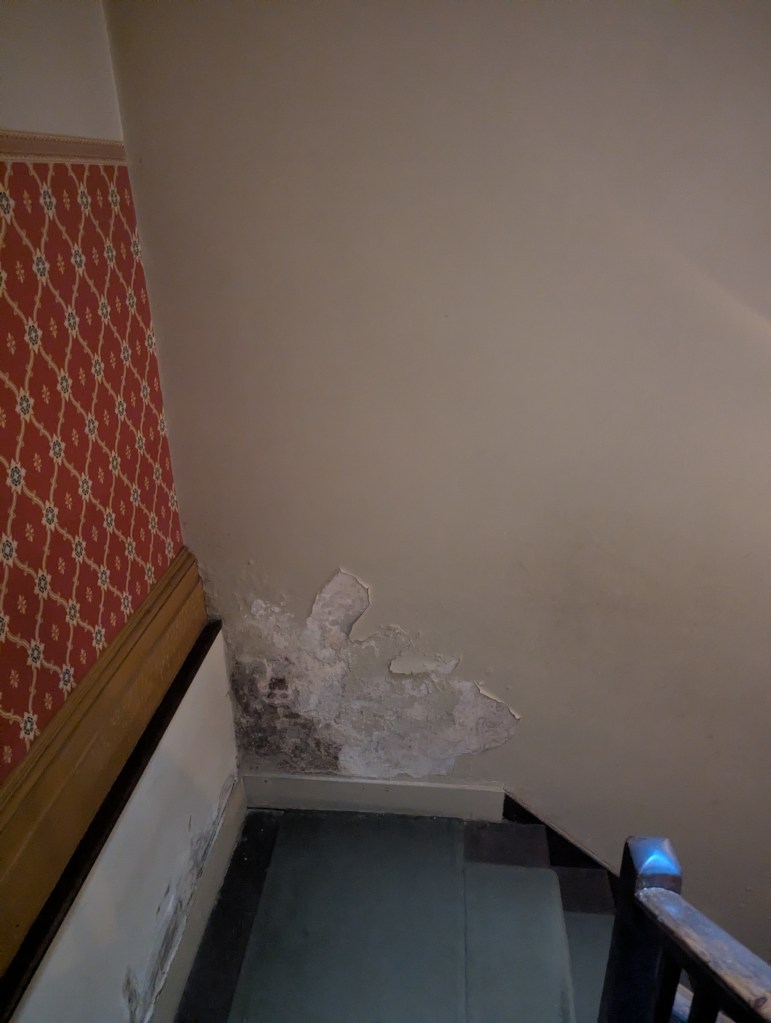
Yet this role without a route to being meaningfully undertaken feels like such a symptom or metaphor for longstanding issues within the retrofit sector. The ongoing performance gap issue is one that has been long recognised but, as the recent 2025 National Audit Report (NAO) on energy efficiency installations showed, hasn’t been fully dealt with. Poor quality works, homes left worse off than they were before the works were undertaken because of mould and damp, affecting the health of the occupants and the fabric of the building itself. The NAO report itself found that 98% of homes that had external wall insulation installed under the Energy Company Obligation and Great British Insulation Scheme have got significant issues requiring remediation.

These issues arise in large amount because of a lack of attention, or ability, to deliver good quality works and ensure the details are right. Good processes, with monitoring and evaluation built in, can really help address or prevent issues. They can draw attention to areas where the work isn’t quite right and allow them to be improved or redone whilst the works are ongoing. Post-completion, they can identify issues with the works before they become much more serious. The intention is also that the Retrofit Evaluator can share lessons learned and areas for improvement with the installer to help them upskill people for subsequent projects.

More widely, in a context where approaches, products and technology are being developed, monitoring and evaluating their performance is crucial. Understanding how they work in practice, if they are easy to work with or need some workarounds to try and integrate them. Finding out how occupants respond, if they are easy for them to use or not. As more heat pumps have been installed in a great variety of homes, including ones that aren’t so well insulated, it’s become clear performance is better in a wider range of use cases than had previously been considered. That makes a massive difference in terms of the level of insulation needed for a home, with knock-on implications in terms of disruption and cost for the home-owner, and resourcing requirements for the supply chain. Without the monitoring and evaluation it’s harder to be confident in a particular approach and the status quo assumptions and actions are more likely to be considered.

What then is the workaround for the lack of a Retrofit Evaluator? As things stand, the Retrofit Co-ordinator now has to fulfil this role. They get to mark their own homework. If the basic level of feedback identifies any issues, they then have to escalate the evaluation to a more in-depth level. This would be undertaken by another Retrofit Co-ordinator. However, this requires them to do that escalation process. The worry is that in practice there might not be incentives to do so, or the quality assurance and monitoring of their work to pick up the cases when they don’t.

If there wasn’t a consistent drum-beat of stories and reports raising concerns about the quality of retrofit work undertaken, it might feel like that was an unfair assumption. Against that background, it feels like another reflection of a sector that recognises the need to change and improve – hence the development of the role in theory Yet it remains a sector that continues to struggle to address fundamental aspects around quality and reliability of the work it’s doing. Undermining trust, the health and well-being of people and their homes, and the ability of their work to get close to delivering the environmental and financial benefits people are paying for.

The ties that bind

One of the things I’m interested in exploring is how to connect in to what people already think about their homes in ways which connect to the wider world. To try and show and persuade people that this is about tapping into ways of seeing the home and the connection people have to their home and beyond to the world, I don’t anticipate it being a kind of Buzzfeed ‘This one trick will convince you’ kind of approach. That feels too risky, too easily pulled apart and then you’re back to where you were before. Crucially though, I also don’t think that’s true. There are a myriad connections and, they are likely to manifest differently for people, which makes sense given the plethora of experiences of home that people can have.

Doing this feels helpful because there can be a reticence to try and engage with how people use their homes because they are seen to be private spaces. Getting involved in that kind of space then feels like it is transgressing and people feel uncomfortable. An English(wo)man’s home is their castle and all that. By identifying ways people already make those connections

Lots of work has questioned and problematised that view of the binary splits that the public/private one is part of. This binary is often accompanied by others – with the home, classified as a private space, and one that is associated with the feminine. By contrast, the public sphere is then classified as masculine. Nonetheless, this idea that the home is a private endures for many, and in a policy context, makes people more reluctant to intervene. Despite the fact there are lots of ways in which regulation reaches into the home. From infrastructure to health and safety standards for materials and products.

In that context I enjoyed finding out about Halle’s work (1993) looking at the artwork that people choose to have in their homes. They did some statistical analysis of the themes and, where they were reproductions, the artists, using this to investigate landscape paintings as markers of status and class differences. Landscapes, family photographs, abstract and ‘primitive’ art and religious iconography were the main things he found. Across classes he found a commonality in terms of landscape paintings being there, but those of foreign or historical scenes were more often found in upper-middle class homes.

Rose (eg 2003 & 2004) writes about photo’s and she also notes how their inclusion in the home connects the occupants to the outside world. They find their inclusion is an important way a building is made a home, but it is also another way we use images to stretch our integration with the outside world.

And it’s one of those things that, when I read it, seemed so obvious. Cieraad talks about how the home can become so familiar that it’s a great place for anthropologists to study because there is so much that is obscured in plain sight. Reading about the different ways we choose things to decorate our homes, reminding us of the world outside and our place in it. It perhaps isn’t enough on its own to show and convince, to allow people to feel more comfortable about accepting that divide isn’t so real. For many people though, it should feel tangible and resonate with them as they look around their homes. Most people will be able to see things they choose to display because they connect them to friends, family and their world. A story and way of thinking about things that resonates, and cumulatively can help engage people.

History may not repeat itself, but it might rhyme

Reading Barbara Penner’s fascinating book ‘Bathroom’ (2013) about how the modern, predominantly Western, bathroom has evolved, the parallels with the energy transition felt noticeable. Very different technologies involved but both water and energy consumption are so firmly entrenched in our lives, expectations and daily practices. The history of bathrooms shows how differently we can behave and therefore suggests we shouldn’t assume we’ve reached an unimprovable, or unchanging situation with the current entrenched position of bathrooms in our lives. How they came to be so offers reflections for the energy transition.

Penner traces the development and refinement of different technologies, showing a mix of reasons and circumstance that dictated which became more widely adopted and which fell by the wayside. How, despite new bathroom related technologies becoming available, there were issues with deployment. They were usually only available to the rich, and even then often only taken up by those who were prepared to deal with the issues getting technologies put in to their home, particularly when the wider infrastructure like sewage pipes wasn’t there to support it. Many poorer areas struggled to get the new products because companies weren’t interested, with a more widespread approach only happening when the public sector got involved. Where efforts were targeted at those who were less well-off, it was often driven by a sense of morality and desire to improve health but also behaviour. Henry Roberts, a Victorian architect, designed flats for poor families which were radical in their inclusion of a room specifically designated as a bathroom. The aim of Roberts was to provide the occupants with the ‘moral training of a well-ordered family’, looking to introduce and enforce an appropriate distance between the bodies of the various occupants and also between the bodies and their waste.

The patchy, ad hoc nature of the change and take-up of bathrooms was interesting to read about. In a world where fitted, matching suites are the norm, hearing about people starting to get some elements of what we would now consider to be fundamental parts of the bathroom, the toilet, sink and bath or shower, but not all of them showed how much has changed. Striking too, how those decisions would be driven by considerations around space, cost and availability, with factors such as health, morality and norms also playing a big part. Even where people did get some aspects of the bathroom put into their home, they would often continue with older technologies in parallel.

In the world of energy transitions, the take-up of new technologies is patchy too – globally but also within countries and across geographies, property types and personal circumstances. Even in the same home, people can have a few different technologies. Perhaps getting some insulation or a heat pump to serve an extension, whilst still having the boiler as the main heating source for instance. Although less explicitly moralistic than some of the efforts in relation to water and bathrooms, there is still a sense that it’s the ‘right thing to do’ to try and support those who are less well-off to get energy measures installed. That said, it’s also true that lots of the early adopters for energy measures are those who are well-off and prepared to navigate the complexity of installation.

Penner is also really strong on showing how the development of the bathroom allowed for our homes and bodies to become much more private spaces whilst also making bathrooms, and by extension homes, much more connected to the public sphere and regulated. Previously, all the functions we would use a bathroom for were done in more communal spaces. People would go to the toilet together, or in more public or shared spaces. Bathing, or cleaning yourself if not actually taking a bath, would be done in spaces with other uses, such as the kitchen, scullery or bedroom. As well as sharing spaces, people would often share the washing water itself.

To allow for the infrastructure which could underpin the kind of toilets we now consider to be standard, regulation and government action happened. The Public Health Act 1848 had clauses regarding domestic sanitary arrangements, marking the first moment when government entered the private bathroom in a meaningful way. The Act required that any new built or rebuilt house needed a sufficient WC or privy and an ashpit with doors and covering. Homeowners were required to notify the local board of health in writing prior to constructing privy/cesspool and surveyors were given the power to shut down any judged to be nuisance or injurious to health. Eventually The Great Stink of 1858 led to the closing of private cesspools and stopped people putting their waste into the Thames, facilitated by the building of a co-ordinated waste system to manage and treat the waste. This led to the adoption of that approach nationally and internationally too.

A criticism of action on climate by those who would consider themselves to be right-wing is that it’s really just cover for more intervention by the State. It was clear reading the book how development of products by the market helped make deployment possible. Without that range of options available, the problem solving to try and improve measures and the mix and match potential that marked the start of the development of the bathroom, it’s hard to see either why more infrastructure might be needed or how it could develop. That said, and I’ve not done further reading so perhaps other accounts might take a different view, it’s hard to see how the development of the infrastructure could have developed in an holistic way without the intervention of government. The private sector focus on generating a desire in those who could pay, and would put up with the challenges of getting measures installed and adapting their homes and way of life, didn’t seem able to provide a comprehensive offer to everyone. Private sector effort and enterprise could generate a want and partially fulfil it.

That sense of the attitudinal changes shifting over time, which fed into and out of the technology changes, was such a strong part of the story for me. As someone who has been brought up with certain norms around cleanliness, so much of what was normal for so many seems unthinkable now. It was a reminder of the fact that even though things can feel quite fixed in terms of behaviours and norms, they are constantly changing, as are how we use spaces, or even if we have designated spaces at all for certain activities. With the advent of new technologies it became easier for people to decry public defecation, once normal and necessary but less so when technology provided other options and design allowed for privacy.

I came to the book to get an understanding of how a part of the home has changed. One of the things that became quickly obvious but I hadn’t consciously engaged with when starting my PhD, was that different parts of the home are subject to change in different ways and over varied timescales. It was therefore really useful to get a sense of how changes to bathing and toilet habits have affected what we now think of as the bathroom, as well as other parts of the home. What was reassuring was how much of it felt relevant for the changes in how homes are designed and used now from an energy and broader environmental perspective. Despite the different technical challenges, I finished the book with a deeper sense of how fundamental social and cultural changes are to if and how positive change unfolds.

‘While it often feels as if change is unthinkable – that people’s beliefs and behaviours are as deeply entrenched and immovable as infrastructure – this history has shown time and time again that our ideas about and our methods of dealing with water and waste are much less uniform, inevitable and fixed than we usually realize. Bathrooms, like sewers, are relatively recent inventions and they constantly evolve and adapt in the face of shifting social, medical, economic, political and environmental factors.’

Barbara Penner, ‘Bathroom’

The hard sell

I was at Elemental London earlier this week. A trade show and conference about the built environment. Plenty of flanges and pumps and gadget goodness to try and make sense of.

At one of the sessions I did go to, someone giving a presentation said that it’s hard to sell heating systems because people only want to talk about them if something goes wrong. A gentle, knowing laugh went around the space.

It feels like there’s plenty of truth in that. Heating systems aren’t the most exciting thing to talk about, there’s lots of technical details which don’t mean much to most people. The language and technical details can be off-putting to most.

So why try and sell a heating system? Why not talk about the things that do interest people instead? Warmth and comfort and relaxation. As Fouquet discusses, people think about energy services – not exactly marketing ready language but that phrasing more readily engages with what people are actually looking for. The outputs and opportunities that flow from the energy, rather than actively being interested in the energy source itself.

We can either keep being frustrated with people or we can go to where they are and really engage with what interests them. There was some sense of an attempt to do that in sessions around the conference, with discussions around co-creation and protecting what’s important to people. More of that is needed to turn fledgling ideas and approaches into things that can more consistently appeal to people.