Living the tension

Don’t worry, this isn’t about watching England play at the World Cup. It’s about feeling the tension between different ways of working and noticing those issues can also translate into how people make decisions in day to day life. What has been emerging is that my own process is showing me that change and creativity don’t always emerge from maximum efficiency.

As someone who is self-funding their PhD beyond having a scholarship to pay their tuition fees, I’m definitely motivated to try and get my PhD completed more quickly. But I’m not ‘just’ here to get a PhD – I want to produce work that is useful and will make a difference.

In some respects then, that context creates the conditions to try and move more quickly and to let go of aspects that feel less clearly defined or on the critical path to delivery. Going for efficiency in the tasks and trying to find ways to do them as effectively as possible.

Yet I’ve had an ongoing tension between the sense that my ambitions and interests are broader than the subject of the PhD, while also needing to develop a PhD project that is discretely bounded enough that it can be completed. I didn’t realise I was doing this but I’ve been reaching towards a broader articulation of the subject and what it is I’m really trying to explore. That has led to a constant baseline level of questioning when doing things about that disconnect as it manifests in a particular area.

The background hum was getting louder and impacting on my ability to be more efficient and effective. The irony of observing myself feeling like I’ve made a decision about the next task I’m going to work on or how I’ll approach something and then feeling like it isn’t quite made as I have that discussion in my head. Eventually it brought me back to some activities that had been postponed week after week, despite having felt them to be useful, where I intentionally give myself a chunk of time to just think, explore and generally thought-shower and play without having to have an end goal in mind. It’s something I’m constantly wanting to do and so creating some time where I’ve got an outlet for that seemed like it was a good idea, felt great when I was doing it and yet got moved into the next week time after time because it didn’t feel like quite the right thing to do.

In giving myself the space to just play, listen to that background hum and try to make sense of it I think I now have a clearer sense of the different layers and linkages between those things. Seeing my PhD as a way to explore ideas through a particular case study that can inform the wider work and underlying questions I’m interested in. Peeling the onion and seeing that I’m still absolutely fascinated by my PhD but also being able to place it in the context of questions that are about what it is that enables some people to make a change and yet others don’t. Exploring and trying to make sense of what kinds of factors help indicate whether something is going to catalyse action or whether it is a good idea that won’t translate.

What felt like a luxury I could live without, even as I could see the value of it, became something that has helped speed things up and brought more clarity to the things I am doing. With that clearer articulation of the different layers and what I’m really trying to explore, I was able to revisit some things like the survey I had drafted and update the questions before they went out into the world. They are still aligned to answering the PhD but also link better to the overarching questions I’m interested in.

Given a lot of what I’m exploring through the PhD is around decision making, that sense of a tension between feeling like the need for speed was helping me make a decision, and realising it was hindering me has been interesting. There can be an underlying sense of a need for speed in decisions people are trying to get agreed that relate to environmental or climate issues – whether it’s an organisational or individual level. That might relate to the urgency of addressing issues that the science and natural systems drives, or it can be artificially generated urgency relating to funding or financing offers that are time limited. John Vaillant in ‘Fire and Flood’ is good at drawing out the different timescales that people can operate at and how time can be experienced differently – what feels fast in terms of the science can feel slow in terms of how humans experience it.

For myself, it’s been a good reminder from that some ways of working which are useful need to be protected in my days and weeks from a practical perspective. Doing a PhD gives me the space to make that happen and become embedded that will hopefully make it easier to protect that whatever comes next. It’s also been a useful reflection to take with me when looking at the circumstances that are being created for people we are trying to get decisions from.

Same but different?

As summer temperatures increase, at night as well as during the day, people are becoming increasingly aware of how uncomfortable their homes can be but there isn’t an easy fix. One of my PhD supervisors reflects on the fact that part of the challenge is that the same homes are both too hot in summer and too cold in winter. We’re not, for the most part, trying to address one issue in one set of homes and the other issue in the rest of the homes. Yet we’re better equipped for dealing with the cold than we are the hot.

In the event of cold weather, most homes can be improved if you were to throw lots of money at it, without doing anything to the home. You could just subsidise people’s bills, or flat out pay the whole lot. It would be massively expensive and wasteful but still, there’s an immediate lever that could be pulled if we lived in a parallel universe and felt that something needed to be done. We already have an equivalent for cold weather of the Winter Fuel Discount and the Energy Bills Support Scheme in 2022.

Most homes have central heating, so to try and warm up the homes it’s then a case of having the heating on more. Census data from 2021 suggests that only c.1.2% of homes don’t have central heating so there are a lot of homes where it is then easier to provide funding towards the cost of energy to make it more affordable. For those households that aren’t using mains electricity or gas to power their central heating there would be more steps because they have to procure extra oil or solid fuel. If they already have this fuel system, this is something that they are used to doing and would have suppliers that they are able to contact to try and source supplies.

That isn’t the case in terms of cooling a home though. Even if you subsidised everyone’s bills in the same way to try and make the home cooler, there would be more steps in between. Some of that would involve getting more immediate cooling options such as fans or cooling units. Having invested in a fan the internet told me was whisper quiet and effective, which turned out not to be so, I don’t think we can assume that it’s quick or straightforward for people to get something which will make a difference. There are things that could be done but they aren’t quick – from shades, shutters and awnings to more hard-core air conditioning units. That means there are a lot more steps, which need a lot more levers.

This also suggests that where possible, it obviously doesn’t make sense for people to be coming up with separate but related proposals. Too often adaptation and mitigation can get separated out but in many cases it should be the same approach which addresses both, or could be the same approach with some tweaks. That if there are going to be works done to a home, they should be things that will make sense for as many of those scenarios as possible. Instead – as my supervisor’s work surfaces – they can work against each other. Measures to improve the ability of the home to retain the warmth in winter can, if not properly detailed and dealt with as part of a wider approach which considers ventilation, make the home warmer or more difficult to cool in summer too.

If vulnerability is a mix of the underlying circumstances and the extent to which you can or can’t adjust, then these heatwaves reflect how much more vulnerable we are to hotter weather than cold weather. The design of our buildings increases our vulnerability as the climate warms up because, for the most part, they aren’t designed to cope with this amount of heat, this regularly – particularly with nights where the temperature doesn’t drop that much. The fact we have much less ability and focus on managing in the heat than the cold will continue to exacerbate this. A lack of quick levers we can pull to try and help (some?) people in emergencies compounds all of this.

Addressing this vulnerability therefore needs a focus on both addressing the underlying conditions alongside the levers to provide more immediate support. To date the focus has been more on trying to address the way buildings operate or how we can use them differently. Reducing the vulnerability to extreme heat will need a more systems based approach to try and make a substantive difference, focusing on one aspect is better than nothing but ultimately has limitations.

This is bad weather

There are different aspects to vulnerability and adaptation – some relate to physical aspects and some to capability – and the current heatwave in parts of the UK are showing both elements of that, but I’m particularly interested in the social elements of it. The social and cultural elements of adaptation, as with mitigation, are challenging but unlocking those aspects could then help provide the resources needed to deal with the physical aspects.

I’m, very slowly and a bit brain foggily, writing this piece as where I live in the UK experiences a heatwave and it doesn’t currently feel like actively enjoyable weather. I haven’t sleep well last night as it was too stifling, with no breeze. The room felt suffocating, I eventually got up and went outside where it was a bit cooler. Today I’m really not feeling very awake or engaged and I’m lucky enough to be able to arrange my work activities to do things that don’t require so much brain power. I was out in the hot, hot heat as I had an event to go to but it really didn’t feel like a good idea.

Yet I’ve heard and read lots of people describing it as nice or good weather – even as they might otherwise be talking about how uncomfortable the heat is. This does not seem like good weather to me, and nor does it seem like they actually think it is when they talk about different elements of their experience.

Perhaps the reason adaptation struggles to get much traction is that in the UK people associate ‘bad weather’ with rain, wind and cold weather. By contrast, hot weather can often be considered to be good weather – in part because of the conception that it’s really rainy and you can never trust it to be sunny in the summer. Hence the cultural idea of having a rainy Bank Holiday BBQ or rain-lashed picnic in the car. The idea that sunny weather could be ‘bad’ doesn’t fit with that view and so then the default for many is to describe it as good, even as they might talk about the impacts negatively.

While some impacts of hot weather can be obvious – such as wildfires, train cancellations or sunburn – it can be less so than floods or heavy snowfall where the impact is more visually obvious. If there are fatalities as a result of flooding or snowfall it tends to be more immediate and clearer to see the connection, whereas with heatwaves it can be harder to tell. Often people die as a result of an underlying condition which is exacerbated by the hot weather. These deaths show up as ‘excess deaths’ which is not a mechanism that is as easily communicated or has the same clarity of cause and effect.

However, a consistent message in the literature is that people underestimate the impacts and are reluctant to take action, even where it will affect them. In relation to flooding which has historically been more common than heatwaves, people can underestimate the likelihood of being affected, as the title of Burningham et al’s 2008 piece ‘‘It’ll never happen to me’: understanding public awareness of local flood risk’ suggests. Research on attitudes to and behaviours undertaken in heatwaves from by Erens et al (2021) found that people who were the most vulnerable or potentially vulnerable to heatwaves didn’t realise they could be affected and only a quarter of potentially vulnerable people changed their behaviour. Research by the British Red Cross found relatively high levels of understanding of actions that could be taken, yet there was a significant drop-off in the number of people who actually took action.

Helping to shift that narrative and getting people to engage with the fact this isn’t good weather for many feels like a pre-condition to then take steps to adapt to it. In the absence of that understanding, it is unsurprising people wouldn’t take action. It’s something that happens to other people rather than to them, until it isn’t of course.

London School of Economics research suggests there is a low expectation among people that government is taking sufficient steps to respond. This could partly be projection by them but also seems to be outsourcing responsibility to a government that is unlikely to be getting lobbied on this by people who don’t think it’s an issue for them. All in all it’s currently quite a hot mess and likely to keep getting hotter unless we can find a way to recognise how things really are and go from there.

Dis-aggregating the home

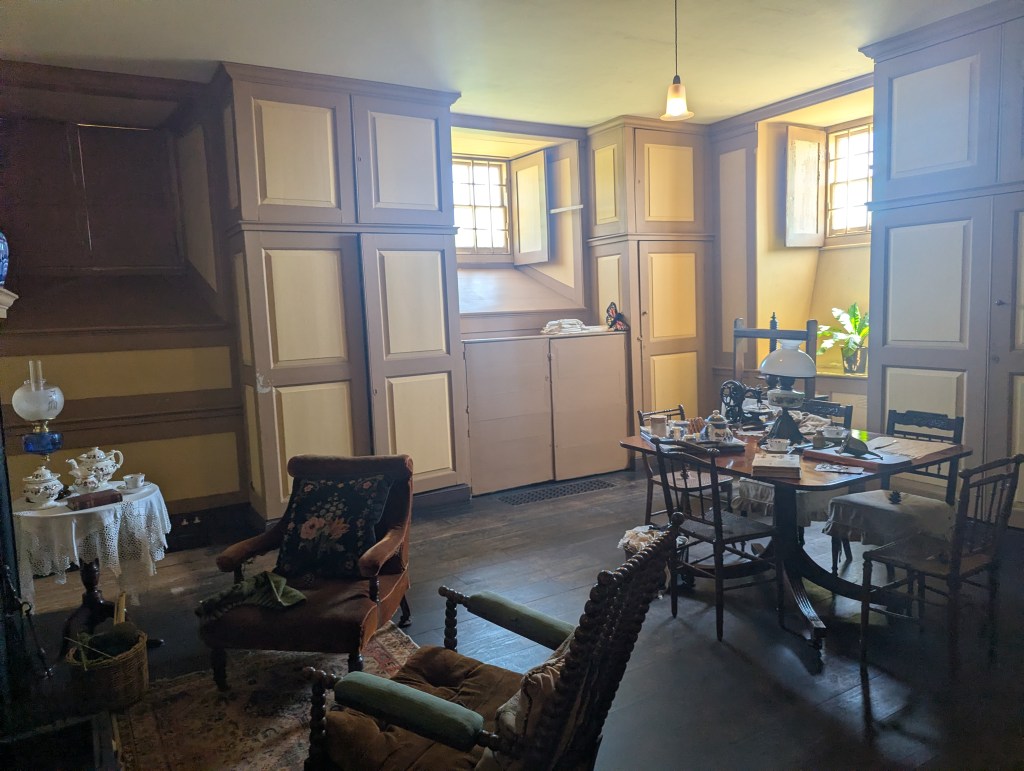
It sounds obvious but it can be helpful to think about the home in terms of the different parts and how they have changed, recognising elements don’t all change at the same time or in similar ways. This moves it away from thinking of it as one monolithic entity which changes in a monolithic way and it strikes me this feels like a shift from some ways in which people can talk about the home. And it made me wonder if perhaps part of why it can feel difficult to improve homes is that often the homes get conceived of as monoliths, which can feel quite daunting.

From a historical perspective, there’s been lots of investigations of how the home and parts of it have changed over time. Judith Flanders brilliant ‘The making of home’ takes the long view, while ‘The great indoors’ by Ben Highmore is looking at how homes have changed over the last 100 years or so in particular. There is also plenty of work looking at different aspects of the home, from Barbara Penners ‘Bathroom’ to chapters in Irene Cieraad’s ‘At home: an anthology of domestic space’ that variously cover how entrance halls have changed, Dutch windows or the move to open plan living.

Perhaps the focus on a ‘whole-house’ approach might be part of what drives that sense of the house as a monolithic space for many in the environmental sector. That the need is there to try and improve all of the building fabric, think holistically about the ventilation strategy and consider factors that will affect the movement and management of moisture in and around the building to avoid damaging the building or creating issues with mould and damp.

In part that view of the home as a monolithic entity also seems to stem from the understandable intention to try and avoid the performance gap. Treating the home as a whole system and trying to understand what’s particular about it – from a technical perspective but also in terms of what people value about the place. Albeit in practice that isn’t what happens enough of the time – either in terms of the design or the installation of measures.

It’s obviously possible to do a whole-house retrofit that takes place over time – so even if that’s the end goal it can then be more light in terms of the interventions. For a long time I had a great love for building renovation passports as a way to help people work out how to integrate retrofit measures into their wider home improvements. There’s lots of work happening in the social housing sector that takes a more piecemeal approach to improving homes over time. Some of that is driven by applying for sources of funding as and when they come up, and some of it reflects that over time a home will move through different teams who are responsible for works to homes – from voids to repairs and maintenance or special projects for instance.

Whereas if the discussion was dis-aggregated and focused around specific aspects, might it feel slightly less daunting? Dialling down the stress of it all, reducing the temperature a bit. It might feel easier to imagine looking to engage people with the need to change out a heating system rather than trying to get people on board with thinking about the whole house in one go. For most people, that’s how they think about their homes more generally – the bathroom needs doing, something needs to be done about the cupboard under the stairs etc – so it brings it in line with other elements too. In and of itself that makes it more manageable for people when thinking about their own homes.

This shift also allows for an approach which accepts that it isn’t just going to change incrementally in terms of aspects of the building but also over time too. So that then it isn’t about trying to claim that this is the ultimate perfection that can be offered but recognising that a particular technology might be the best for now, but that is likely to change in time too.

That change of mindset can then help people think more tactically too. My PhD is all about linking in environmental improvements to wider home improvements – instead of thinking about the whole house it’s then trying to find a way in and working from there. Going with the grain of works that either need to be done because something has broken, or works that people are exploring or choosing to get done.

There are lots of practical implications which arise from making that shift, and I hope to explore those further as my PhD progresses. But the act of thinking differently about our homes, and therefore parts of our homes, feels like it could be a helpful mindset shift that makes it much easier to talk to people about changes. Taking the idea apart to help put the actual space back together a bit differently.

Choosing to dance

I’m at the point in the research where I’m actually drafting the questions to ask people, and it’s exciting yet it also feels a little sad. It’s a reminder that actually doing things you want to do and care about risks messing things up and dealing with messy reality but it is good to push through that for the same reasons. It has felt like a dance between ideas and reality, the literature and exploring peoples’ lived experience as well as between myself as a researcher and the people I’m asking questions of.

It feels a bit sad because to choose is to pick some things and to leave others behind. Areas that I’m really interested in, that I think would be useful, where it seems like there’s a gap – they are getting cut. Sometimes it’s because they feel too far removed from the subject, that it doesn’t feel like it would help to provide responses that add up to a cohesive set of information. This also means that if I’m asking questions I don’t think I can clearly use the answers from, I’m not being respectful of people’s time by getting them to fill in survey responses I can live without. Some questions have similarly had to be culled because I think, even though they are closely related to the area, I’ve got too many questions overall to realistically expect people to complete a survey that long. Especially because, for the kind of number of people I need to complete the surveys, I’m relying on more than just my partner and a couple of friends completing it.

In that narrowing down, from the general broad-brush ideas to the very specific questions it means a lovely idea – which can be all of the myriad of good things I can imagine – becomes a distinct thing. That narrowing down means I have to let go of all kinds of possibilities, some of which I can envisage now and some of which might only become apparent later on down the line.

One of the things I love and find very bracing about Oliver Burkeman is his repeatedly coming back to the idea of the finitude of human life and how we’re always choosing what to put our time and energy into, even if it doesn’t feel like we’re choosing. That we can’t do all of the things, even as we might want to. And that even if we think we’re getting around this by just not deciding, that’s still kind of a decision, just not a proactive one. So it’s better to try and put as much of your time as possible into things that you actively care about rather than just putting things off or getting your faff on.

So it is that, as can often be the case, aspects which makes it feel sad are also what makes it feel exciting. Doing this work gives a strong sense that the work is moving into a different phase and becoming more real. Trying to translate the general concepts I want to explore and picking the words, weighing and testing them – is this too leading? How would I use the responses to that? Trying to come up with answers for survey responses that respect the plurality of views and contexts that people can have about their experiences of home and how they make decisions about things. Imagining the discussions that I would have with people, the kinds of responses that they might give, the worlds and experiences – many of them beautiful but, given home can for too many be a space of violence and insecurity, also experiences that can be difficult and upsetting for them to reflect upon. Thinking about the kinds of follow-up questions and how to frame things to try and give people the space to talk about things without putting words in to their mouth.

In thinking of the structure of the interview, that too feels like a dance – something created between myself and the person being interviewed. Thinking through the logistics and trying to imagine how it might feel to move from one area or question to another. Are there too many questions – and the other person will feel like they are getting rushed and crushed around? That I am stepping on their toes, rushing to talk over them or hurrying them along to try and get all of the questions covered. Is that going to create a stressful situation for both of us – as though we’ve got the dancing equivalent of sweaty hands or stepping on each others toes? Watching the clock and calculating the number of questions still go to rather than being fully engaged in what the person is saying. Considering what kind of time people need to give considered responses, while still being able to get through enough questions that I get a sense of the lay of the land for them. Helping them move through the discussion and also allowing myself to be changed by what they have to say. Reflections that someone might offer up resonate differently when thinking about them in the context of what others share.

The dance still isn’t done, the questions need to be reviewed and updated. Then I want to pilot them to see how they translate in practice. It could be I put my left leg out and then have to pull it right back in again, or it turns out I’ve got two left feet or some similarly mangled metaphor. Nonetheless, that feeling of exploring and continuing to turn ideas into action is the kind of dance I want to be doing all of my days…

Are you thinking what I’m thinking?

Everyone thinks everything is worse than it is – a sense that things are getting ever more extreme and polarised. Social media throws our sense of, and crucially MPs, sense of, what people think about issues off. Social media focuses on the extremes, especially now that X has become a site which actively provides a platform for extremist right-wing views. As such, it is reassuring to read examples which show views which are both less extreme and more progressive than it can too often seem.

The Climate Barometer report ‘Signal in the Noise 2025/26‘ showed that the difference between what MPs thought the public believed and what they actually thought is significant. MP’s continue to underestimate how much support there is for renewables amongst the public, including in their own constituencies. Even with the news in the state that it’s in, people still overwhelmingly think climate change is a crucial issue and one that needs to be addressed. They also think it shouldn’t be forgotten in amongst all of the other things going on at the moment.

The disconnect between the perception and reality of public opinion is really important because MP’s will be thinking about how their constituents will react to actions they take. If the image MP’s have in their head is wrong, this can throw them off doing what they might think is the right thing to do. It might persuade them to stay quiet and not push on something, rather than feel like they can put their head above the parapet, let alone that they might be supported by their constituents.

This disconnect can be taken to extremes by some politicians who seem to be very online, and react accordingly. Yet the report is more evidence of the fact that lots of social media increasingly serves to platform the more extreme views, creating a sense that those views are more representative than they are. Climate Barometer looked at discussion about net zero on X and found ‘conversation is dominated by right-leaning skeptics, who make up 86% of all users discussing the term’. This active network of voices against net zero, and other social issues, contrasts with more disparate, less active and co-ordinated voices that are in favour of trying to address environmental issues such as net zero.

This matters even more because of pluralistic ignorance – a phenomenon where people privately disagree with a norm or view but assume others don’t, so they don’t say anything. This helps perpetuate the norm because no-one speaks out, so there’s social conformity to the norm which further reinforces it. If people are given the impression extreme views are the norm, that people are less pro-environmental than they are say, then it has real-world impacts. This can make us feel more weird and isolated from those around us. It also means we’re less likely to raise the subject and put across our views, thereby discovering we’ve got more in common than we had realised. We are also less likely to vote for parties that support those policies because we assume others won’t either so our vote would be ‘wasted’ or take action in some other way.

Creating spaces to have conversations about issues can be a way to try and surface views and get a sense of where people are in practice. It’s why I make a point of talking about how I travel by train, occasionally boat and even more occasionally, by a train on a boat, rather than flying when I go overseas now. For a long time before I started travelling that way I felt bad about flying but I was surrounded by people who were continuing to fly – including those who also worked on environmental issues. The social norm of flying, perhaps with a helping of feeling bad and a shrug of ‘oh well, nothing to be done’ was just so common that it allowed me to convince myself it was ok to fly. If someone had been talking about how fun it is to travel without flying and had helped me to think about travel differently, which is a key part of getting into the zone of it, I would probably have switched to train travel sooner.

As climate and environmental issues become more noticeable, there’s a lot more to discuss about how impacts are arising and what can be done. Even if you don’t use every opportunity that arises, using just a fraction of them to raise in conversation with others would still lead to a lot more discussion on the subject. The chances are they might have more in common with you than you imagine, and if they don’t, at least you know for sure.

It’s like Piccadilly Circus in there

Policy makers can be reluctant to put in place policies that are seen to impinge upon the privacy of people in their own homes, yet commercial entities are less worried about this. From adverts in kitchens on fridges to people having massive logos on their clothing, accessories and in their homes, it’s another way of letting the outside in, making homes more public spaces.

Instinctively the idea of adverts on fridges feels quite shocking and a departure but reading Saunders & Williams 1988 piece ‘The constitution of home’ was a reminder that it’s perhaps more of a variation on a theme. They were talking then about advertising coming into the home through the TV and radio, and how this connected the home and outside world. They had slightly mixed views about the extent to which the home is or isn’t a private space but it was helpful to be able to see these adverts in a longer-term context.

TV and radio advertising has helped pave the way for the adverts on fridges, but with TV and radio, the ads are quite one-way. The people and organisations placing the ads would be able to get viewer or listener numbers and they might be able track if there was an uplift in activity as a result. They would have much less information available than is there now through tracking on phones and internet devices. This creates much more of a feedback loop between the adverts, organisations and audience. It’s also providing much more data which can be tracked and logged and used, with the attendant concerns about the possibility of personal or big data being used in ways we would find unethical.

Some of the sense of difference might just be the shock of the new, happening in a situation where there are growing concerns about the impact of data and devices. A sense that there’s increased surveillance but it’s not clear that we are safer or benefiting from it in other ways. That devices are making things seemingly more convenient – so smart fridges can tell us something is getting close to its best before date, but at a cost we hadn’t considered, let alone really reckoned with. The hollowing out of high streets, a loss of big and small businesses that can’t compete with massive online, offshore companies, more job insecurity and lower pay for more people. The social impacts of becoming more removed from others – those that we disagree with and now feel more removed from so it’s easier to be angry with and about them. Removed too from those we care about or might care about. Of course, no one smart fridge or other device does that but the cumulative impact of convenient things is something people are concerned about, for instance in the increasing hollowing out of high streets or declining concentration spans.

There is something different about the extent to which it’s a choice to engage. With TV and the radio you can choose to switch them on or not. If the adverts come on you can switch off or leave the room, and it’s you engaging when you want to but otherwise they aren’t around. With the adverts on the fridge, the fridges weren’t sold with that function to start with, so it isn’t as though people made the choice and were able to consider the trade-offs. People chose an expensive fridge and then subsequently that functionality was introduced, which feels very different indeed. There was eventually some functionality introduced that allows the adverts to be switched off but it isn’t clear they can be entirely removed.

In many respects then, smart devices with advertising are part of the longer history of the outside coming inside, or there being a much more permeable link between the home and the wider world. What remains then, is a sense of how the lack of choice looms larger in that context, but it also shows how homes, and expectations about homes, can push back on shifts. The company that introduced them thought they would be able to get away with it, yet people felt able to complain and have their views heard in a way that might be harder to achieve in a more communal space.

History may not repeat itself, but it might rhyme

Reading Barbara Penner’s fascinating book ‘Bathroom’ (2013) about how the modern, predominantly Western, bathroom has evolved, the parallels with the energy transition felt noticeable. Very different technologies involved but both water and energy consumption are so firmly entrenched in our lives, expectations and daily practices. The history of bathrooms shows how differently we can behave and therefore suggests we shouldn’t assume we’ve reached an unimprovable, or unchanging situation with the current entrenched position of bathrooms in our lives. How they came to be so offers reflections for the energy transition.

Penner traces the development and refinement of different technologies, showing a mix of reasons and circumstance that dictated which became more widely adopted and which fell by the wayside. How, despite new bathroom related technologies becoming available, there were issues with deployment. They were usually only available to the rich, and even then often only taken up by those who were prepared to deal with the issues getting technologies put in to their home, particularly when the wider infrastructure like sewage pipes wasn’t there to support it. Many poorer areas struggled to get the new products because companies weren’t interested, with a more widespread approach only happening when the public sector got involved. Where efforts were targeted at those who were less well-off, it was often driven by a sense of morality and desire to improve health but also behaviour. Henry Roberts, a Victorian architect, designed flats for poor families which were radical in their inclusion of a room specifically designated as a bathroom. The aim of Roberts was to provide the occupants with the ‘moral training of a well-ordered family’, looking to introduce and enforce an appropriate distance between the bodies of the various occupants and also between the bodies and their waste.

The patchy, ad hoc nature of the change and take-up of bathrooms was interesting to read about. In a world where fitted, matching suites are the norm, hearing about people starting to get some elements of what we would now consider to be fundamental parts of the bathroom, the toilet, sink and bath or shower, but not all of them showed how much has changed. Striking too, how those decisions would be driven by considerations around space, cost and availability, with factors such as health, morality and norms also playing a big part. Even where people did get some aspects of the bathroom put into their home, they would often continue with older technologies in parallel.

In the world of energy transitions, the take-up of new technologies is patchy too – globally but also within countries and across geographies, property types and personal circumstances. Even in the same home, people can have a few different technologies. Perhaps getting some insulation or a heat pump to serve an extension, whilst still having the boiler as the main heating source for instance. Although less explicitly moralistic than some of the efforts in relation to water and bathrooms, there is still a sense that it’s the ‘right thing to do’ to try and support those who are less well-off to get energy measures installed. That said, it’s also true that lots of the early adopters for energy measures are those who are well-off and prepared to navigate the complexity of installation.

Penner is also really strong on showing how the development of the bathroom allowed for our homes and bodies to become much more private spaces whilst also making bathrooms, and by extension homes, much more connected to the public sphere and regulated. Previously, all the functions we would use a bathroom for were done in more communal spaces. People would go to the toilet together, or in more public or shared spaces. Bathing, or cleaning yourself if not actually taking a bath, would be done in spaces with other uses, such as the kitchen, scullery or bedroom. As well as sharing spaces, people would often share the washing water itself.

To allow for the infrastructure which could underpin the kind of toilets we now consider to be standard, regulation and government action happened. The Public Health Act 1848 had clauses regarding domestic sanitary arrangements, marking the first moment when government entered the private bathroom in a meaningful way. The Act required that any new built or rebuilt house needed a sufficient WC or privy and an ashpit with doors and covering. Homeowners were required to notify the local board of health in writing prior to constructing privy/cesspool and surveyors were given the power to shut down any judged to be nuisance or injurious to health. Eventually The Great Stink of 1858 led to the closing of private cesspools and stopped people putting their waste into the Thames, facilitated by the building of a co-ordinated waste system to manage and treat the waste. This led to the adoption of that approach nationally and internationally too.

A criticism of action on climate by those who would consider themselves to be right-wing is that it’s really just cover for more intervention by the State. It was clear reading the book how development of products by the market helped make deployment possible. Without that range of options available, the problem solving to try and improve measures and the mix and match potential that marked the start of the development of the bathroom, it’s hard to see either why more infrastructure might be needed or how it could develop. That said, and I’ve not done further reading so perhaps other accounts might take a different view, it’s hard to see how the development of the infrastructure could have developed in an holistic way without the intervention of government. The private sector focus on generating a desire in those who could pay, and would put up with the challenges of getting measures installed and adapting their homes and way of life, didn’t seem able to provide a comprehensive offer to everyone. Private sector effort and enterprise could generate a want and partially fulfil it.

That sense of the attitudinal changes shifting over time, which fed into and out of the technology changes, was such a strong part of the story for me. As someone who has been brought up with certain norms around cleanliness, so much of what was normal for so many seems unthinkable now. It was a reminder of the fact that even though things can feel quite fixed in terms of behaviours and norms, they are constantly changing, as are how we use spaces, or even if we have designated spaces at all for certain activities. With the advent of new technologies it became easier for people to decry public defecation, once normal and necessary but less so when technology provided other options and design allowed for privacy.

I came to the book to get an understanding of how a part of the home has changed. One of the things that became quickly obvious but I hadn’t consciously engaged with when starting my PhD, was that different parts of the home are subject to change in different ways and over varied timescales. It was therefore really useful to get a sense of how changes to bathing and toilet habits have affected what we now think of as the bathroom, as well as other parts of the home. What was reassuring was how much of it felt relevant for the changes in how homes are designed and used now from an energy and broader environmental perspective. Despite the different technical challenges, I finished the book with a deeper sense of how fundamental social and cultural changes are to if and how positive change unfolds.

‘While it often feels as if change is unthinkable – that people’s beliefs and behaviours are as deeply entrenched and immovable as infrastructure – this history has shown time and time again that our ideas about and our methods of dealing with water and waste are much less uniform, inevitable and fixed than we usually realize. Bathrooms, like sewers, are relatively recent inventions and they constantly evolve and adapt in the face of shifting social, medical, economic, political and environmental factors.’

Barbara Penner, ‘Bathroom’

Back to the future

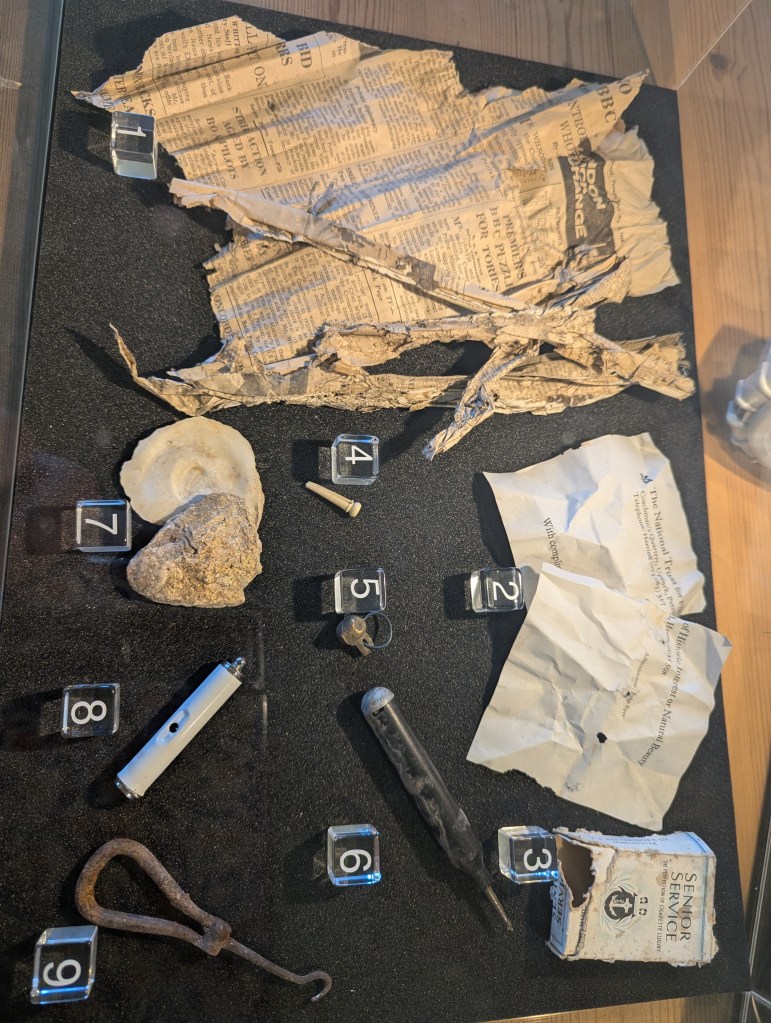
Visiting archives is a way to physically connect with the past, so I am keen to do so as a way to explore the stories that shape how we understand homes, communities, and change over time. As soon as I stepped into the Southwark Archives I realised that of course this is what an archives should smell like. That slightly dry, dusty but richly inviting smell. Absolutely ideal.

From that on-point smell, my visit to an archives only got better. As a first-time visitor to an archives, and going in an exploratory way to get a sense of the lay of the land, I didn’t have much of a sense of what I’d find, how it would all work.

The amazing archivist that I’d e-mailed before I arrived had, on the basis of a very broad set of parameters, collected together some information for me and it was all laid out ready when I arrived. I just delved right in, looking to see what piqued my interest, or felt like it related to my PhD.

The generosity of this work, people working to preserve parts of the past and help others make sense of it just blew me away. Watching one of the archivists respectfully and patiently respond to a million questions from a couple of people who had booked a visit. Finding and helping, making resources available and helping people who are coming to the archives with all kinds of interests and questions. The act of archiving, as they acknowledged themselves when talking about the changing norms in society, is obviously an act of choosing what is important, what should be kept, that says something about the time, place and people – even if those views reflect a worldview that most of us would now no longer agree with.

It was so incredible to actually physically hold documents going back over 100 years. Although virtual things are great and give us access to so much information easily, that sense of literally holding parts of history in my hands had me feeling quite emotional at times. The more so because most of what I looked at was the stuff of everyday life – brochures, flyers, news stories and reports. Often it’s the so-called ‘extraordinary’ moments that get recorded – moments in which most people are observers rather than participants, such as sporting events, the details of rich peoples lives. It was really lovely to see a richer reflection and recognition of people’s lives beyond that small slice of it.

Even though I felt like I was in hunter gathering mode, rather than really processing what I was seeing, there were still some themes which came through:

  • the care people put into looking after each other – the different schemes and plans to look after each other, to try and find ways to help people live healthier, better lives
  • an increasingly common mismatch between the amount of funding needed to look after, let alone improve social housing and what has been made available
  • restrictions on how people can live in homes they don’t own, regulations from an 1897 publication, much of which would still feel familiar today
  • different manifestations of the tensions between people and other creatures. Lots of news stories about rats, ants, mice, cockroaches and other insects and animals that are trying to make themselves at home

There were also some fascinating gems, including:

  • a sense of the changing expectations of homes coming through in a drawing from a 1928 publication. This proudly showed a lovely home that had a properly plumbed in bath in the kitchen. This would now be considered unacceptable but was then considered quite an upgrade
  • photo’s and stories from people giving glimpses into the different ways people navigate the world and place their home within it – from the landmarks around the place a registered blind person uses to orientate himself, to transient spaces briefly becoming homes for homeless people
  • Montagu H. Cox, the Clerk of the Council, wrote in January 1928 about ‘the housing problem’ in a way which felt both humble and yet purposeful – ‘These are striking figures (numbers of homes built), but it must not be supposed that the housing problem is already solved. Slums have not yet been wholly swept away, nor have houses yet been provided for all who need them. Moreover, the housing standards of to-day will not necessarily be those of to-morrow, and some areas not at present classed as slums are certain in course of time to come within this category. Nevertheless, much has been accomplished, the lines of future progress are more clearly discernible, and the time has been brought appreciably nearer when it may be possible to say that the solution of one of the most difficult and serious social problems of the age is at last within sight’. Much in there which would still hold true – from housing standards changing to homes and areas changing in character. That sense of a solution, written in a beautifully printed and bound book, looking positively to the future felt tonally very different to much of the public discourse we see and hear now about what’s possible.

My favourite find though was in the seemingly unlikely place of a 1939 brochure by the Borough of Bermondsey Electricity Committee. You’d be forgiven for thinking this might be an offering as dry and dusty as the air in archives but you would be wrong – richness indeed in that brochure, as in the archival air. Here’s a small sample from ‘The magic of electricity’:

‘Once upon a time, a little girl named Alice discovered a Wonderland where philosophic caterpillars smoked hookahs, and lobsters danced quadrilles, while the Mock Turtle sobbed without ceasing – a queer quarrelsome Wonderland of muddled magic. There was a lovely garden in this Wonderland, but Alice could not find the way into it until the middle of the story, when a golden key unlocked the door the led to the bright flower-beds and cool fountains.

Housewives who use the old-fashioned methods of lighting, heating, cooking and cleaning are just in Alice’s shoes. They are surrounded by a quarrelsome Wonderland of smoky fires, inadequate lighting, dirt that needs continual clearing away, and unending labour over the simplest tasks. They have not discovered the key that gives access to the lovely garden of Leisure – the golden key that is clearly marked “Electricity”.

With this little book, the Electricity Committee presents every modern Alice who lives in Bermondsey with the key.’

Key’s indeed to be found, in that brochure and the rest of the archives. An absolute privilege to be able to explore them, my first visit but hopefully not my last to that kind of ‘quarrelsome Wonderland’.

Seeing is believing?

With all of the discussion about clean energy transitions, it can feel very abstract for most people. Massive power plants, huge wind turbines.

Talk about the energy transition seems like it would feel more tangible and real to people if they are actually part of it. Every day you’d be likely to see your panels, or those of your neighbours. The talk of a transition would feel like something you were a part of. It would feel true and real and you’d be able to see how your life was better as a result.

Public acceptance of solar across the board seems to be high. The recent ‘Britain talks climate and nature’ report by Climate Outreach found only 11% of people don’t like seeing solar on roofs. That’s a huge level of public acceptance of a measure which can make quite a difference to the aesthetics of a home or street. People are also much more likely to get solar if their neighbours have got it, creating a potentially virtuous circle in terms of acceptance and take-up.

Solar installs are much quicker than lots of other measures, and less disruptive too. In terms of integrating solar into day to day life, there aren’t really any adjustments needed once it has been installed. Unlike with heat pumps which require space to be found for them and then they are using that space on an ongoing basis.

Immediately people get a benefit in terms of the energy being generated but there’s no lifestyle changes needed to be able to use it. There are lifestyle changes you might be incentivised to make as a result of having them – switching some activities to during the day, like using the dishwasher or washing machine – but if you don’t you are the one who might lose out.

With other energy efficiency or low carbon measures, there might be adjustments which are needed to make sure it works properly. There are also potential risks from an energy and climate perspective of the rebound effect. For those who have been under-heating their home that can actively be a good thing in terms of moving to a level of comfort which is better for health and wellbeing.

Directly providing measures which improve homes could also go some way to addressing the phenomenon Chen et al, (2025) identified, where the messaging on affordability doesn’t resonate with those on low incomes. This is something that people within the environmental sector can focus on around the benefits of some measures or the approach to decarbonisation more generally. So it’s humbling but helpful to get some insights into why that message can actually alienate many of the people it’s specifically trying to help. That messaging makes people feel nervous thinking about the costs because they don’t feel they can afford it. This is exacerbated by the fact they don’t think they will benefit from any transition so the costs are for them but not the benefits.

Being able to tangibly show people it’s for them can change that. With some things, like insulation, the measures themselves just aren’t visible to people unless they’ve been badly installed and then it becomes apparent through the mould, damp and other structural issues. Otherwise the impacts of the insulation can easily become invisible. People tend to take the savings from the energy efficiency and use it to fund an increased level of comfort – which can be the intention in fuel poverty schemes – or the savings get lost as prices rise anyway. So people feel frustrated because they were expecting a reduction in costs and instead see an increase.

In the medium term increasing the deployment of solar will also make it easier to shift costs from electricity to gas because people are less reliant on gas. Making that change is something that needs to happen to support the electrification of energy. Given most people are currently reliant on gas for their heating and hot water, there is an understandable concern about the impact of that shift on people’s health and incomes. Reducing the cost to people of electricity through the provision of free solar can then create the space to fairly and progressively make changes to costs.

Finding a way to give people a more tangible sense of ownership of the move to a decarbonised future feels utterly fundamental to getting people on board. Solar could be one way to do that, to allow people to see themselves as part of, and benefiting from that change.