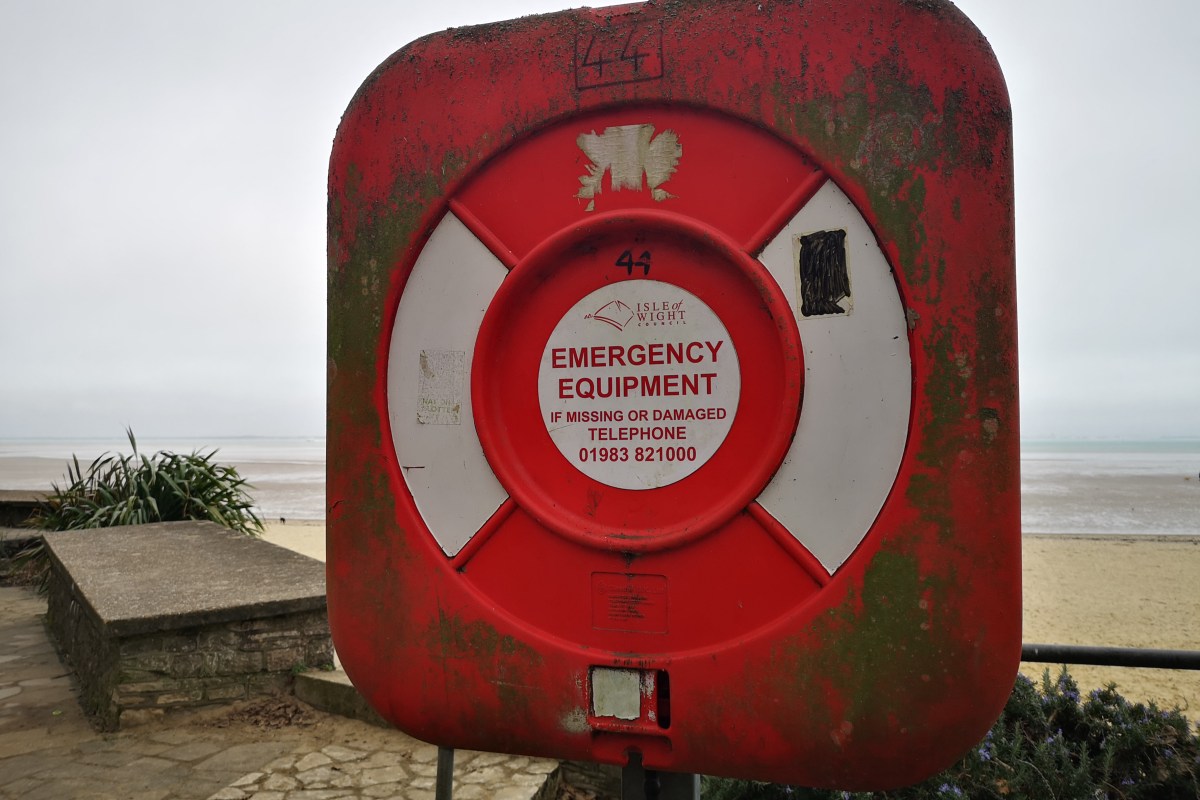
This is bad weather

There are different aspects to vulnerability and adaptation – some relate to physical aspects and some to capability – and the current heatwave in parts of the UK are showing both elements of that, but I’m particularly interested in the social elements of it. The social and cultural elements of adaptation, as with mitigation, are challenging but unlocking those aspects could then help provide the resources needed to deal with the physical aspects.

I’m, very slowly and a bit brain foggily, writing this piece as where I live in the UK experiences a heatwave and it doesn’t currently feel like actively enjoyable weather. I haven’t sleep well last night as it was too stifling, with no breeze. The room felt suffocating, I eventually got up and went outside where it was a bit cooler. Today I’m really not feeling very awake or engaged and I’m lucky enough to be able to arrange my work activities to do things that don’t require so much brain power. I was out in the hot, hot heat as I had an event to go to but it really didn’t feel like a good idea.

Yet I’ve heard and read lots of people describing it as nice or good weather – even as they might otherwise be talking about how uncomfortable the heat is. This does not seem like good weather to me, and nor does it seem like they actually think it is when they talk about different elements of their experience.

Perhaps the reason adaptation struggles to get much traction is that in the UK people associate ‘bad weather’ with rain, wind and cold weather. By contrast, hot weather can often be considered to be good weather – in part because of the conception that it’s really rainy and you can never trust it to be sunny in the summer. Hence the cultural idea of having a rainy Bank Holiday BBQ or rain-lashed picnic in the car. The idea that sunny weather could be ‘bad’ doesn’t fit with that view and so then the default for many is to describe it as good, even as they might talk about the impacts negatively.

While some impacts of hot weather can be obvious – such as wildfires, train cancellations or sunburn – it can be less so than floods or heavy snowfall where the impact is more visually obvious. If there are fatalities as a result of flooding or snowfall it tends to be more immediate and clearer to see the connection, whereas with heatwaves it can be harder to tell. Often people die as a result of an underlying condition which is exacerbated by the hot weather. These deaths show up as ‘excess deaths’ which is not a mechanism that is as easily communicated or has the same clarity of cause and effect.

However, a consistent message in the literature is that people underestimate the impacts and are reluctant to take action, even where it will affect them. In relation to flooding which has historically been more common than heatwaves, people can underestimate the likelihood of being affected, as the title of Burningham et al’s 2008 piece ‘‘It’ll never happen to me’: understanding public awareness of local flood risk’ suggests. Research on attitudes to and behaviours undertaken in heatwaves from by Erens et al (2021) found that people who were the most vulnerable or potentially vulnerable to heatwaves didn’t realise they could be affected and only a quarter of potentially vulnerable people changed their behaviour. Research by the British Red Cross found relatively high levels of understanding of actions that could be taken, yet there was a significant drop-off in the number of people who actually took action.

Helping to shift that narrative and getting people to engage with the fact this isn’t good weather for many feels like a pre-condition to then take steps to adapt to it. In the absence of that understanding, it is unsurprising people wouldn’t take action. It’s something that happens to other people rather than to them, until it isn’t of course.

London School of Economics research suggests there is a low expectation among people that government is taking sufficient steps to respond. This could partly be projection by them but also seems to be outsourcing responsibility to a government that is unlikely to be getting lobbied on this by people who don’t think it’s an issue for them. All in all it’s currently quite a hot mess and likely to keep getting hotter unless we can find a way to recognise how things really are and go from there.

Picking your poison

In the discussion between fabric first and fabric fifth it can often feel as though people are trying to get to the ‘right answer’ rather than looking at where the inefficiencies are, how big they are and trying to decide which is more feasible.

In choosing fabric fifth it means that there will be a need to generate more energy and increase grid resilience. All of this costs and means building more national infrastructure. It’s not the more efficient approach in lots of ways, as it means putting more energy generation in than might be optimally required. Asking people to decarbonise their heat supply is a much simpler message and one which can have the biggest impact on their individual carbon footprint. There can still be a place for other measures too, particularly if people want to fund them themselves, but if it’s hard to persuade people to take up any environmental measures, focusing on the most impactful could bring efficiencies that way. In addition to generating carbon savings more quickly, it could also help to reduce costs in trying to recruit people by using a simpler message, and cutting the costs of assessing homes as the standalone heat pump installation can be simpler than internal or external wall insulation.

With fabric first, there should be less energy needing to be generated. In practice this isn’t straightforward, with lots of evidence suggesting there’s a performance gap arising from quality issues in the install process and then a rebound effect, with many households taking improved energy efficiency as comfort savings. This can lead to an increase in energy consumption – and for those households who are under-heating their homes, with the knock-on impacts on the health of the people and the building itself affected, this can be a good thing on wellbeing grounds.

To get to those carbon savings also means trying to persuade people to take up the deeper levels of insulation it requires. This can be more invasive, with most of the ‘easy’ to treat measures done – such as loft or cavity wall insulation. There are still some remaining but these are more likely to be complicated works such as non-standard cavity walls, or perhaps they are lofts where the amount of things being stored makes it too difficult for the occupants to contemplate the work. The longer it takes to persuade people, the more carbon gets emitted along the way.

I’ve long been fascinated by the idea of the shape of the decarbonisation curve, what that means in terms of the quantum of carbon which gets emitted and crucially what that means in terms of how the shift feels to live through. Reaching net zero by any date by plateauing in a steady state way and then plummeting to zero, or a more gradual downward trajectory both get to the same point. Imagining the shape of those two separate trajectories, and therefore the space underneath them as a proxy for the carbon emissions, shows the amount of carbon generated is much bigger in the first scenario than the second. The first scenario increases the likelihood of feedback loops, which mean the impacts could be more significant. Thinking about the transitions and how they would feel to live through, goes to some quite different places. Even during the Covid-19 pandemic, what felt like a total transformation in how we lived globally led to a c.4-5% drop in carbon emissions in 2020. It’s hard to imagine a precipitous drop which is good for humanity. Whereas the more gradual drop suggests a more managed approach which seems likely to be much easier to live through.

If we lived in a world where everything was aligned to the fabric first approach – funding, regulation, owner and occupants willingness and interest and the supply chain capacity and capability – it could still be the best option. Effective and efficient. If that isn’t where we are, which it isn’t, then the question becomes one of trade-offs. To make decisions means choosing the trade-offs rather than acting as though they aren’t there and continuing to push specific approaches.