The number of rooms being let out in an HMO, uPVC windows and how to respond to requests for EV charging points. Some of the different issues heritage groups are grappling with on a day to day basis, as they too try and navigate what it means to seek to protect Conservation Areas. In a context where conservation issues are often cited as a barrier to environmental improvements, the couple of walking tours I joined as part of London Open House festival were a reminder that people in those areas are unsurprisingly unlikely to see themselves in that way.
The first walking tour was of Brockley, a well-preserved Victorian part of inner London in the London Borough of Lewisham. Here and there are some newer buildings, largely infill properties – either where there had been bomb damage or where there was space on the plot of a larger house to build a smaller property. Taken together, Brockley has a range of mid- to late 19th century-domestic architecture from large, ornate houses to what would have been more modest worker’s cottages. Many of the large houses have been sub-divided, in a different lifetime I lived in half the ground floor of one of the largest houses in the area – with 12 foot high ceilings and beautiful fireplaces it felt like quite the luxurious space to be in, and that was only a fragment of the whole house. Now though, it seems that some of the larger houses are getting undivided and returned to being just one home. Having lived there for just over a year it felt familiar.
The second walking tour was around Brentham Garden Suburb in west London, an area I’d never even heard of before, let alone visited. It was the first garden suburb to be built on co-partnership lines so that residents could buy shares in their homes. The suburb was Master-planned by garden city architects Barry Parker and Raymond Unwin, who later influenced Hampstead Garden Suburb and mainly built between 1901 and 1915. Designed with informal, tree-lined curving roads and small, varied house groupings rather than rigid grids, the place feels architecturally coherent but there’s also lots of variety, even on the same road.
The two walking tours one day apart offered a bit of a compare and contrast between the two areas. Of course some of what felt different might be that the people running the sessions are approaching things from a different angle, and so another walk and talk might have had more differences or similarities. Broadly though, both were engaged with what made their area interesting and grappling with what it means to preserve areas and their character.
There were plenty of similarities between the areas:
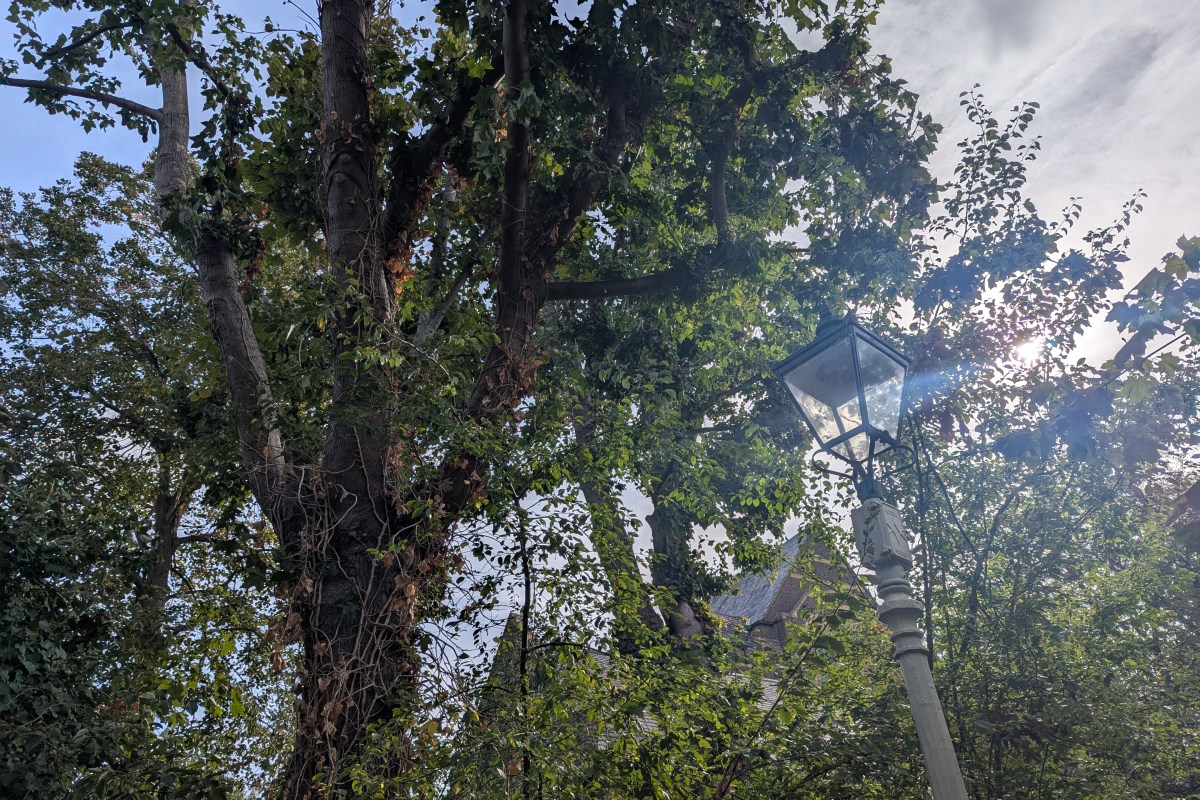
- Green, leafy and a bit of natural chaos: there are lots of trees in both areas, really underlining how green London is, and how much people, buildings and nature co-exist together. Some of the trees were there before the areas were developed – such as the old oak tree in a green space in Brentham Gardens, while many of them were planted as the homes were built. In Brockley that meant that there are some lovely tree lined streets with beautiful mature trees. Both areas had places that felt a bit more overgrown or wild – in Brentham Gardens there are what they describe as twittens – narrow alleyways between roads that were often quite overgrown, and in Brockley they have some old mews which have got lots of evidence of nature making itself at home
- Care and connection: in both places the area itself and the people giving the talks gave a sense of care in the place. From getting defibrillators installed in spaces around Brockley and talking with a sense of pride and quiet wonder about how they are told when they’ve been used and what that might mean for the number of lives saved, to being able to articulate what is special or distinctive about the place. In Brockley there seemed to be some active work ongoing to try and ensure HMO’s were properly set-up and able to provide good places for people to live. While in Brentham Gardens the Brentham Club provides a lot of facilities for people – from the pub to the tennis courts where Fred Perry learned to play – there were lots of signs of connection
- Connections beyond, to the local area: Brockley felt more connected to the wider area in terms of the facilities it was close to, with lots of shops while Brentham Gardens felt more connected through the sound of traffic from some large roads that were reasonably far away.
- Stories: there was a lot of interest in the stories of those who have lived there over time. The people on both walking tours gave a sense of trying to understand the stories and history of the place and people who have lived their over time and undertake various activities to try and capture that. From archives to informal groups who get together to support each other in exploring the history of their homes, there was a real interest in understanding more. On the Brockley walking tour there was a mention of some famous people that have lived in the area but they seemed as interested in discussions they’d had with people living in the area
- Expensive properties: even if when they were built they weren’t necessarily intended to be aimed at the richest in society – albeit some in Brockley clearly were – neither area is really providing for the humble workers now.
- Some surprises: it was fun to find a, with patches of green space hidden away in Brentham Gardens that had been intended to be little village greens. In Brockley there was a Nissen shelter that is in someone’s back garden
There are of course plenty of differences between the two areas though:
- How they came to be built: Brentham Gardens was built on a co-operative model and Brockley was developed by three landowners. One was about trying to allow people who were building homes for others to be able to build homes for themselves, while the other was about rich people getting to decide how they wanted a place to be. So Wickham Road was laid out as a wide, tree-lined road because the developers thought it looked grander
- Architectural variation: initially in Brentham Gardens there was the intention to have some variety and different approaches within a set of parameters. However new build properties have largely tried to be in keeping with the existing designs. While Brockley was more homogenous initially, albeit still with variations across buildings – with Italianate and Gothic alongside more traditional Victorian styles. Since the properties were first built in Brockley the newer buildings have had more variation. From the 1960s blocks that were in-fill buildings where there had been bomb damage, to newer build properties that have found spaces to develop. There were some that tried to replicate the kind of feel but Brockley felt more mixed in terms of the new developments
- Wiggly and straight: Brentham Gardens was trying to instill a sense of the countryside and there were attempts in the layout to try and avoid straight roads as it was felt this would give more of an intimate country feel to the place. This means that views are a bit more meandering, apart from one long road. By contrast Brockley has got lots of straight roads, some were more of a grid pattern, but not all of them. Wickham Road was the grandest and not only is very straight but also quite wide
- Community spaces: Albeit smaller than originally intended, there is a community centre in Brentham Gardens, while the Brockley Society people were talking about how they don’t have any community space within the Conservation Area. There are some places close by but outside of that area, and they have creatively used some old telephone boxes around the area – in addition to one that hosts one of their defibrillators, they have also turned a couple into miniature libraries.
- Size: many of the properties in Brockley seemed to be bigger than many in Brentham Gardens, at least in terms of the height and the original size before many were sub-divided. This might be partly why Brockley has then seen many of those homes sub-divided into flats because it is easier to do some when there’s already a four storey building with a set of stairs up. It sounded as though some Brockley properties are getting turned back into one individual dwelling after the sub-divisions, while in Brentham Gardens we were shown an example of one house which used to be two.
A fun compare and contrast between two areas that in some respects are quite different but actually showed so much of what it means to live in a place and create connections from the past to the future, from a house to the wider area. They were both a great reminder of how, even in an urban setting, we aren’t apart from nature but living in and around it. That there are stories aplenty down every road and in every building if we want to have a look…

