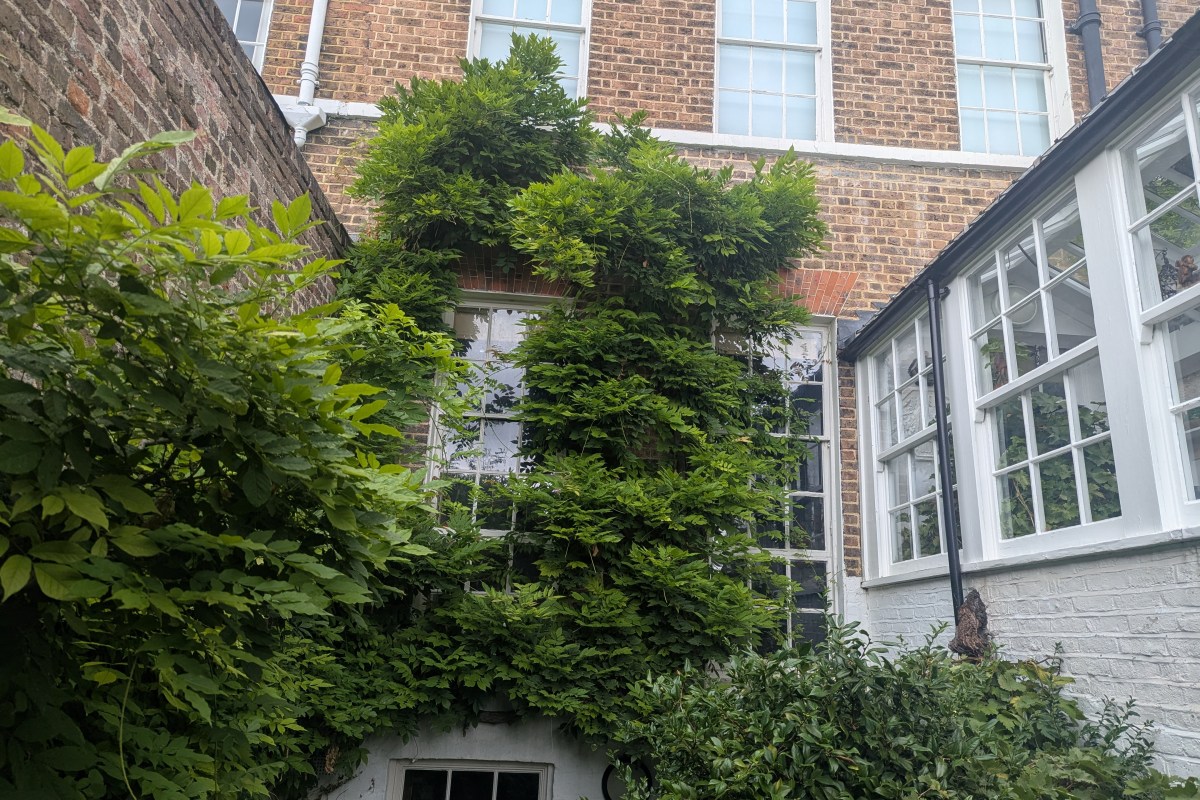
While we, understandably, can think of homes and buildings as mute backgrounds, we also have a sense of them as places that see, hear or hold memories – the idea that ‘if the walls’ could talk they would have stories aplenty. Sometimes that can feel difficult, visiting places where bad things have happened but sometimes those conversations can take you by surprise and bring a little moment of joy.
Visiting Emery Walker’s house in Hammersmith I was taken by a gnarly grapevine in the sunroom. I discovered that it was from a cutting taken from Hogarth’s grapevine over 200 years ago and yet it was still going strong – producing lots of grapes and generally seeming quite vigorous. So much so that recently when the original grapevine at Hogarth’s house died, they took a cutting from Emery’s Hogarth grapevine to replenish the stocks. Over hundreds of years later there is still a conversation between those houses.
And perhaps the reason I was so drawn to the grapevine rather than some of the other plants or pieces I saw was because of grapevines I had planted at my previous home. Emery’s grapevine was more likely to speak to me, and me to respond, than some of the other items precisely because it touched a memory of my homemaking in my previous home. Planting a grapevine to try and turn a narrow pathway alongside another garden into a more beautiful, verdant space – and to hide a neighbour’s garden that was more of a weedy paradise than a thing of beauty. Another grapevine I bought one anniversary of my husband’s death.
Three very different homes somehow in conversation across the centuries. Conversations mediated by people and memory, physical things and intangible emotions but a conversation nonetheless. Another reminder of how homes are porous places that can connect us to other people, and to other versions of ourselves.
 We need new stories...