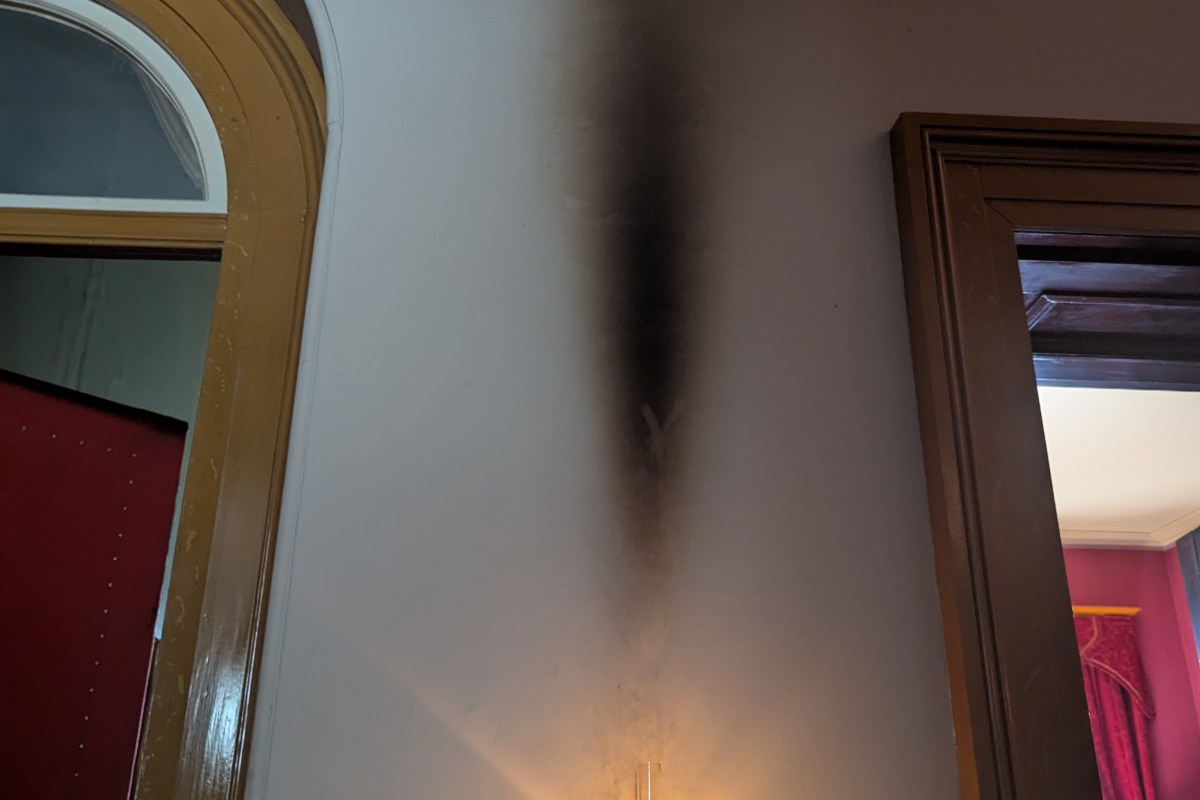
Scents can be so evocative, so it perhaps shouldn’t have been a surprise that the visceral smell of oil and gas lamps that greeted me as I entered The Judge’s Lodging in Presteigne gave such a connection to the past. History can often feel abstract, with tales of rich and powerful people living lives that seem very different to ours. From the focus on those in the ruling classes or aristocracy to different habits and practices, it can feel hard to have that sense of connection. Smelling the oil and gas lamps. feeling the effects of inhaling their fumes on myself, and observing it in the surroundings bridged that distance.
I have read about oil and gas lighting and the fact that it could create some soot but I didn’t really get an impression from reading about it quite how it manifested in practice. As soon as I saw and smelt the lamps, it was easy to connect them to the tracks of dirt and grime on the wall and up on the ceiling. Connecting the dots between the general description and how it worked in practice felt very satisfying – and I wondered if that was represented in period films. From there I found it easy to imagine how I might be annoyed if I lived then. Having decorated and made the place look lovely and then to see it getting messed up and dirty would really annoy me, in much the same way the first mark I notice on a newly painted wall does now. Of course it’s not a direct transplant from now to then and perhaps I would be more sanguine about it because that’s just the expected price that would be paid.
But then it also made me think, it isn’t as though there aren’t modern equivalents to those impacts. I look at that technology and it seems obvious that it’s not an ideal option. That’s because I’m comparing it to technologies that don’t have that same impact direct or visible impact in the home. In the home, the negative effects of gas heating can manifest in invisible impacts such as carbon monoxide poisoning, or there can be damp, condensation and mould from a mixture of how we use the home and the insulation levels. Yet those same technologies we now use also have impacts that are far worse at an aggregated level that doesn’t manifest directly in the home in the same clear cause and effect kind of way.
There was also a clear above and below stairs divide that I could both see and smell which felt starker than I had felt when I visited Uppark House last month. As the picture below shows, there was a transition from the nice wallpaper above stairs to the more damp and condensation filled part below stairs:
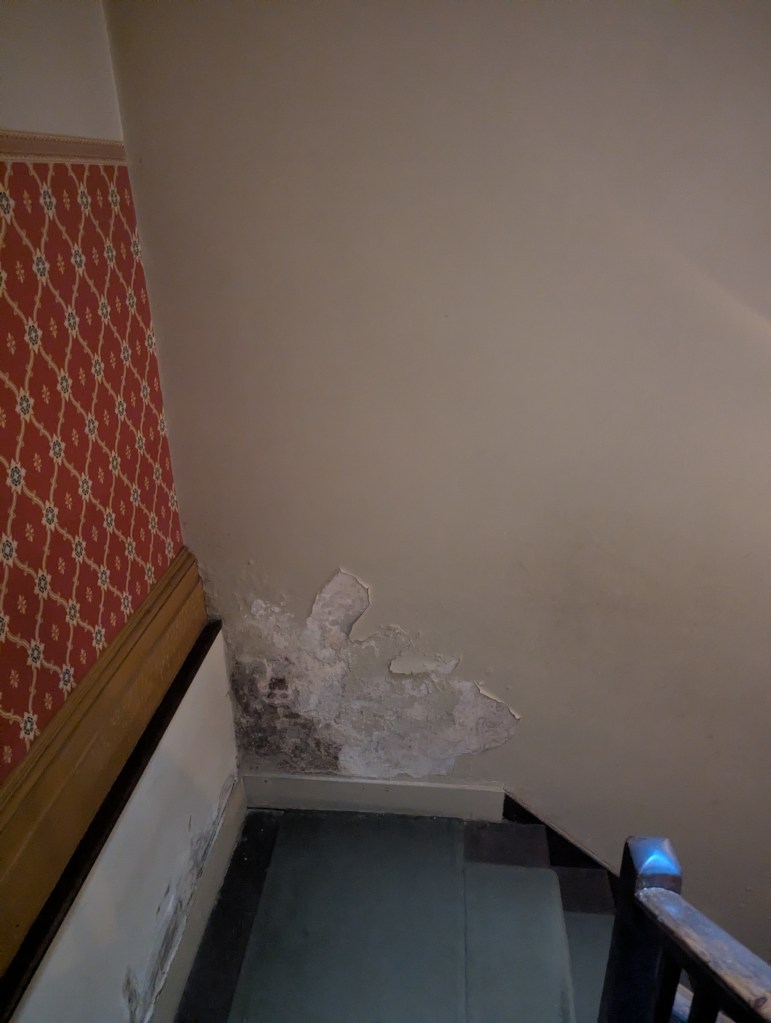
Where the Servants quarters in Uppark that we got to see felt quite light and airy, at The Judge’s Lodgings they were much darker, felt more damp and with low ceilings it was easy to imagine how much more stifling the cooking smells would have been there. There were also signs of damp around the place, which didn’t seem so surprising given the low ceilings, cooking and washing activities which would have been done there and the fact it would have been kept empty for large parts of the year when the court wasn’t in session.
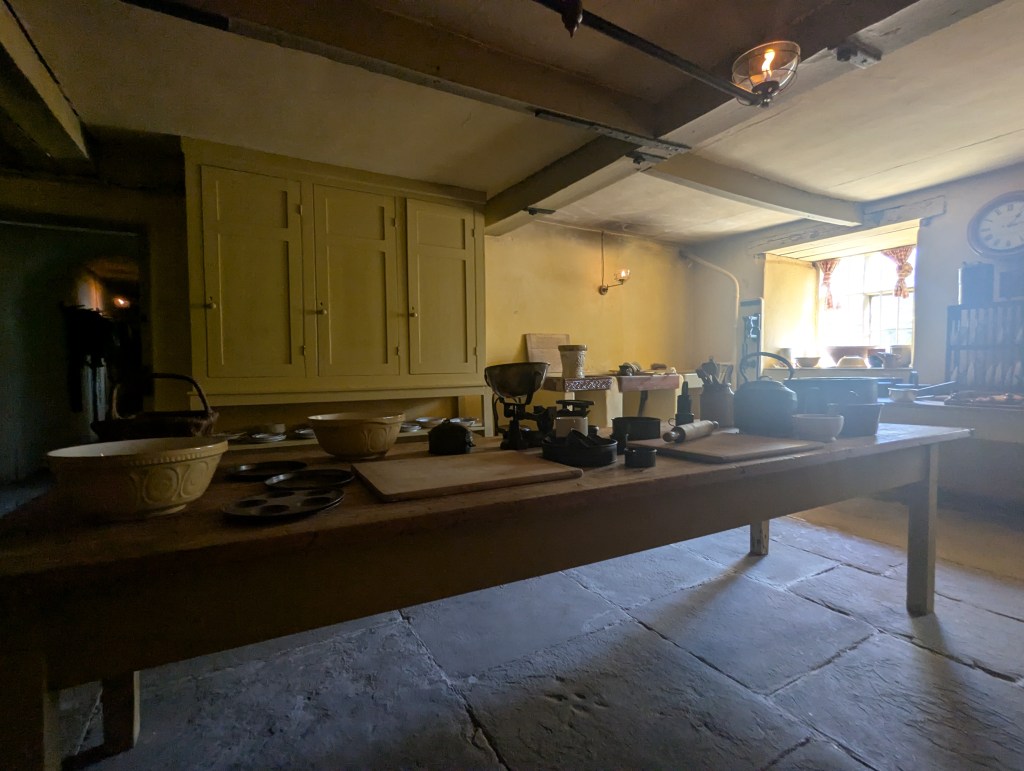
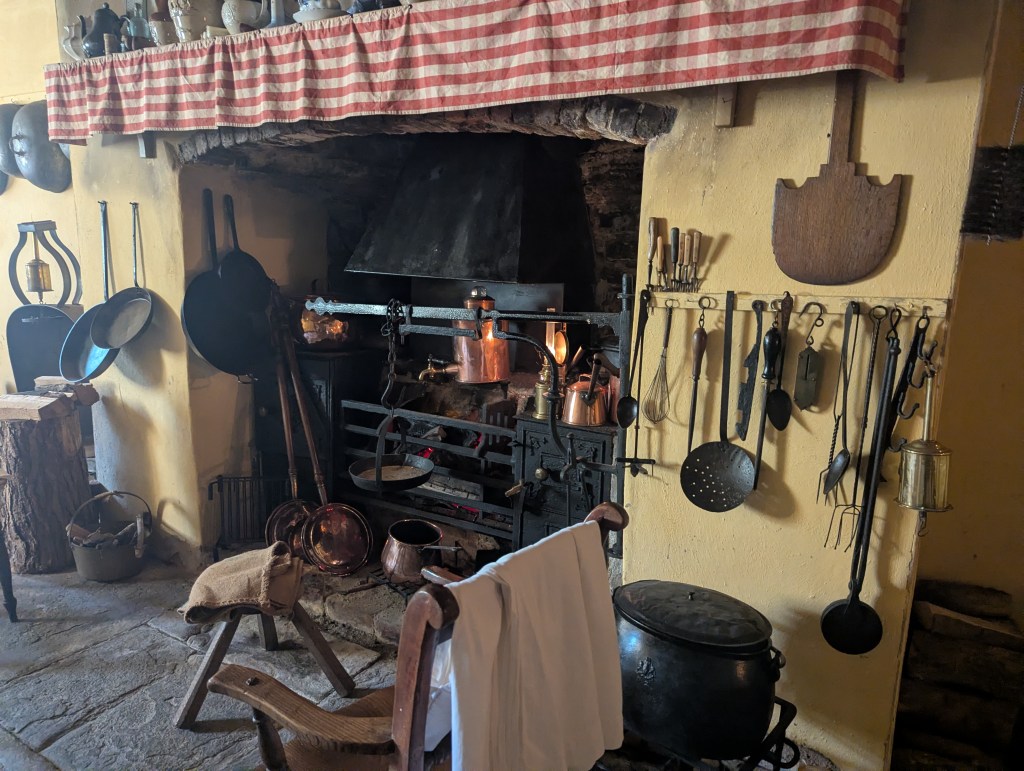
The servants were the first to have the gas and oil lighting – it was tested out on them before the Judge’s had it. A precursor to the fact many schemes to try and increase deployment of insulation or renewable technologies have focused on the social housing sector where people have had less choice about whether they can accept things or not.
For whoever slept in the alcove off the space where they worked and ate, that sense of being unable to escape their work – both physically and also with the smells of the place, would have felt even more marked.
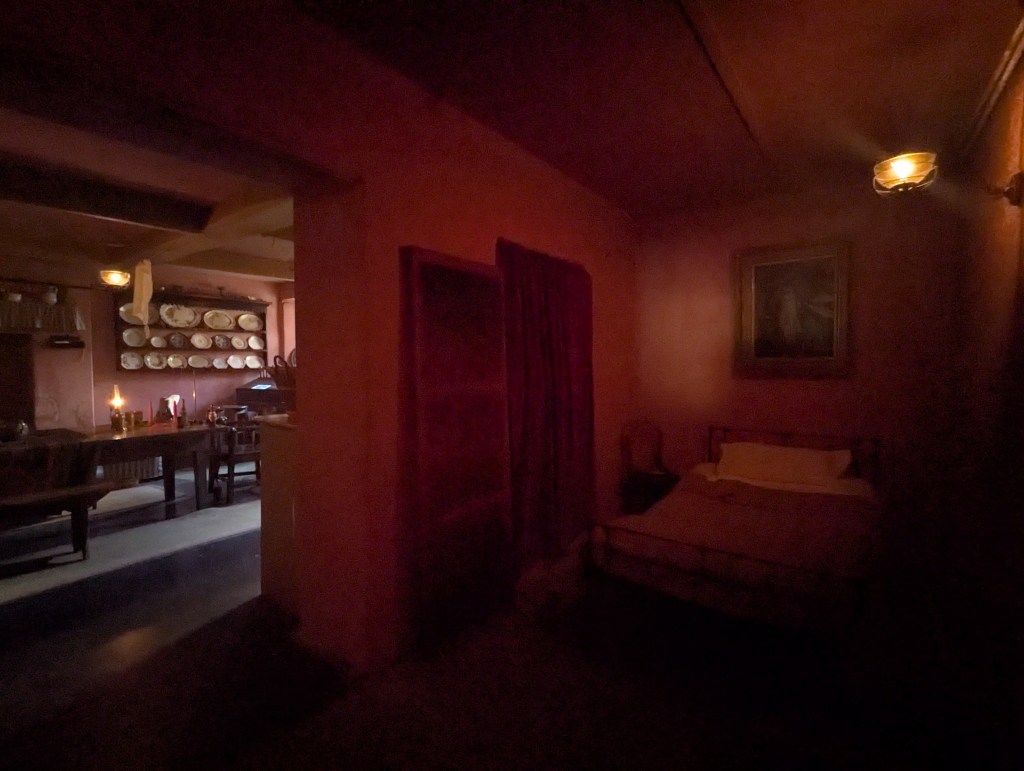
Although the Judge staying here would have experienced this place as a more relaxing space than the servants were likely to, for both the people living above and below stairs this was a working home, not just one for relaxation. However, even there, the comparison between the dark alcove for sleeping and living spaces below stairs, and those of the spaces above stairs showed, while there was a similarity in theory the practice would still have felt quite different.
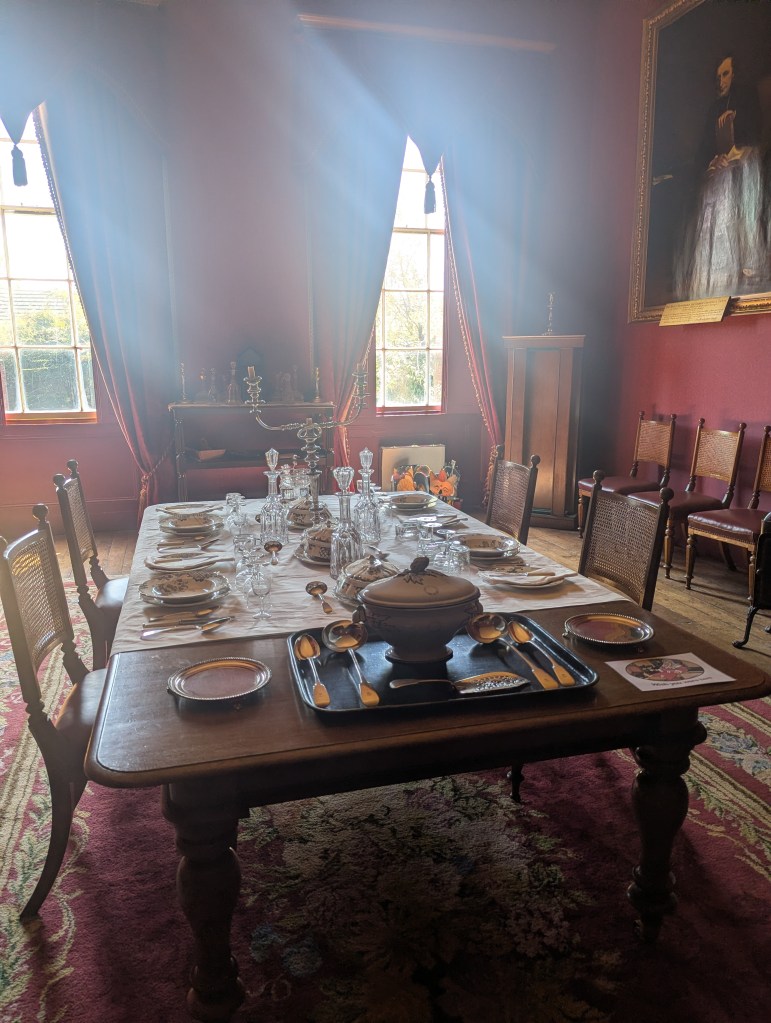
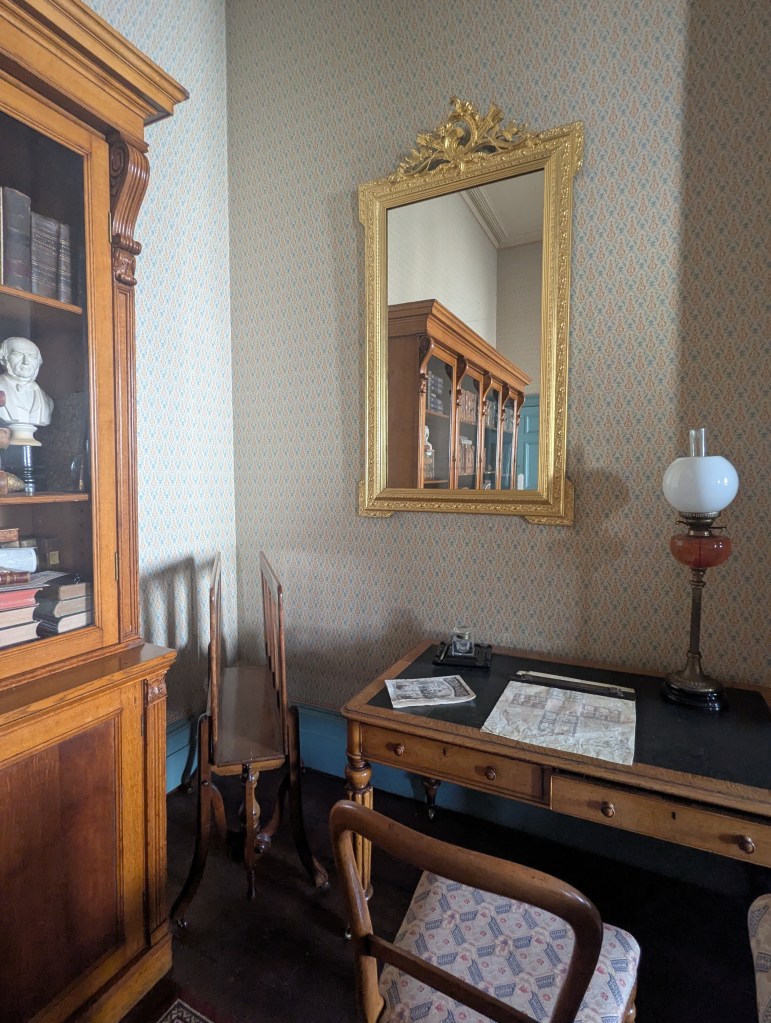
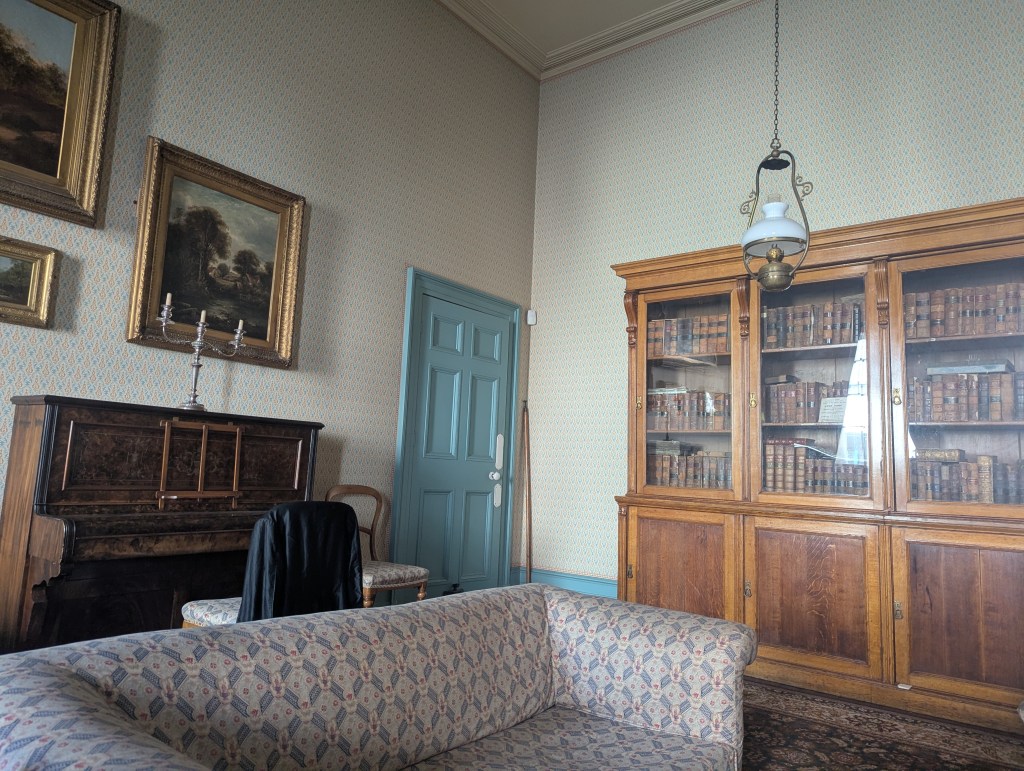
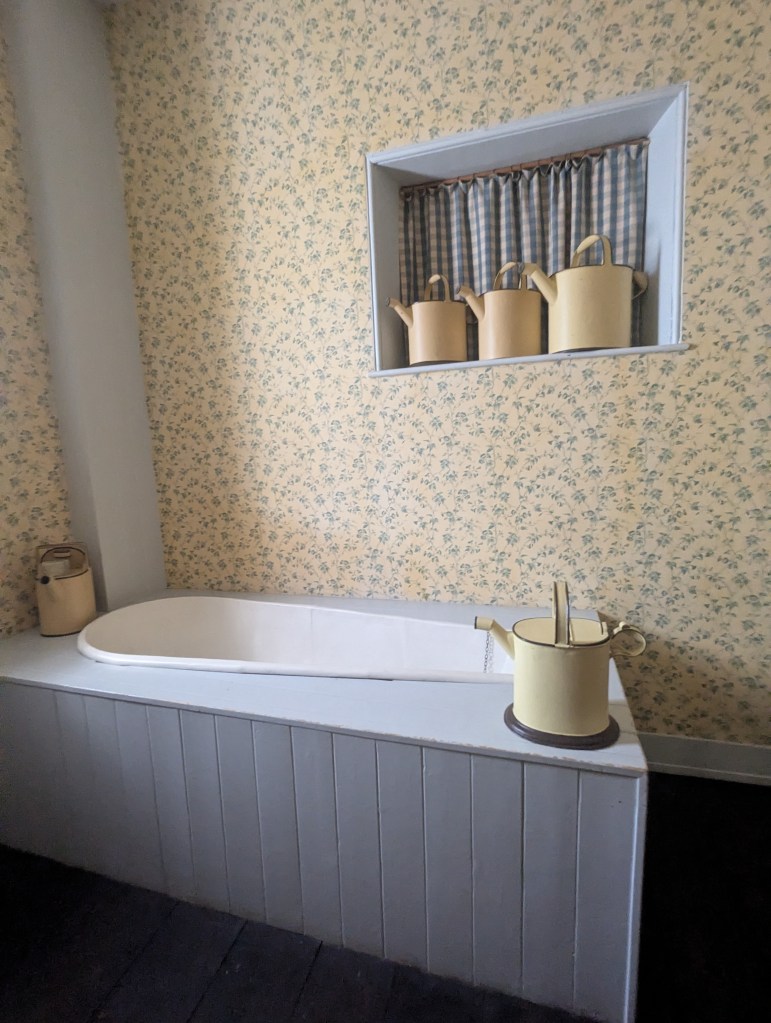
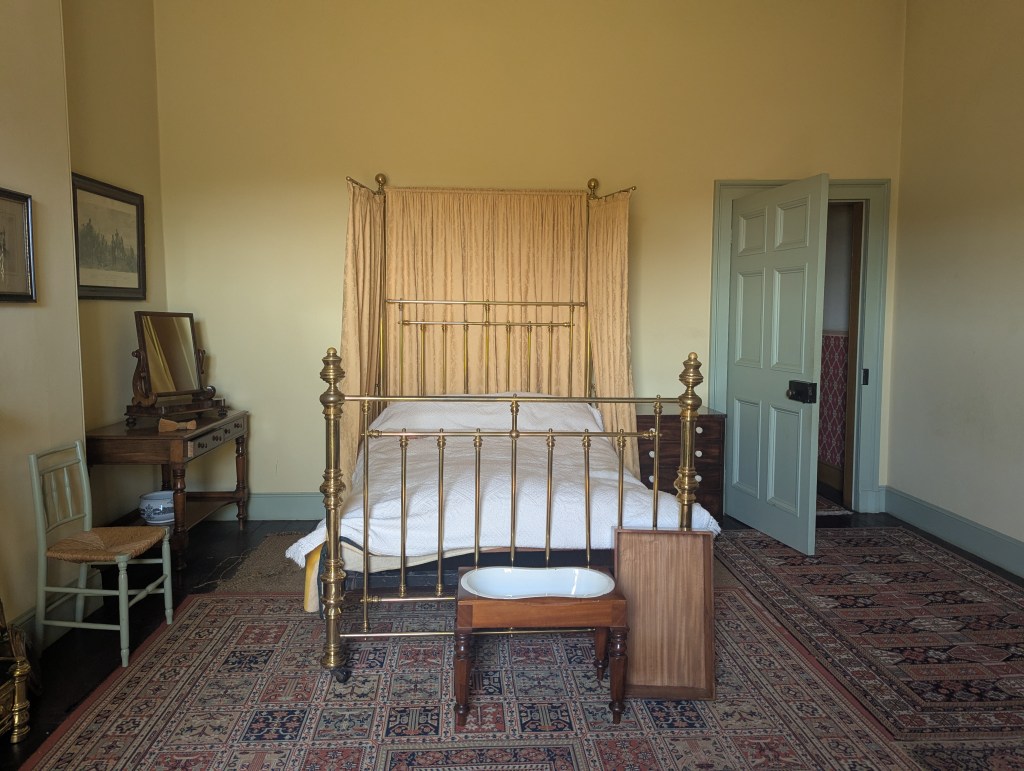
A very different kind of home to others I’ve visited but it was great to see, and even better to briefly smell, the place and through it, get a clearer understanding of what it would have been like to live with those technologies.

