The hard sell

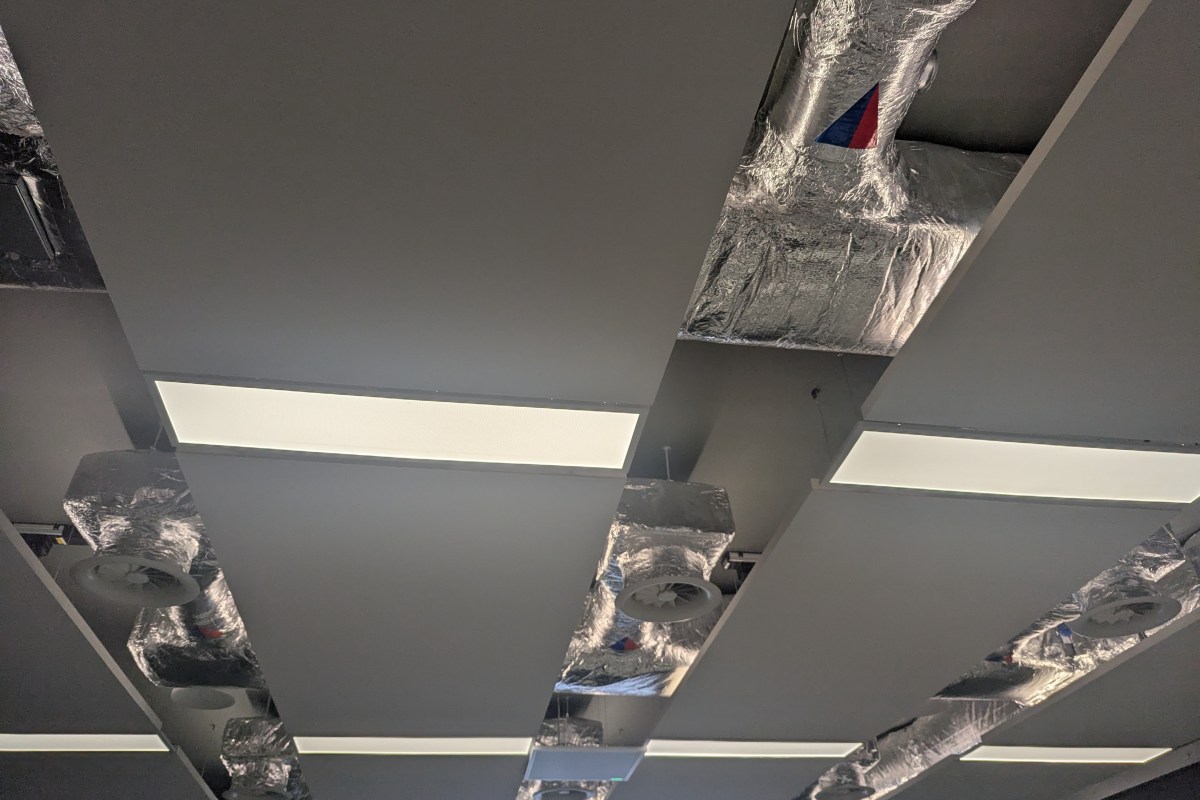
I was at Elemental London earlier this week. A trade show and conference about the built environment. Plenty of flanges and pumps and gadget goodness to try and make sense of.

At one of the sessions I did go to, someone giving a presentation said that it’s hard to sell heating systems because people only want to talk about them if something goes wrong. A gentle, knowing laugh went around the space.

It feels like there’s plenty of truth in that. Heating systems aren’t the most exciting thing to talk about, there’s lots of technical details which don’t mean much to most people. The language and technical details can be off-putting to most.

So why try and sell a heating system? Why not talk about the things that do interest people instead? Warmth and comfort and relaxation. As Fouquet discusses, people think about energy services – not exactly marketing ready language but that phrasing more readily engages with what people are actually looking for. The outputs and opportunities that flow from the energy, rather than actively being interested in the energy source itself.

We can either keep being frustrated with people or we can go to where they are and really engage with what interests them. There was some sense of an attempt to do that in sessions around the conference, with discussions around co-creation and protecting what’s important to people. More of that is needed to turn fledgling ideas and approaches into things that can more consistently appeal to people.

A scone-fuelled mission

It’s fun to have a mission.

I’ve been to the Tate Britain many times before but this was the first time I had a mission – I was looking for artworks that had representations of home in them.

Often I wander around museums and don’t really feel like I’m engaging with them. I did a short ethnography course a million years ago and the activity I undertook was watching others interacting with an artwork. Sitting there for an afternoon I felt quite exposed because, although I’d picked a quite well known and large piece of art to watch the watchers, most people passed it by very quickly indeed. My sitting there for so long felt very out of place compared to how long others were interacting with the artwork.

As someone who’s never learned ‘how to’ interpret art, I don’t feel like I come to it with a very wide vocabulary to understand what I’m seeing. That’s partly why I’m so interested in including reviewing different cultural materials in my PhD – it’s a way for me to learn some skills and approaches to understanding and interrogating artwork.

I love going to museums and galleries and enjoy exploring, so being able to get more ways to understand pieces of art and find ways to interact with them in a more meaningful way feels like such an enriching thing to be able to do. The fact that it’s in the service of something that feels useful in terms of answering the questions of my wider PhD then means I can allow myself to enjoy it without the more puritanical streak in me freaking out.

I also got to have some delicious tea and a lovely scone with an absolutely stonking amount of clotted cream and jam to refresh me part-way through the endeavour. If anyone had told me this is what working on the weekend could be like I think past me would find it as hard as current me to fathom this could be the case.

In that context then, I really enjoyed having that sense of purpose – being able to make my way around the exhibition with a hook to see what I could find. I also passed on my mission to the posse I was with which added to the fun, for me at least – I didn’t do a feedback poll to see how the others felt about it.

I had expected to be able to find more things along the way than I did though. Lots of pieces either didn’t seem to relate to the home or didn’t show people in that context.

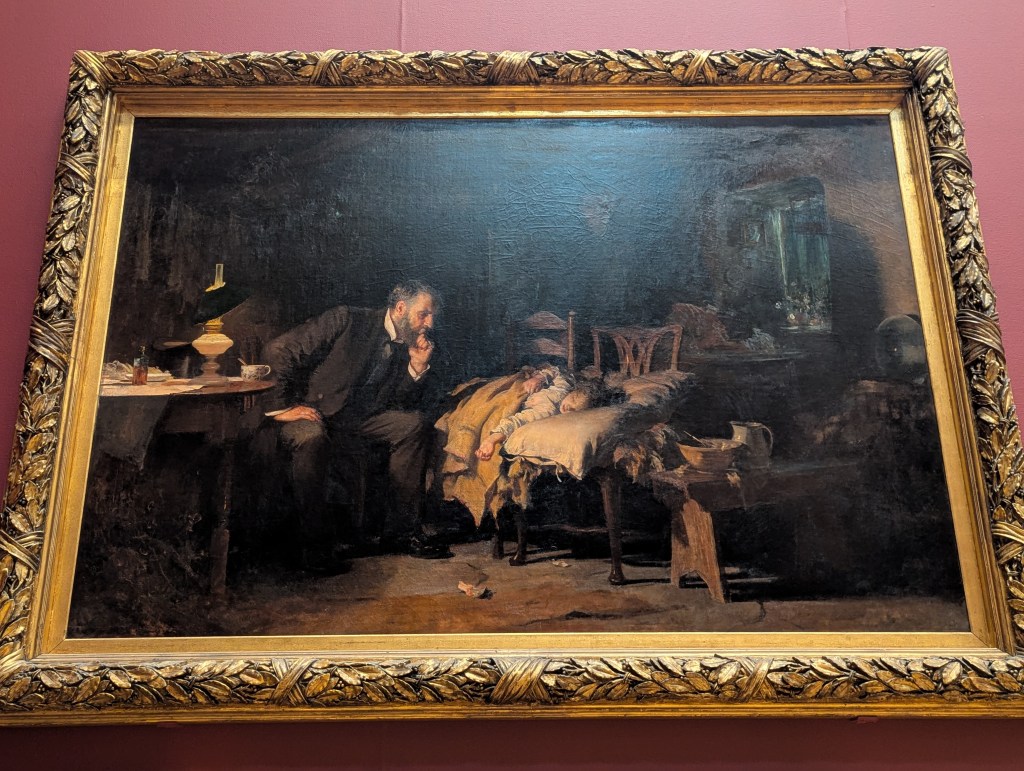
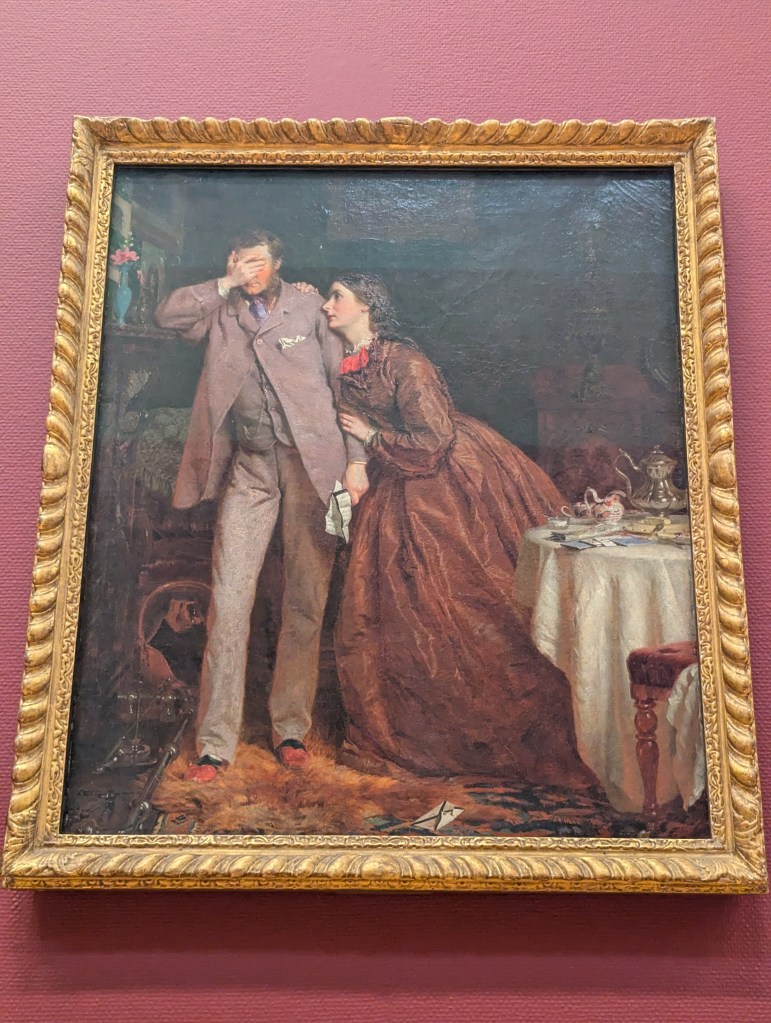
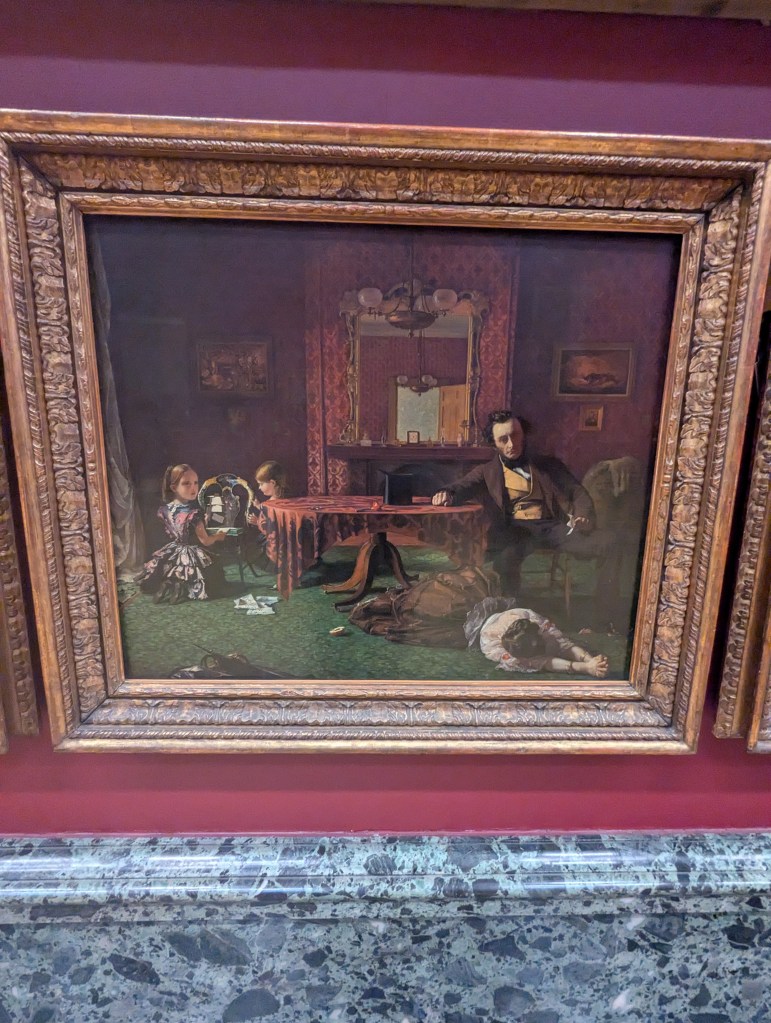
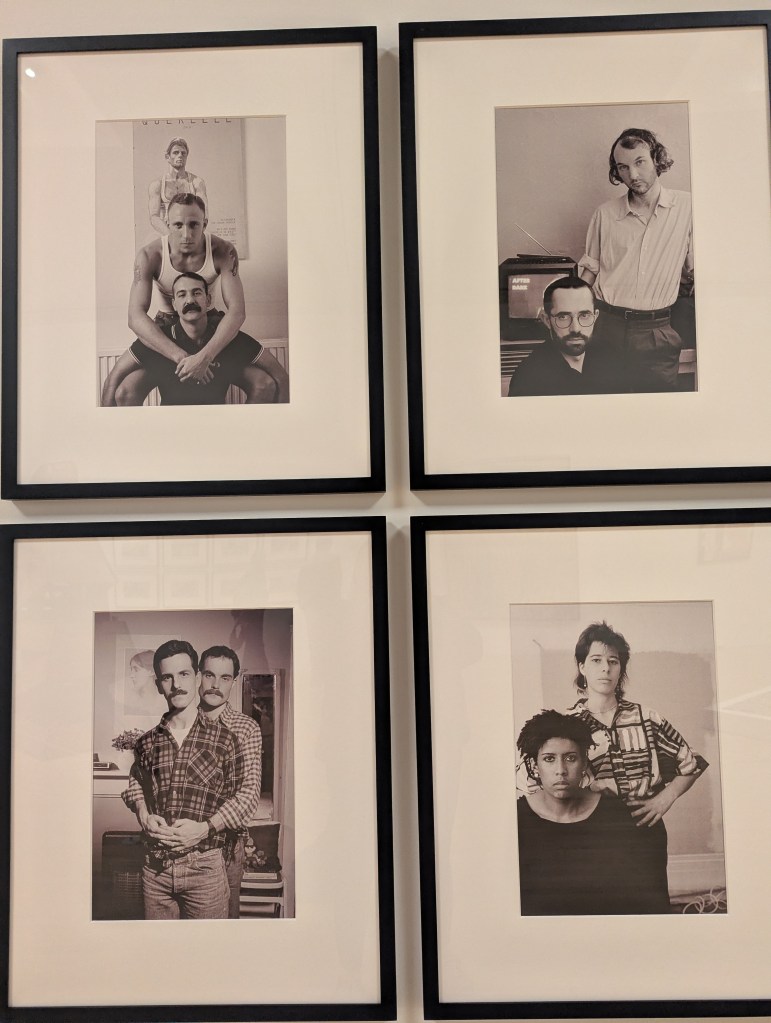
Here are a few of the ones I did find along the way.

Walter Sickert, Ennui, 1914

A fascinating piece, with such a story within it of the relationship between the two people. Virginia Woolf wrote an essay about Sickert, and particularly this piece, as a response. Albeit Woolf was writing in response to another version of the painting done by Sickert and held at the Ashmolean Museum – that one has much more vibrant colours and decor but the people within it are unchanged. Stuck and bored whatever their surroundings.

That sense of a story in the paintings comes through much more strongly in those pieces where there are multiple people in. From a Dr looking after a sick child, to men distraught – sometimes supported by their wife as in Hick’s work, at other times, as in Egg’s the prostrate woman is apparently the cause. Of course that also makes it harder to see the interiors though…

Woolf makes another appearance in the home of one couple in Gupta’s series showing homosexual couples at home. The photos were taken at a time in the 1980s when homosexuality was being portrayed as deviant whilst these photos present them as ordinary rather than other.

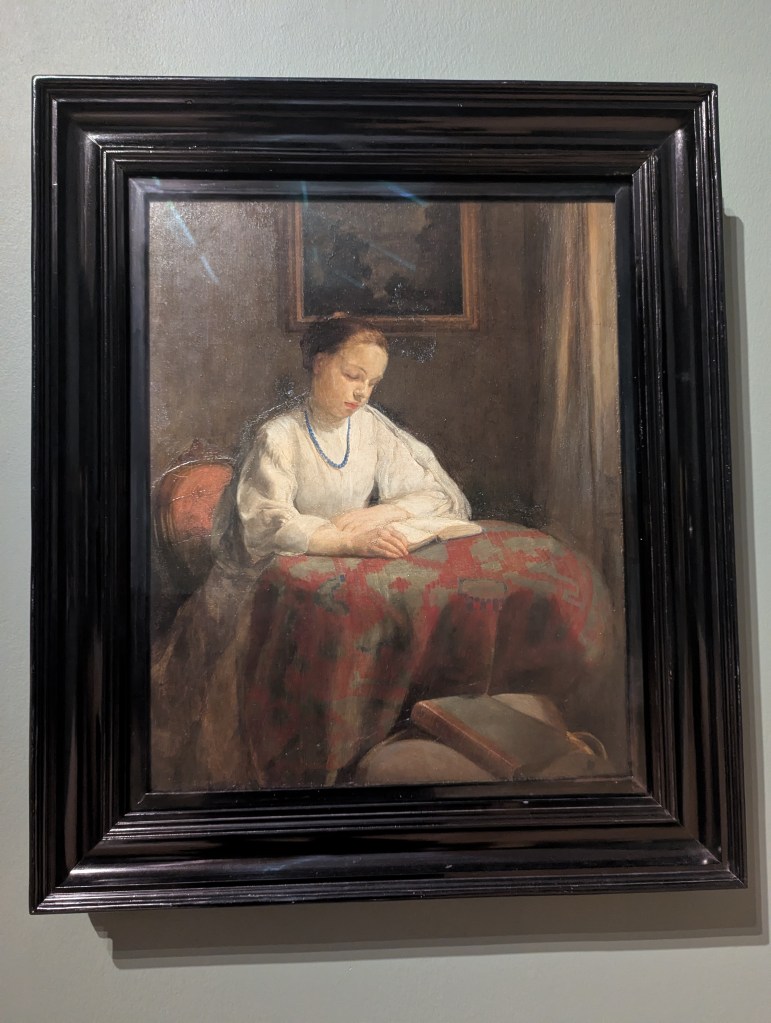
All of the paintings have a story to tell but from this collection of paintings at least, it’s a gentler story in those with just one person in. Peace, quiet and reflection in the scenes but, apart from McEvoy’s painting the interiors themselves are vibrant and busy – full of colour and objects.

More wandering and exploring, a beautiful richly coloured and empty view of the room where Shakespeare was apparently born; a side-quest visit to see the Henry Moore’s because I can still enjoy the stark, sensual beauty of them whilst working hard.

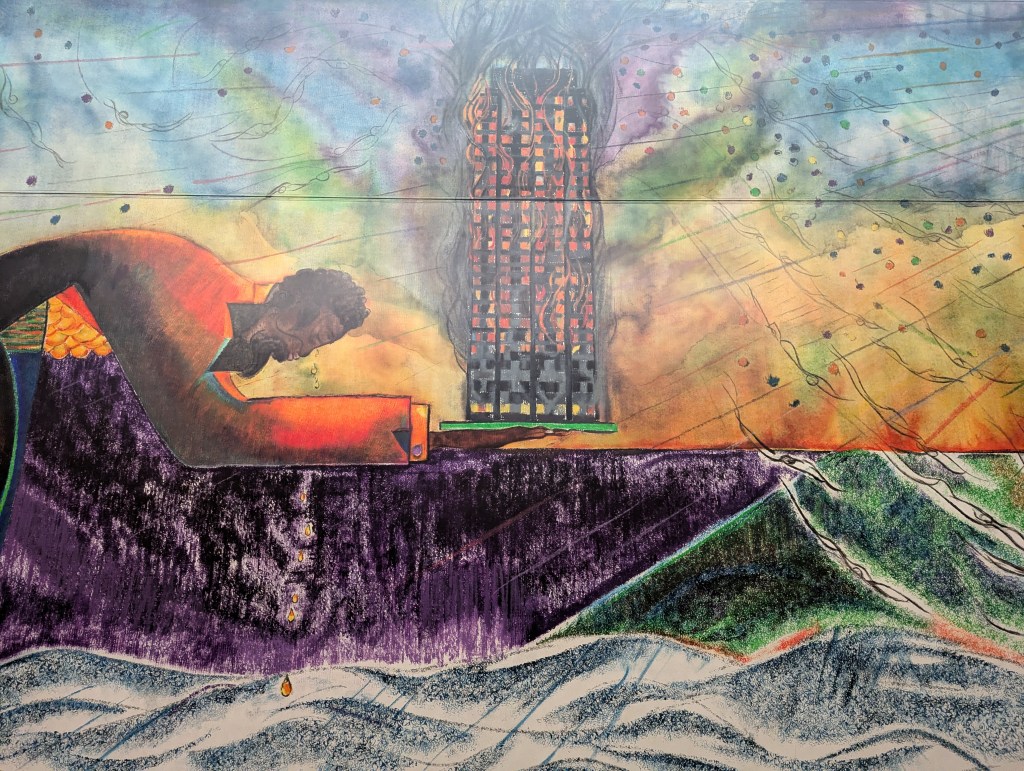
Then, as we left the building, we were met by Chris Ofili’s colourful, elegiac piece in memory of those who died in the Grenfell Tower fire. A totally different piece. The scale monumental compared to the smaller pieces I’d seen. Richly coloured and far removed from the gentle, quiet reflections. As with some of the other pieces, telling a story about when things have gone wrong, failings and harm. This time, at a societal level rather than between two people. The painting itself has a dreamlike quality about a nightmarish situation.

Chris Ofili, Requiem, 2023

Only a few pieces of art found on my visit but that small selection shows just how varied homes and home-making and un-making can be, how fundamental they are to our lives and wellbeing.

Moons and moons and moons

Talking about other planets often seems to be another way of talking about Earth. ‘Orbital’ by Samantha Harvey, the poetic, beautiful book about a day in the life on the International Space Station, much of what made it so wonderful to read was being taken to somewhere else I’d never get to go to and seeing Earth afresh. Being shown the wonder, richness and improbable aloneness of our Earth in the universe.

In ‘Moon’, Duncan Jones’ 2009 film, so much of the story is about the focus of Sam Rockwell’s character Sam Bell on looking after himself as he counts down towards the end of his three year stay on the Moon so he can return to Earth, his wife and family. Sam is all alone on the Moon, alone apart from an AI helper and ‘buddy’, mining for helium-3. He is limited to getting intermittent messages from them as the live communications links between the Moon and Earth are down.

At the start of the film we see Sam trying to keep himself together physically and mentally. The toll the work, location and dislocation from home, his life and family have taken on him is increasingly apparent. We see how much he wants to get back to Earth, to his home and family, how close it all seems and yet how far given what seems to be a declining state of health. As the film unfolds, we watch his health deteriorate.

Seeing him as he gets physically injured, as his mental health seems to be affected, it felt like I was seeing the madness of our pursuit for energy playing out on one person. Getting sick and going mad as an allegory of our collective madness. How this plays out on him – his health suffering, physically and mentally scarred, bruised, burned and eventually left for dead. Disconnected from those he loves, watching them from afar, intermittently, as they grow and change without him there.

Heidegger talks about how technology can alienate us from ourselves and our true sense of being. That we are all beings in this world, having relationships to each other but technology can lead us to see nature and other people simply as raw materials. This takes us away from our sense of self, our way of being in the world which Heidegger sees as crucial to our humanity. Although there’s much to criticise Heidegger for – professionally and personally – ‘Moon’ gives a cinematic view of what that disconnect can look like.

The distant company Sam is working for, distant both physically and emotionally, seem to be operating from this Heideggerian perspective – they give meaningless platitudinal reassurance but don’t do anything to fix equipment or look after him in ways which would actually be useful to him. Sam continues to work even whilst he is unwell out of a sense of obligation. Potentially also because it is hard for him to imagine what it is that he would do if he doesn’t work. He has some interests there – making a model replica of his hometown and exercising – but his whole life has become so built around the work that perhaps he needs to keep working to not have to grapple with who he is without the work. That there isn’t anything there for him apart from the work, so he needs to keep working to help make sense of the place.

Seeing the mining unfolding on the Moon, what I think of as a pristine environment, somehow seems more shocking and throws into further relief what we are doing on Earth. Compared to earth, where it’s estimated there is only about 100kg globally, the amount on the Moon is relatively more abundant. Although there is only a low concentration of helium-3 on the Moon, different samples have found up to 10 parts per billion(ppb), with the average about 4 ppb, it’s still something lots of companies and organisations have considered or investigated. Currently helium-3 is used in a few ways, including in cryogenics and quantum computing but it’s also considered a potential future source of energy, as the film proposes it is used. The film shows the Moon’s surface getting utterly churned up as Sam tries to find crumbs of helium-3 to send back to Earth.

Reading about energy transitions and one of the key discussions in that area is whether there have in fact been energy transitions or whether it’s simply a case of energy additions. The argument for energy transitions is about progress away from older energy sources and bringing online new ones. Particularly one, the discussion is about a transition away from filthy fossil fuels to cleaner sources of energy – renewable sources such as solar, wind or hydroelectric, as well as cleaner by some metrics ones such as nuclear.

Fressoz’s book ‘More and more and more’ talks about how, rather than energy transitions, what we’ve had, and are going through, are energy additions. What we’ve seen over time, and see still, is energy additions, we’re still using old technologies. Data from ‘Our World in Data’ shows that more traditional biomass is burnt globally now than 100s of years ago. We’re still using coal and gas. This year has seen the highest ever level of coal usage globally. Whilst more renewable technologies are coming online, we’re also seeing an overall increase in the amount of energy being consumed globally.

As Fouquet and others show – for instance in Fouquet and Pearson’s 1998 article ‘A Thousand Years of Energy Use in the United Kingdom’, the more energy that becomes available, and the more affordable it becomes, the more likely we are to spend any disposable income on energy. The more people are using energy, the more it becomes worth investigating how people can more efficiently use energy, or finding new ways to use energy. So then it becomes more affordable, and more normal, for more people to use energy. Then we go around the loop again.

Shove talks about the adoption of practices and how comfort becomes something that people seek. This feedback loop between availability, use and rising expectations or changing norms can then feed off itself. We can justify the mess we make of places on Earth or, in a potential future, the Moon or indeed other planets – apparently Jupiter has the most helium-3 of all the planets but that’s even more inaccessible than the Moon – because of all the uses we make of energy.

I found the watching ‘Moon’ to be an unsettling story in many ways, yet it was also like watching a story I’ve seen many times before. The film provided a near-future reflection on scenes and stories that continue to be played out across the world for other resources.

Back to the future

Visiting archives is a way to physically connect with the past, so I am keen to do so as a way to explore the stories that shape how we understand homes, communities, and change over time. As soon as I stepped into the Southwark Archives I realised that of course this is what an archives should smell like. That slightly dry, dusty but richly inviting smell. Absolutely ideal.

From that on-point smell, my visit to an archives only got better. As a first-time visitor to an archives, and going in an exploratory way to get a sense of the lay of the land, I didn’t have much of a sense of what I’d find, how it would all work.

The amazing archivist that I’d e-mailed before I arrived had, on the basis of a very broad set of parameters, collected together some information for me and it was all laid out ready when I arrived. I just delved right in, looking to see what piqued my interest, or felt like it related to my PhD.

The generosity of this work, people working to preserve parts of the past and help others make sense of it just blew me away. Watching one of the archivists respectfully and patiently respond to a million questions from a couple of people who had booked a visit. Finding and helping, making resources available and helping people who are coming to the archives with all kinds of interests and questions. The act of archiving, as they acknowledged themselves when talking about the changing norms in society, is obviously an act of choosing what is important, what should be kept, that says something about the time, place and people – even if those views reflect a worldview that most of us would now no longer agree with.

It was so incredible to actually physically hold documents going back over 100 years. Although virtual things are great and give us access to so much information easily, that sense of literally holding parts of history in my hands had me feeling quite emotional at times. The more so because most of what I looked at was the stuff of everyday life – brochures, flyers, news stories and reports. Often it’s the so-called ‘extraordinary’ moments that get recorded – moments in which most people are observers rather than participants, such as sporting events, the details of rich peoples lives. It was really lovely to see a richer reflection and recognition of people’s lives beyond that small slice of it.

Even though I felt like I was in hunter gathering mode, rather than really processing what I was seeing, there were still some themes which came through:

  • the care people put into looking after each other – the different schemes and plans to look after each other, to try and find ways to help people live healthier, better lives
  • an increasingly common mismatch between the amount of funding needed to look after, let alone improve social housing and what has been made available
  • restrictions on how people can live in homes they don’t own, regulations from an 1897 publication, much of which would still feel familiar today
  • different manifestations of the tensions between people and other creatures. Lots of news stories about rats, ants, mice, cockroaches and other insects and animals that are trying to make themselves at home

There were also some fascinating gems, including:

  • a sense of the changing expectations of homes coming through in a drawing from a 1928 publication. This proudly showed a lovely home that had a properly plumbed in bath in the kitchen. This would now be considered unacceptable but was then considered quite an upgrade
  • photo’s and stories from people giving glimpses into the different ways people navigate the world and place their home within it – from the landmarks around the place a registered blind person uses to orientate himself, to transient spaces briefly becoming homes for homeless people
  • Montagu H. Cox, the Clerk of the Council, wrote in January 1928 about ‘the housing problem’ in a way which felt both humble and yet purposeful – ‘These are striking figures (numbers of homes built), but it must not be supposed that the housing problem is already solved. Slums have not yet been wholly swept away, nor have houses yet been provided for all who need them. Moreover, the housing standards of to-day will not necessarily be those of to-morrow, and some areas not at present classed as slums are certain in course of time to come within this category. Nevertheless, much has been accomplished, the lines of future progress are more clearly discernible, and the time has been brought appreciably nearer when it may be possible to say that the solution of one of the most difficult and serious social problems of the age is at last within sight’. Much in there which would still hold true – from housing standards changing to homes and areas changing in character. That sense of a solution, written in a beautifully printed and bound book, looking positively to the future felt tonally very different to much of the public discourse we see and hear now about what’s possible.

My favourite find though was in the seemingly unlikely place of a 1939 brochure by the Borough of Bermondsey Electricity Committee. You’d be forgiven for thinking this might be an offering as dry and dusty as the air in archives but you would be wrong – richness indeed in that brochure, as in the archival air. Here’s a small sample from ‘The magic of electricity’:

‘Once upon a time, a little girl named Alice discovered a Wonderland where philosophic caterpillars smoked hookahs, and lobsters danced quadrilles, while the Mock Turtle sobbed without ceasing – a queer quarrelsome Wonderland of muddled magic. There was a lovely garden in this Wonderland, but Alice could not find the way into it until the middle of the story, when a golden key unlocked the door the led to the bright flower-beds and cool fountains.

Housewives who use the old-fashioned methods of lighting, heating, cooking and cleaning are just in Alice’s shoes. They are surrounded by a quarrelsome Wonderland of smoky fires, inadequate lighting, dirt that needs continual clearing away, and unending labour over the simplest tasks. They have not discovered the key that gives access to the lovely garden of Leisure – the golden key that is clearly marked “Electricity”.

With this little book, the Electricity Committee presents every modern Alice who lives in Bermondsey with the key.’

Key’s indeed to be found, in that brochure and the rest of the archives. An absolute privilege to be able to explore them, my first visit but hopefully not my last to that kind of ‘quarrelsome Wonderland’.

Walked the homes

Do Ho Suh’s exhibition at the Tate is so titled because traditional Korean buildings known as a hanok can be disassembled and reassembled elsewhere, a process of ‘walking the house’.

It was wonderful to be immersed in someone expressing different aspects of the home. From the physical aspects to the emotional and temporal. Seeing them all overlaid together, as they are for people most of the time but which feels rare to see in artworks. Homes can often be featured in art but rarely as the main event, often just a backdrop or fleeting glimpse. Something that tells us about someone but isn’t often the main focus.

Public/private split

Homes are usually thought of as private spaces, or at least they have increasingly been for the last few hundred years. People lived together in much more communal set-ups. Sharing rooms, beds and homes. Things that we would now consider private, like using the toilet or having sex, were much more public activities then. It’s apparently why swear words were related to religion up until a few hundred years ago – that was a transgressive thing to talk about, whereas swear words now are more about sex and toilet things because they have become private matters, things to be ashamed or embarrassed about.

Here, Suh upends that, making the private public. He has houses within houses, parts of homes which have become public spaces as they are demolished. A childhood home rubbed down and rebuilt within the gallery. Every part of the exterior traced onto paper, lines and designs, to capture the look and feel of the place. Films showing homes exposed to the public as they are demolished, private walls becoming briefly public before they disappear.

Homes in this telling are not just becoming public because we get to see the private light switches and fire hydrants of previous homes but, in sharing his artistic response to his home, he’s also helping us move from the specific to the universal. In showing us where he’s lived in a way which invites us in, creates some intimacy, he’s also inviting people to think about their own home. Helping us bring our own homes into that gallery, comparing ours with his, reflecting back on our own, seeing how others live.

Gender and homes

Homes have traditionally become a place that’s associated with women rather than men, as many, including Bowlby, Gregory and McKie have reflected. Following the split between public and private spaces, men became more associated with public spaces and women with private spaces. Perhaps if the exhibition had been by a woman rather than a man, it might have resonated slightly differently. A sense of women working within the parameters they are typically afforded. Whereas having a man make art from it, and see it as something which is worthy of making art with and from, is another way of helping to show and shift that division.

Modernity and homes

Putnam identified two successive transformations of contemporary living from traditional 19th Century models of home. The first was the emergence of the modern home between about 1920-1950 when domestic spaces were designed around the technical core of sewers, water, gas and power cables. A time when these innovations were new for most people and somewhat astonishing, or perhaps a little terrifying too. The second shift he identifies is around the 1960s, when the technical, economic and political structures of modernity became part of the background of modern home life. At that point, as what he describes as ‘the material life supports of modernity are taken for granted’, the cables and sewers and suchlike fade into the background and the home becomes a space in which people personalise their space and negotiate with each other about how it looks.

In that context it was fun to see cables, wires and light fittings represented. Those life supports, especially things like cables, don’t tend to be shown and have disappeared into a sense of what normal homes look like. Often in lifestyle magazines cables and wires get edited out of pictures, as though the items they are powering magically work without showing the plugs. That it’s not cool or aspirational to need to connect in to power sockets.

Suh shows the different aspects of the home which would normally be hidden, peeling away layers of life. Simultaneously showing the modernity of the home which is taken for granted by those who have grown up with it, and also going back to the pre-modern home where it’s not taken for granted and is instead something to marvel at. Bringing them to the fore again allows for the magic and importance of them to be seen and recognised.

Making homes our own

When people move into a place they often try and remove traces of previous occupants to ‘make it their own’. Suh shows there are many ways to make a home our own.  He had to get permission from some of the landlords to make the art,  a way of taking ownership of the home – it’s his art when it’s out in the world, even if it wasn’t and isn’t ‘his’ home.

In one of the pieces, he layers up aspects of different homes – light switches and plugs, light fittings and door handles. It gave me a time-travelling sense of all of the people who would have used those light switches and door handles. The different hands that had used them, the lives they have supported. As we become more separate in our homes, with much less communal living, more people living by themselves, and even within homes as we have separate spaces, overlaying parts from multiple homes gave a more communal sense of home.

Memory and meaning

For some, home is a place of practices and habits, for others it’s a place that holds memory and meaning. The pieces by Suh blur those boundaries. The practice of making art, the holding on to places and details which act as anchors for both practices within the home and also memories.

The pieces are a way of preserving the past but also, for him as an artist, of making the future – exhibitions and work, building a body of work and meaning. Tracing the contours of the building, with his childhood home literally rubbing every part of the outside of the building, capturing the details on fabric which then gets remade into a simulacrum of his home – but not a place you could actually live within. A memory of the memory. A memory that looks like the memory, in the same way a story that gets told and retold can become a memory of the story, rather than a memory of the memory.

As Brickell reflects, home isn’t just a place where history ends up but where history emerges from and, quoting Caluya, the home exhibits ‘a certain plastic tendency that enables its boundaries to expand and shrink’. This work does that too, delicately and painstakingly tracing the boundaries of the homes but with an intention for those very boundaries to go further out into the world.

The exhibition space itself felt like things were quite crushed together and could have done with some more space to breathe. Nonetheless, providing room for people to see homes as worthy of being considered art, and not just glamorous homes or parts of homes but the life support parts, created a space for thinking about homes that we can take from the gallery into the world and back home again.

Not writing

Feeling distracted, thoughts fractured and half thought and racing away with and from me. Wanting to write and focus and also to think all of the things and explore all of the avenues and rabbit holes and luxuriate in that.

Hot weather and maybe my mind is playing along, feeding off it. It doesn’t feel like the weather for rigorous discipline and deep, thoughtful work. Any time not lounging in a comfortable chair in the shade with a long tall glass of something delicious feels like an absolute triumph. Surely I should be carried through the streets, people showering me with flowers and kudos, writing epic tales to be passed down.

Jumping from one thing to another, exacerbated by screen attention grabbing which persuades me into frittering away time after time on things the better angels of my nature know to not be what I want to actually be putting my time into.

We are creatures of the weather, only able to live and work and be in a very narrow set of temperatures. It isn’t at all surprising that in those circumstances I, we, would be less able to function. When my brain is boiling, eyes feeling like they could melt at any moment, skin red and sweaty at though the blood within is melting – can I really be surprised that work feels hard. No wonder the recent polling suggests less enthusiasm for heatwaves as they become increasingly common. Having that discomfort on a frequent basis when it’s not a break, a chance to discover new ways of being, have the ordinary be transformed – even if not into something good, at least into something unexpected.

Not sustainable to give myself days and weeks and months off whilst the weather is like this. Another reason to not write. And that’s it really. That I’m pushing myself into doing things I’m not sure about, think I can’t do or I’m not good at. So of course it all feels more discomforting. My brain is in the business of finding things to show me that it’s ok and healthy not to write. To try and do what it thinks is looking after myself when actually I want to see what happens if I just keep trying, day after day.

And this is all nonsense, nothing of any interest or use, apart from to me. Seeing the excuse in the hot hot heat. Finding the inspiration to keep working and trying and figuring things out – a reminder of why the work I want to do is needed, even as the changes I’m trying to address make it ever harder to so…

An uncomfortable silence

I went to see ‘London Road’ at The National Theatre, a musical using verbatim language from residents of and around London Road. 79 London Road was where the serial killer Steven Wright was living when he was arrested for the murders of five women.

The play doesn’t really focus on the murderer, and those who have been killed hardly feature at all, and rarely with much compassion. In one sequence, one of the women from the road talked about how they were glad the women were killed – they had all been working on the street or the local area as sex workers – and the person living on the road found it uncomfortable and unpleasant living there. There were a number of extended silences, giving the audience time to contemplate what she’s saying, to feel the messy, difficult implications of it. The silences increased the sense of intimacy, hearing private views that she knows she ‘shouldn’t’ be feeling, or we would probably want to hear. It felt like the audience was holding it’s breath as she spoke. Letting her say what she had to say. Curious about it. Wondering if she would pull back, come to more socially acceptable views. Instead the kept restating her views, going further each time, the pauses giving more of an impression they were considered views.

An even bigger silence later on, as one of the sex workers reflected on how the murders had made them get out of that work, mostly – they still saw a few regulars. A moment that seemed to grow and grow, perpetually it felt, about to end, yet somehow continuing to expand. Like blowing a bubble, the shape of it wobbling as it grows, so fragile and ready to pop at any moment, yet somehow, for that fraction of a second which feels bigger, continuing to exist and grow. A reminder of how powerfully a silence can hold people, how rare it can be. Discomfort and waves of wondering when it will end, a tension at times that feels like it needs to end and then shifts into a wanting it to continue – it’s so big but surely we can make it ever bigger and larger. At times almost wanting to laugh because it felt so long, improbably so.

Moments of silence can be hard to experience, whether they are gentle ones like those in a safe, lovely theatre, or harder ones with other people where the stakes are high. Not knowing, filling it with our own dread panic. The voices of our insecurity, where it’s hard to be curious, there’s more risk in the response.

More and more there’s discussion about how smart phones and screen time generally are affecting our ability to sit with discomfort or boredom. Leaving us rushing to fill the silent moment with distraction and action, noise and other people doing things. Not having to wait to see what becomes of the silence because we can fast forward or scroll on through other people’s lives and thoughts.

The play was a reminder of the messiness of emotions and reactions. Not tidying things up for people but giving the people represented in the play the dignity and responsibility of their own emotions. Providing the audience the space to feel their own responses, however uncomfortable they might find them. The power of holding some space and allowing things to be as they are.

A manageable tragedy

When the tree at Sycamore Gap was felled there was a huge outcry. Investigations and art work. Trying to understand why and how. Anger and shock, sadness and disgust.

Then people collected seeds from the tree and have been growing them. There were 49 saplings which have been grown from seeds of the felled tree that organisations could bid for. One tree for each foot in height that the tree was at the time it was felled. Over 500 applications received.

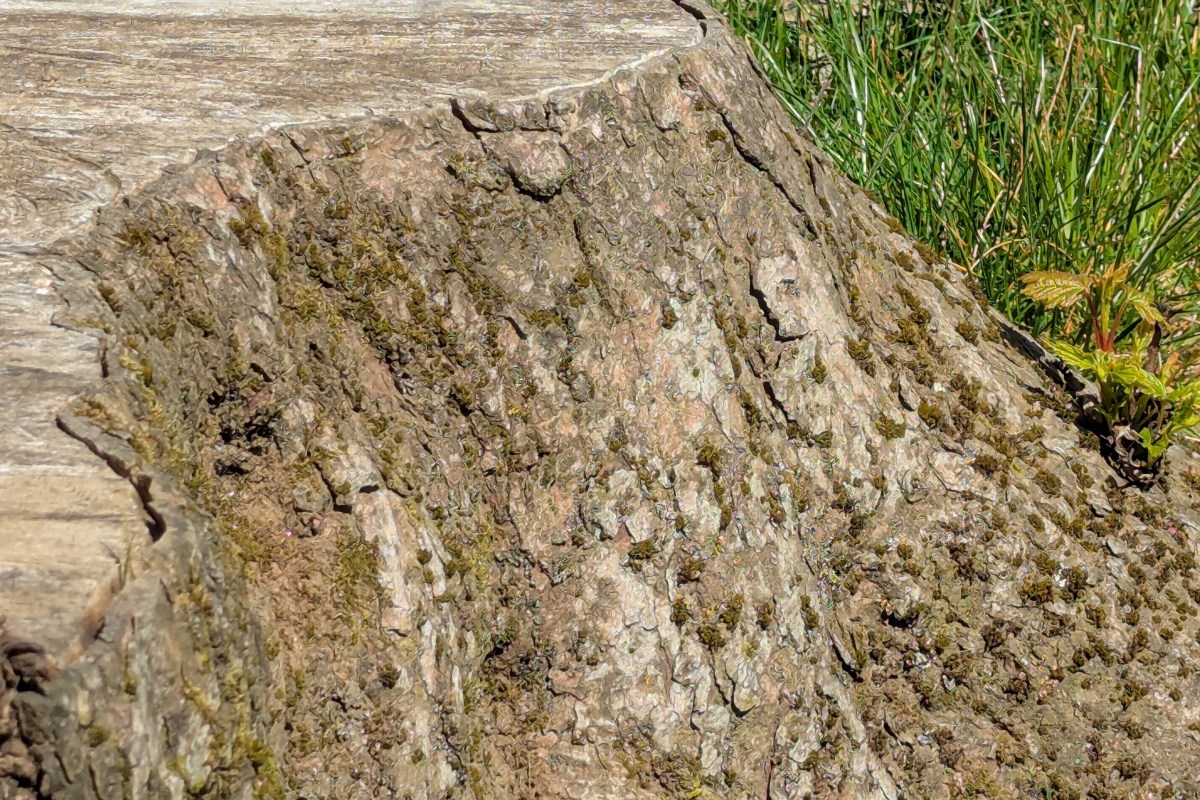
What remains of the tree has been protected and there are signs that the tree is regrowing. I saw it a couple of weeks ago myself when I walked the Hadrian’s Wall Path from coast to coast – Bowness to Wallsend. Along the way places I stayed often had pictures up of the Sycamore Gap tree showing one of the recognisable sights of the walk. When we got there it was being guarded and filmed by people in hi-vis with clipboards.

Should the shoots be left to regrow, which will lead to a more messy outline than what was there before? Or should it be properly felled and a new one put in place that will have the same look as the previous one? If the former, is it the same tree or not and does it matter?

What is it we are trying to do with all of this? Are we trying to protect the tree and help it recover, or are we trying to recapture the way it looked before? Making a wrong right or just trying to make sense of something that, even after the trial, seems mystifying?

The scale of interest in one tree feels high. It’s a recognisable tree given it’s location. Caught on film lots of times. Voted best tree. Boundary between countries and a marker along the way for those walking Hadrian’s Wall

The fact it’s just one tree, one recognisable tree, seems to be at a scale that people can engage with. Unlike the much larger scale environmental issues of climate change and biodiversity loss, the felling of the Sycamore Gap tree feels manageable. It was there and now it isn’t. There isn’t a faceless organisation who did it, or some weather event. Instead it’s two people. Manageable. Trying to understand their motivations. Wondering about the relationship and dynamics. National outcry. Shock and rage. Front page news and long reads about the tree and the trial – the comedy defences put forward, grainy footage of the moment the tree came down filmed by people claiming not to have done it.

The Global Forest Watch estimated that between 2001 to 2024, the UK lost 585 kha of tree cover. That’s equivalent to a 16% decrease in tree cover since 2000. Much more than one tree lost and yet hardly any coverage or action…