Not writing

Feeling distracted, thoughts fractured and half thought and racing away with and from me. Wanting to write and focus and also to think all of the things and explore all of the avenues and rabbit holes and luxuriate in that.

Hot weather and maybe my mind is playing along, feeding off it. It doesn’t feel like the weather for rigorous discipline and deep, thoughtful work. Any time not lounging in a comfortable chair in the shade with a long tall glass of something delicious feels like an absolute triumph. Surely I should be carried through the streets, people showering me with flowers and kudos, writing epic tales to be passed down.

Jumping from one thing to another, exacerbated by screen attention grabbing which persuades me into frittering away time after time on things the better angels of my nature know to not be what I want to actually be putting my time into.

We are creatures of the weather, only able to live and work and be in a very narrow set of temperatures. It isn’t at all surprising that in those circumstances I, we, would be less able to function. When my brain is boiling, eyes feeling like they could melt at any moment, skin red and sweaty at though the blood within is melting – can I really be surprised that work feels hard. No wonder the recent polling suggests less enthusiasm for heatwaves as they become increasingly common. Having that discomfort on a frequent basis when it’s not a break, a chance to discover new ways of being, have the ordinary be transformed – even if not into something good, at least into something unexpected.

Not sustainable to give myself days and weeks and months off whilst the weather is like this. Another reason to not write. And that’s it really. That I’m pushing myself into doing things I’m not sure about, think I can’t do or I’m not good at. So of course it all feels more discomforting. My brain is in the business of finding things to show me that it’s ok and healthy not to write. To try and do what it thinks is looking after myself when actually I want to see what happens if I just keep trying, day after day.

And this is all nonsense, nothing of any interest or use, apart from to me. Seeing the excuse in the hot hot heat. Finding the inspiration to keep working and trying and figuring things out – a reminder of why the work I want to do is needed, even as the changes I’m trying to address make it ever harder to so…

An uncomfortable silence

I went to see ‘London Road’ at The National Theatre, a musical using verbatim language from residents of and around London Road. 79 London Road was where the serial killer Steven Wright was living when he was arrested for the murders of five women.

The play doesn’t really focus on the murderer, and those who have been killed hardly feature at all, and rarely with much compassion. In one sequence, one of the women from the road talked about how they were glad the women were killed – they had all been working on the street or the local area as sex workers – and the person living on the road found it uncomfortable and unpleasant living there. There were a number of extended silences, giving the audience time to contemplate what she’s saying, to feel the messy, difficult implications of it. The silences increased the sense of intimacy, hearing private views that she knows she ‘shouldn’t’ be feeling, or we would probably want to hear. It felt like the audience was holding it’s breath as she spoke. Letting her say what she had to say. Curious about it. Wondering if she would pull back, come to more socially acceptable views. Instead the kept restating her views, going further each time, the pauses giving more of an impression they were considered views.

An even bigger silence later on, as one of the sex workers reflected on how the murders had made them get out of that work, mostly – they still saw a few regulars. A moment that seemed to grow and grow, perpetually it felt, about to end, yet somehow continuing to expand. Like blowing a bubble, the shape of it wobbling as it grows, so fragile and ready to pop at any moment, yet somehow, for that fraction of a second which feels bigger, continuing to exist and grow. A reminder of how powerfully a silence can hold people, how rare it can be. Discomfort and waves of wondering when it will end, a tension at times that feels like it needs to end and then shifts into a wanting it to continue – it’s so big but surely we can make it ever bigger and larger. At times almost wanting to laugh because it felt so long, improbably so.

Moments of silence can be hard to experience, whether they are gentle ones like those in a safe, lovely theatre, or harder ones with other people where the stakes are high. Not knowing, filling it with our own dread panic. The voices of our insecurity, where it’s hard to be curious, there’s more risk in the response.

More and more there’s discussion about how smart phones and screen time generally are affecting our ability to sit with discomfort or boredom. Leaving us rushing to fill the silent moment with distraction and action, noise and other people doing things. Not having to wait to see what becomes of the silence because we can fast forward or scroll on through other people’s lives and thoughts.

The play was a reminder of the messiness of emotions and reactions. Not tidying things up for people but giving the people represented in the play the dignity and responsibility of their own emotions. Providing the audience the space to feel their own responses, however uncomfortable they might find them. The power of holding some space and allowing things to be as they are.

Calm emergencies

Much of the work around seeking to engage people on climate change has been trying to inject a sense of urgency. Creating a catalysing moment to break through the incrementalism. 100 months until x. This is the crucial decade for climate. The doomsday clock is now at one minute to midnight.

Everything, everywhere all at once is understandable and true, but it’s not sustainable for people to deal with, or live like that, on a day by day basis. Most people, even those who agree that climate change is a massive priority, struggle to find enough time in their days and weeks to engage with the issue even briefly.

Reading ‘Fire Weather’ by John Vaillant I was struck by the little moments of relative calm in amongst the terror and carnage. I can’t think of a book I’ve read where I spent as much time clutching at my face, putting my hand to my mouth in shock, shaking my head or willing people to get out. Reading descriptions of people taking their clothes to the dry cleaner and arranging the date when it would be collected next week as they watch the fire advancing outside; people running backwards and forwards from their home to their car to get some last things that seemed somehow vital in that moment; or just standing watching the fire at the end of their road. People comparing stories at the emergency shelters they had escaped to of things they had brought with them that they couldn’t fathom. Even in the midst of that raging fire, the like of which that town had never seen before, nor had most of the firefighters, people still couldn’t grapple with the immediacy of the emergency.

In ‘Scarcity’, Eldar Shafir talks about how it’s difficult to make decisions when you’re in a situation of scarcity. Whatever the source of scarcity, whether it’s financial, time or food, the brain gets frazzled and finds it hard to make any decisions. It’s so distracted by trying to deal with the impact of the scarce situation it can’t justify providing lots of brainpower to address issues, even ones which are seemingly related to the source of scarcity.

Thinking about it now, I wonder whether those moments of seeming relative calm in the book were actually that. Perhaps they were more moments of panic that looked like calm. That people just couldn’t make sense of what was happening or work out what needed to be done, what their options were. The situation had moved from one they could understand and navigate – for the people with their dry cleaning, they could think through what they already knew of their plans and availability, how they could fit their day together to find space to collect their laundry at particular points. Those kinds of situation are ones that are everyday for many, and so the range of options is easily accessible. Even the fact it was a wildfire in that context, it wasn’t the first time they had them in that scenario – just not at that level of ferocity.

For those kinds of situation which are outside our imaginings or the day to day, even in the moment, it’s hard to make sense of them. We can overlay our reactions from the everyday on to them but they don’t fit well – responses that had seemed fine, now seem incongruous, ridiculous. Why arrange to collect the dry cleaning next week when the fire looks like it could engulf the building in the next 10 minutes? But that can be all we’ve got in those kinds of situations. The habitual response. Responding to the social cues – everyone else in the shop is talking about drop-offs and collections and pointing out a particular part of some clothing that needs special attention – so to be the one freaking out would be weird and uncomfortable, even if it might make more sense in that moment.

At a collective level, Vaillant shows how the local firefighters found it hard to understand they were in a different world. They started fighting the fire in the ways they had done with previous smaller, less intense fires and found it hard to adjust. There were indicators around the speed it was moving at, the heat and intensity of it which could have shown them they needed to recalibrate. The structures they were operating in, from the different organisations with overlapping responsibility but no clear way to agree on decisions, mitigated against other perspectives or approaches finding a way through.

And then for situations with less immediacy – the wildfire isn’t rampaging at the bottom of your street – what looks like calm on the outside, or maybe even on the inside too, if we don’t look or think too deeply, can instead be another kind of panic. Wandering along with the same responses that just don’t fit now. Organisational structures which can’t recalibrate for emergencies but keep on with the busy business as usual in the meantime.

A sense of fragility underneath all of that calm and structure and order and process. Just with less reason to sense the fragility or understand the need for change…

A manageable tragedy

When the tree at Sycamore Gap was felled there was a huge outcry. Investigations and art work. Trying to understand why and how. Anger and shock, sadness and disgust.

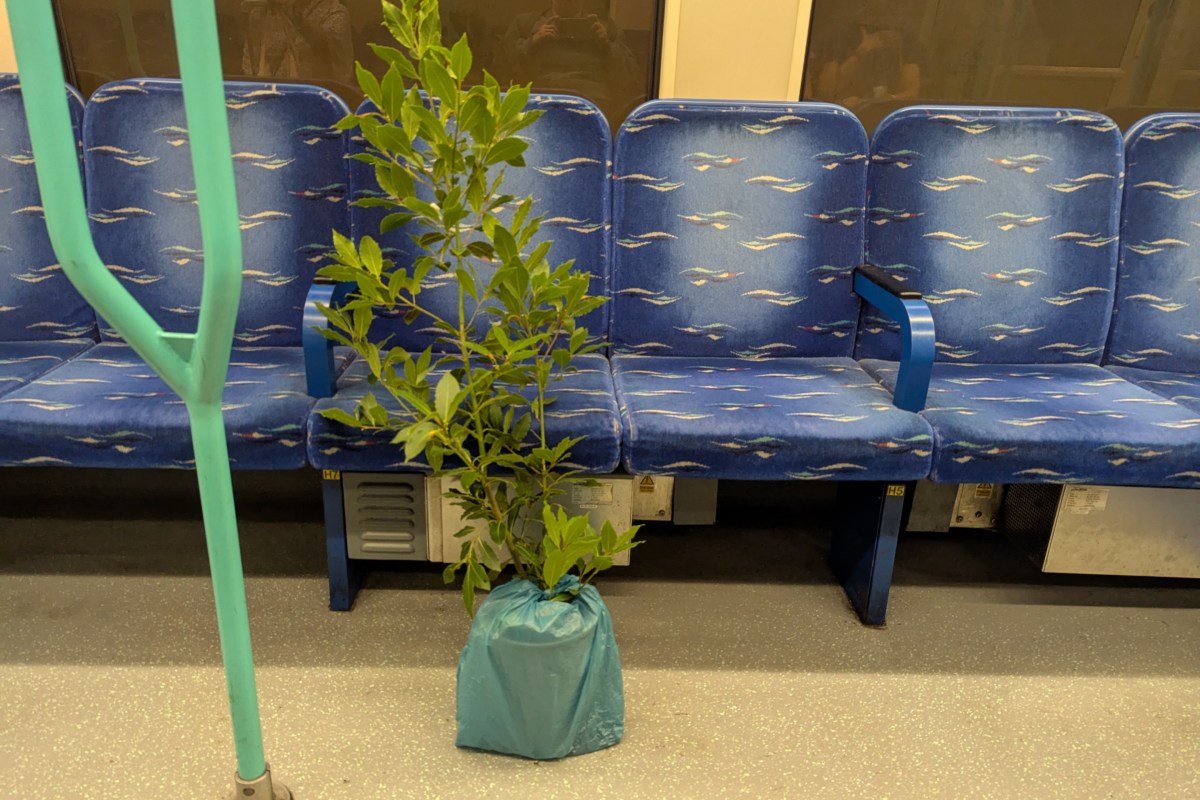
Then people collected seeds from the tree and have been growing them. There were 49 saplings which have been grown from seeds of the felled tree that organisations could bid for. One tree for each foot in height that the tree was at the time it was felled. Over 500 applications received.

What remains of the tree has been protected and there are signs that the tree is regrowing. I saw it a couple of weeks ago myself when I walked the Hadrian’s Wall Path from coast to coast – Bowness to Wallsend. Along the way places I stayed often had pictures up of the Sycamore Gap tree showing one of the recognisable sights of the walk. When we got there it was being guarded and filmed by people in hi-vis with clipboards.

Should the shoots be left to regrow, which will lead to a more messy outline than what was there before? Or should it be properly felled and a new one put in place that will have the same look as the previous one? If the former, is it the same tree or not and does it matter?

What is it we are trying to do with all of this? Are we trying to protect the tree and help it recover, or are we trying to recapture the way it looked before? Making a wrong right or just trying to make sense of something that, even after the trial, seems mystifying?

The scale of interest in one tree feels high. It’s a recognisable tree given it’s location. Caught on film lots of times. Voted best tree. Boundary between countries and a marker along the way for those walking Hadrian’s Wall

The fact it’s just one tree, one recognisable tree, seems to be at a scale that people can engage with. Unlike the much larger scale environmental issues of climate change and biodiversity loss, the felling of the Sycamore Gap tree feels manageable. It was there and now it isn’t. There isn’t a faceless organisation who did it, or some weather event. Instead it’s two people. Manageable. Trying to understand their motivations. Wondering about the relationship and dynamics. National outcry. Shock and rage. Front page news and long reads about the tree and the trial – the comedy defences put forward, grainy footage of the moment the tree came down filmed by people claiming not to have done it.

The Global Forest Watch estimated that between 2001 to 2024, the UK lost 585 kha of tree cover. That’s equivalent to a 16% decrease in tree cover since 2000. Much more than one tree lost and yet hardly any coverage or action…

We forget ourselves

‘They’ get mentioned at work a lot. I work on environmental issues, in a team of people doing the same. I’m not a lone environmentalist, I’m surrounded by people who are all aware, or should be aware, of the same things as me.

I hear lots about the fact ‘they’ need to get their homes retrofitted, ‘they’ aren’t recycling or lobbying their politicians at local or national level, ‘they’ can’t be bothered to even do the easy things. ‘They’ are hard to reach or won’t engage or only want to talk about other aspects of their home or go on about double glazing.

At work I’m constantly surprised at how people working on environmental issues forget how they themselves act. How few people are vegetarian let alone vegan – and how defensive many people can be in discussing making a change, even just for some meals or at environmental events. Most people still fly for pleasure, and do so frequently – and how little people want to engage in the impacts of that choice or do anything differently as a result. I thought I’d be an outlier having not retrofitted my home. Yet most people will do home improvements which involve spending lots of money but don’t include energy in the scope of the works.

Living lives on a day to day basis which don’t look much different to those who aren’t spending their working lives on climate and environmental issues. Not having the justification that they don’t have much of the detail or an understanding of what needs to be done – in some areas at least, even if not all of them.

Despite the subject matter we’re working on, it feels quite culturally normal to not live in a particularly environmentally friendly way. Challenging that feels very uncomfortable and mostly doesn’t happen. Some of that is understandable – if you’ve got to work with people day in, day out then most wouldn’t choose to be confrontational about things when you don’t need to be. Part of why, for me at least, I often don’t ask is because I find it so depressing when I do. It’s the same arguments as I hear elsewhere from people who don’t have anywhere near as much knowledge, interest or motivation than those I’m working with. What I’d expected to be a source of motivation can often exacerbate my concern about how much inaction there can is.

There’s also a lack of curiosity in so many people about the factors which limit their own environmental activity outside work. They are able to live with the cognitive dissonance and prefer that to trying to make changes in how they live. Giving explanations which excuse their behaviour – joking that planting a tree or two will offset the flights they are taking later in the month. A knowing joke but still ‘they’ make it and take the flight…

The potential marathon

My beautiful husband died just over 12 years ago. His death hit me hard, and hit me hard for a long time. I felt like I had a sense of the dimensions of the impact of his death. Thinking about my career, I’ve come to realise I hadn’t fully appreciated how it had affected me in terms of the extent to which I find it difficult to make longer term plans.

His diagnosis – already terminal by that point – came only 6 weeks after I’d finished my MSc. I’d already started job hunting but as soon as we got the news I stopped that immediately. Being able to have a job where people already knew and trusted me meant that when things were unstable and I needed to not be at work it was manageable, my incredible manager helped make it manageable. I could still work and support us both, vital given he wasn’t eligible for benefits and was working in a contract job – so it was only me who could provide an income for us.

After he died, for at least a couple of years, I just didn’t have any interest in getting a new job. I didn’t have much interest in anything in truth. I certainly didn’t have the energy to voluntarily start a new job and feel like I could bring a positive energy to it.

That gradually shifted and I started looking and applying and thinking. Eventually getting something and moving on and feeling like it was a positive reflection of my progress and recovery that I’d got to that point. That it was right that my life looked a bit different to when he was dying, that I was carrying on and properly trying to live and thrive.

When that job started to feel like it wasn’t right for me I started getting my job search on. Similar kinds of roles but different organisations. If people asked I sounded like I had a clear direction – the same subject, public or community sector but maybe a different kind of role. That felt ok. Then when a couple of job searches didn’t get me out of my current predicament, as privileged and first world problems as it is, I then had to try and figure things out a bit more.

Paying more attention to the bored, sinking feeling when I’d read a job advert that theoretically was a good fit and trying to figure out why I found it so uninspiring. Trying to wrangle with what it means to look around and not have people that I want to steal a job from – what kind of career path is it if there aren’t any jobs I see that I want?

Reading and thinking about how to make a change, there’s lots about goals and ambitions and dreams. Realising that I don’t have this big picture sense of what I’m aiming for career wise. No massive ambitions or sense of what good looks like or things I’d like to achieve by the end of my career. Trying lots of exercises to try and figure it out. In lots of ways I would think of myself as ambitious, wanting to push myself and do good things, learn and make a difference.

Yet again and again I would hit up against the sense of how impossible it feels to think longer term. It’s all so precarious and at any moment could fall apart. I can do longer term planning for things like a mortgage or pension. Which I think had hidden how much I didn’t do longer term planning or dreaming or scheming in other areas. With a mortgage, I think it’s because after the initial slog of saving up to buy somewhere, it’s usually cheaper to pay a mortgage than to pay rent. So in the moment it still makes sense to be doing the longer term thing even if I die two minutes later. Before Chris got ill I felt like I was thinking longer term – hence signing up to do a Masters. Since then, I’ve just not felt able to think longer term in a serious way – it just doesn’t feel possible. I bump up against the part of me that doesn’t trust in the future so I make a funny face, side-eye to show I know this is all ridiculous and then couldn’t quite get past that.

And there’s something good and true in that disbelief or mistrust. Simply setting aside those feelings doesn’t seem like a good idea, however uncomfortable it is to deal with them. It gives space for uncertainty, reminds me to be grateful for what I’ve got now, or at least try to. Gives some distance and perspective, a way to try and come back to what really matters and remember how lucky I am to be alive, briefly in time and space but as fully as I can be.

Instead it’s been about trying to find a way to sit differently with those emotions. To accept that it’s all fragile and contingent and make plans and think about hopes and try to translate them into reality anyway. Allowing myself to wonder and accept it’s all a work in progress. Making plans and committing to them, whilst trying to accept there will always be unfinished things. Life is a marathon not a sprint, even if we don’t all get to finish the marathon.

We don’t get to tie a bow around everything and actually that’s ok. It means we keep on living, right up until the point we’re no longer alive – and that’s about as much as we can hope for.

The tyranny of the blank page

Part of making this space for myself is to have a place to write. To see if I can. If I do. Where it leads, whatever that might look like. Not to worry, as I often do, about working out each of the steps and thinking about them and trying to imagine where it will lead and take control I don’t have. Instead, just to do something and let it unfold.

Writing here involves, to state the obvious, actually writing.

So many times since the last piece I wrote I’ve thought about writing. Felt frustrated I was somewhere else, doing something else, and couldn’t write. Balled up frustration at myself not making the most of this space, opportunity, life. Trying not to let that cascading frustration escalate but to do something about it. To write.

Here I am.

Realising that a big part of why I’ve not been here is the worry about what I’d write next. About wanting to make sure that it straight away starts to take shape and what that would look like as a sequence of pieces. Looking at notes to try and calibrate things – that idea might be too soon, that one isn’t quite ready – on and on. Thinking and wondering and, obviously, not writing. Not using this space for the very thing I set out to do and this is only the second piece in.

The worry of doing the wrong thing, thinking about the potential impacts of the imperfect path stopping any action being taken. Feeling concerned about doing something that might not be the best path forward is something that I’ve come to realise weighs more heavily on me than I’d realised. My beautiful husband Chris died just over twelve years ago at the age of 32. I’d not quite appreciated how deeply that sense of the fragility and temporary nature of life had sunk into my bones, into my DNA. Or maybe I knew in some general or other ways but not quite in that dimension. I’m lucky enough to have a mortgage and a pension and be able to save. I book holidays and other lovely things far in advance. It’s not exactly seat of the pants territory for those type of things. Which meant I’d not quite realised how, in other dimensions of life planning, I find it harder to do so. That to do something which might not be the best thing or represent all that I am or could be, to accept that one moment can’t hold everything, is something so obvious yet clearly not something I’ve properly been able to accept. Looking at the blank page is then just an ideal situation for that kind of worry to crystallise. Every cliché and misplaced comma is a reminder of the transience.

The tyranny of the blank page holding me back. The idea that whatever next goes here needs to be right. Not defining what right is, holding it loosely enough that it can be something I beat myself with but don’t properly examine. The blankness of the page feeling a mirror of myself – blank and lacking in ideas, or at least of ideas that merit being written down and got out of my head. Lacking ideas that are useful or will make a difference. That fear of the blank page, the road not taken, the words left unsaid, so many metaphors – clichés I know, but I write on regardless to just keep writing – which lead us to we think we’re doing the right thing. Looking after ourselves by keeping ourselves away from things which could open us up to ridicule.

Having this space and intention and desire has helped me come back to here. To write. Here I am.

Reminding myself that really the page isn’t as blank as I think it is. There’s so much to say and think about, yet it can be so hard to remember that. Trying also to hold as truth that it’s not necessarily about having the answers or ideas, so much as creating or holding a space to ask questions. Reminding myself of the need to play and try and see. Then when I remember that, it’s easy to write. It’s always felt easy to write when that’s the case.

To write then, is to actively engage with all of that annoying, potential-filled imperfection and time passing, time that is perhaps being wasted. Trusting that what’s gone before can be turned into something that can be used, or maybe even beautiful or useful.

It’s been heartening to read in Hattie Crisell’s generous book ‘In Writing’ actual writers talking about how they have to grapple with themselves and the blank page and the nonsense they feel they’ve written to try and make sense of things. Thinking they can turn something that’s fragile and messy into something that can make sense, resonate and connect with others. Reading about how writers that I’ve read and enjoyed and admired and savoured have felt their own first drafts were awful. Doubted they could make it better, hated themselves and their work along the way, and even then felt disappointed by the end with the gap between their idea and what they ended up publishing.

To be shown, again and again that it’s totally normal and all part of the process that things need to be edited and amended. Cutting sections and ideas, with whole character and plot lines going to better serve the overall piece. Taking time away to get a different view, seeing it as its own thing rather than a part of yourself and all that gets weighed down with.

Doing all of that however requires doing the work. The sometimes slow, sometimes seemingly non-existent work. Painstaking and unclear at times, at others a clarity that feels effortless but is the result of all that’s gone before. No work, no words, no chance to try and make that idea into something that’s actually really real or useful or creates some kind of motivation, connection.

Much of which felt familiar from thinking about what’s needed on climate change. People turning up and doing the sometimes slow, sometimes seemingly non-existent work. Just trying and seeing and learning and iterating. We need to get more and more people involved and doing things. Actually taking action and trying, day after day.

Then – I think maybe not, the worry and calibrating against what’s needed steps in. I think then that we don’t have the time to faff around, we need to get things right. The urgency of the situation, the science and daily looking around the seeing. The news stories and the accumulated heartbreak of stories. There isn’t the time to get it wrong, we need to take action which is actually going to meaningfully make a difference. The more we cut carbon now the more chance we give for more people now and in the future to lead lives of dignity. It’s not just about meeting arbitrary carbon reduction targets but it’s also about the shape of the decarbonisation curve – the more we can manage the transition the gentler the curve, which is better for people, planet and the social fabric of our lives. Which brings me back to the blank page.

Why we need new stories

When I first started working on environmental issues – what seems like a millionty years ago, it seemed like the issue was technical first and foremost. That hasn’t felt true for a long time.

All around there are stories of environmental impacts and how they bleed into and out of social, cultural and economic ones.

Yet we’ve got the technologies that might not get us all the way to net zero, or do so in the most elegant way, but can still get us a very long way towards where we need to be. Technologies that are becoming ever more efficient, with problems increasingly identified addressed, worked around or managed. From the story of solar PV continuing to defy ever greater expectations in deployment, to heat networks and heat pumps, there is an ever-growing array of options to decarbonise energy systems.

Around the world governments are making funding available to reduce or remove costs for these technologies. Cost is often cited as the next barrier, yet free measures and new forms of financing are increasingly available to reduce it. Increased take-up of measures then allows the supply chain to invest, innovate and bring costs down, further helping to widen the potential market. We still can’t give away free measures though – and huge amounts of money can be spent trying to do so.

Meanwhile, around the world more and more people are saying they believe climate change is real and that action is needed. They think that governments should take action and take the lead. Yet that isn’t what lots of people are voting for. Instead people are voting for politicians who say we need to ‘drill baby, drill’. They are voting against politicians who propose to put in place small measures which are still a long way away from what the science suggests is needed.

There are all kinds of reasons for that – and that’s what I want this to be a space to explore. Maybe it’s just a cyclical thing – a year in which there are billions of people voting, at a time when living standards are feeling relatively under pressure. Incumbents all around the world have lost votes and in many cases have lost office as people protest that the status quo isn’t working for them, however much they might or might not like who they are voting for.

Climate change and biodiversity loss are going to continue to compound societal and economic pressures in a negative feedback loop. As the impacts of those two linked global shifts continue to manifest ever more often and violently, it’s likely this is now the most stable climate system we’ll experience in our lifetime. Records continue to be broken, we see the world making and remaking itself as it adjusts to the climate impacts. Places we once knew become strange to us as the seasons shift out of kilter and different creatures and ecosystems that were so aligned become disconnected.

Waiting until things calm down and it all goes back to normal and then the old stories will feel true again doesn’t feel sustainable. The urgency of the climate imperatives, the science, suggests that we can’t wait, delay is just increasing the risk and harm, hurting ever more people and hugely increasing the numbers of people who are vulnerable.

We need to find stories that resonate with people in, because of and throughout the changing seasons. This feels like a space to explore that. About storytelling and psychology, science and sense-making. Trying to understand how thoughts and needs connect to actions and deeds.